
Posto Bata
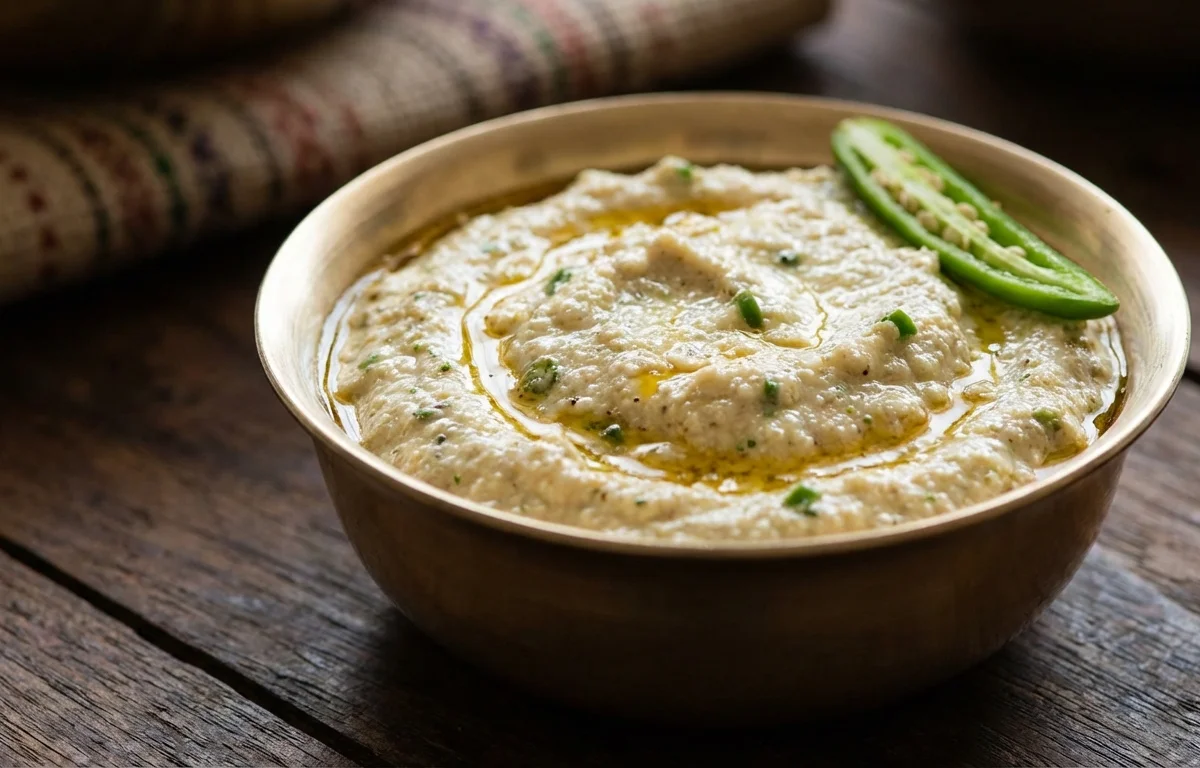
A classic Bengali poppy seed paste with green chili and mustard oil, ground smooth and served as a simple side. It is nutty, lightly spicy, and best enjoyed with warm steamed rice.
For 4 servings
- prep · ~20 min
Soak the poppy seeds.
Wash the poppy seeds well and soak them in enough water for 20 minutes so they soften slightly and grind more smoothly.
TIPA short soak helps the seeds turn creamy instead of gritty. - mix · ~3 min
Grind the posto and chilies.
1.Drain the soaked poppy seeds.2.Add the poppy seeds, green chili, and salt to a grinder.3.Add a little water and grind to a smooth, thick paste.4.Scrape down the sides and grind again if needed. - assemble · ~1 min
Mix in the onion and mustard oil.
Transfer the posto paste to a bowl. Add the finely chopped onion and mustard oil, then mix well until evenly combined.
TIPUse raw mustard oil for the sharp, authentic Bengali finish. - serve
Serve with steamed rice.
What to keep in mind.
7 tips from the recipe — small details that make a real difference to the final dish.
- 1Drain the soaked poppy seeds well before grinding so the paste stays thick, not watery.
- 2Grind in short pulses and add water drop by drop; posto should be creamy and dense.
- 3If your grinder struggles, start with the chilies and a spoonful of soaked posto to get it moving.
- 4Chop the onion very fine so it blends into the paste instead of overpowering each bite.
- 5Mix in the mustard oil at the end, not during grinding, to keep its sharp aroma intact.
- 6Serve soon after mixing, since raw onion can release water and thin the paste if it sits too long.
- 7A pinch more salt just before serving can wake up the nuttiness of the poppy seed paste.
Adapt it for your goals.
No-onion
Skip the chopped onion for a cleaner, more traditional posto flavor and a slightly longer shelf life.
extra spicyExtra-spicy
Add more green chilies while grinding for a hotter version that cuts through the richness of the poppy seeds.
sil batta styleSil-batta style
Grind the soaked posto and chilies on a stone slab for a more rustic texture and deeper traditional flavor.
garlic free satvikGarlic-free satvik
This recipe is already garlic-free; keep it simple with just posto, chili, salt, and mustard oil for a satvik-style side.
Why this is on our healthy list.
Seed-Based Healthy Fats
White poppy seeds and mustard oil provide satisfying fats that make this simple rice accompaniment feel rich and filling.
Plant Compounds from Chilies
Green chilies add heat along with beneficial plant compounds, bringing flavor without needing heavy spices.
Simple Ingredient Dish
Made from a short list of basic ingredients, this side dish delivers strong flavor without rich gravies or added sugar.
Frequently asked questions
Usually the poppy seeds were not soaked enough or the grinder needed more time. Grind longer and add only a few drops of water at a time.



-curry.webp)
.webp)