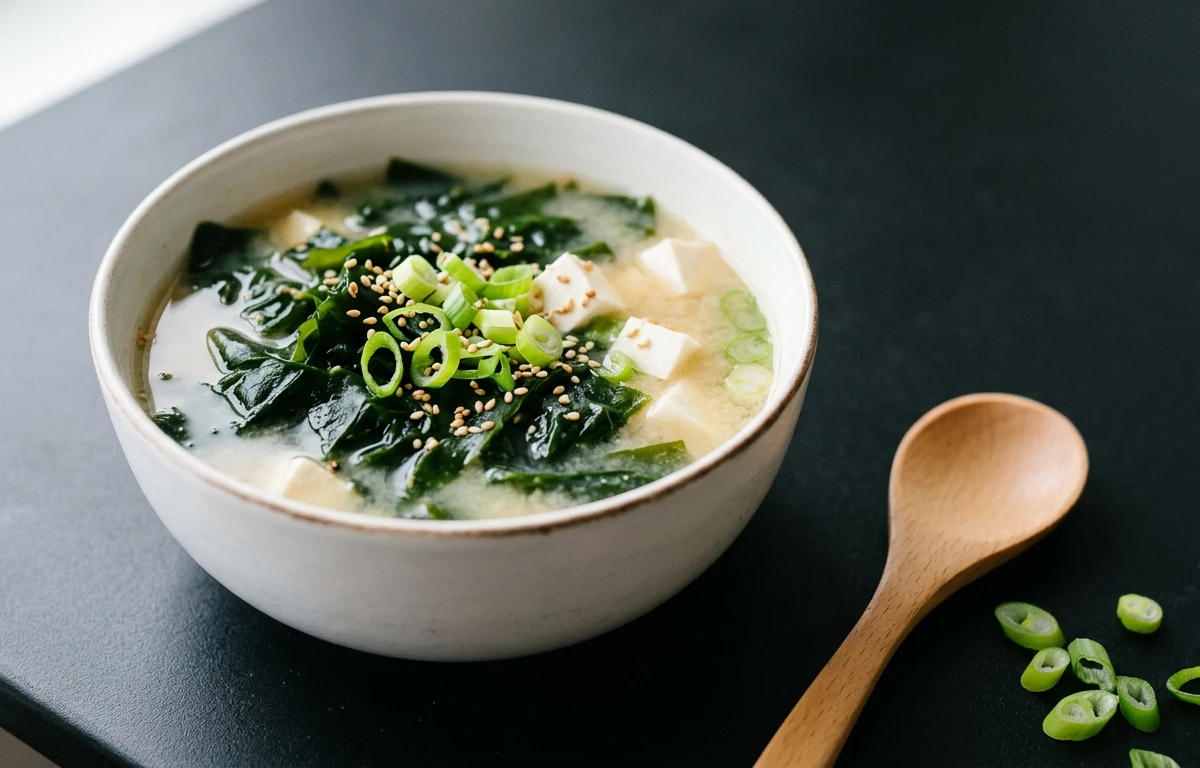
Quick Miso & Wakame Soup
A soul-warming Japanese soup that comes together in under 15 minutes. Delicate umami-rich miso paste is whisked into a gentle dashi-simmered broth, dotted with silky rehydrated wakame seaweed and soft tofu cubes. It's the perfect light starter or comforting sip on a chilly evening.
For 4 servings
- prep · ~5 min
Rehydrate the wakame.
Place dried wakame in a small bowl with enough cold water to cover. Let it soak for 5 minutes until it expands and softens. Drain and set aside.
TIPWakame expands to about 8 times its dried size — a little goes a long way. - simmer · ~7 min
Make the kombu dashi.
1.Combine 4 cups water and the kombu piece in a medium saucepan.2.Place over medium heat and bring to just below a boil (small bubbles at the edges).3.Remove kombu just before water reaches a full boil to prevent bitterness.4.Lower heat to a gentle simmer.TIPDon't let the kombu boil — it releases bitter compounds. Remove it when you see the first bubbles rising. - simmer · ~2 min
Add tofu and wakame to the broth.
1.Gently slide the cubed tofu into the warm dashi broth.2.Add the drained, rehydrated wakame.3.Simmer gently for 2 minutes to warm everything through without boiling. - mix · ~2 min
Dissolve the miso paste into the soup.
1.Turn off the heat. Scoop out about 1/2 cup of the warm broth into a ladle or small bowl.2.Add the miso paste to the reserved broth and whisk until completely smooth and free of lumps.3.Pour the dissolved miso mixture back into the saucepan and stir gently to combine.4.Taste and add a pinch of salt only if needed — miso is already salty.TIPAlways dissolve miso off heat. Boiling destroys its delicate fermented flavor and beneficial probiotics. - serve
Ladle into bowls and garnish with green onions.
Divide the soup evenly among 4 small bowls. Scatter sliced green onions over each serving. Serve immediately while the soup is hot and fragrant.
TIPMiso soup is best enjoyed fresh. If reheating, warm gently and never let it boil.
What to keep in mind.
7 tips from the recipe — small details that make a real difference to the final dish.
- 1Use a 4-inch piece of kombu and wipe it with a damp cloth — never wash it, as the white powder is natural umami.
- 2Soak wakame in cold water for exactly 5 minutes; oversoaking makes it mushy and dilutes its flavor.
- 3Cut silken tofu into cubes with a wet knife to prevent sticking and keep the pieces clean.
- 4Remove the kombu as soon as you see the first tiny bubbles around the edges to avoid a bitter, slimy broth.
- 5Always turn off the heat before adding miso — boiling kills its probiotics and flattens the delicate flavor.
- 6For a deeper dashi, add a handful of bonito flakes after removing kombu and strain the broth before adding tofu.
- 7If reheating leftovers, warm the soup gently over low heat and never let it boil to preserve the miso character.
Adapt it for your goals.
Vegan
The recipe is already vegan, but swap white miso for a darker brown miso for a more intense, earthy flavor; add shiitake mushroom slices soaked in the dashi for extra savory depth.
high proteinHigh-protein
Add 1/2 cup of shelled edamame or shred cooked chicken breast into the broth along with the tofu for a heartier, protein-packed bowl.
low sodiumLow-sodium
Use reduced-sodium miso paste or decrease the miso to 2 tablespoons, and rely on kombu's natural saltiness to season the broth — skip any extra salt.
spicySpicy
Stir in 1 teaspoon of chili oil or a dollop of sriracha with the miso paste, and top with a sprinkle of shichimi togarashi (Japanese seven-spice) for a warming kick.
Why this is on our healthy list.
Rich in Probiotics
White miso is a fermented food that provides live probiotics, which support gut health and digestion when the miso is not boiled.
Low-Calorie & Hydrating
This soup is primarily water-based and very low in calories, making it a light, hydrating option that still delivers savory satisfaction.
Good Source of Plant Protein
Silken tofu and miso both contribute high-quality plant protein, essential for muscle repair and overall body function.
Packaged with Iodine and Minerals
Wakame and kombu are seaweeds naturally rich in iodine, calcium, and magnesium, which support thyroid function and bone health.
Frequently asked questions
Yes, but white miso (shiro miso) is mild and delicate; red or brown miso is saltier and more pungent, so start with 2 tablespoons and adjust to taste.