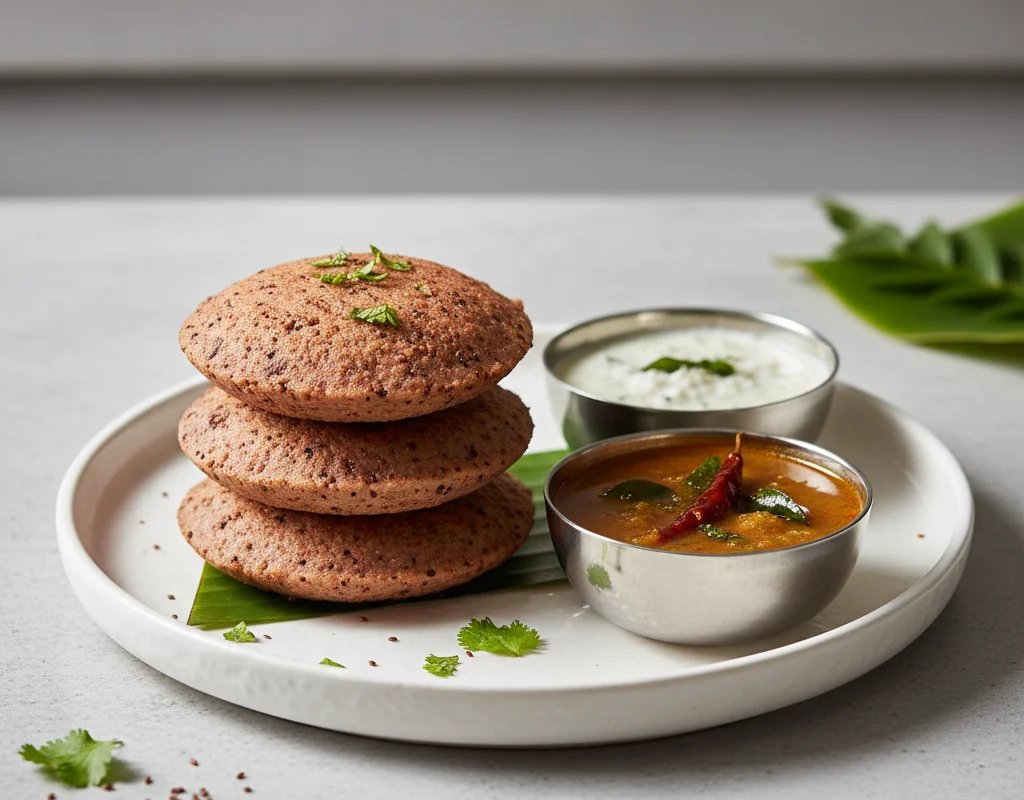
Ragi Idli
Soft, fluffy steamed cakes made with finger millet and a touch of fermented batter. These earthy brown idlis pack a nutty flavor and come together quicker than traditional rice idlis. Perfect with coconut chutney and a bowl of warm sambar.
For 4 servings
- prep
Soak the urad dal.
Wash the urad dal and fenugreek seeds thoroughly. Soak them together in enough water for 4 hours. The dal should swell and become plump.
- mix · ~10 min
Grind the batter.
1.Drain the soaked dal and fenugreek, reserving the water.2.Grind dal in a wet grinder or blender, adding reserved water little by little until smooth and fluffy (8-10 minutes).3.Transfer ground dal to a large mixing bowl.4.Add the ragi flour and salt. Mix well into a thick, smooth batter. Add water if needed to achieve pourable consistency.TIPThe batter should coat the back of a spoon. Too thin and the idlis will be flat. - rest
Ferment the batter overnight.
Cover the bowl with a lid or cloth and leave in a warm place to ferment for 8-10 hours or until the batter doubles in volume and looks airy. In winter, placing the bowl in an oven with just the light on helps.
TIPDo not stir the batter vigorously after fermentation; gently fold to keep the air pockets intact. - prep · ~3 min
Prepare the steamer.
Pour water into the idli steamer base and bring it to a boil. Lightly grease the idli moulds with a few drops of oil.
- mix
Pour batter into moulds.
Gently fold the fermented batter once or twice. Do not overmix. Pour the batter into the greased idli moulds, filling each about three-quarters full to allow space to rise.
- steam · ~14 min
Steam the idlis.
Place the idli stands carefully into the steamer. Cover and steam on medium-high heat for 12-15 minutes. The idlis are done when a toothpick inserted comes out clean.
TIPDo not open the lid during the first 10 minutes of steaming or the idlis may collapse. - rest · ~3 min
Rest before unmoulding.
Turn off the heat and let the idlis rest in the steamer for 2-3 minutes. This prevents them from sticking to the moulds.
- serve
Unmould and serve warm.
Run a wet spoon around the edges of each idli to release them easily. Serve the warm ragi idlis with coconut chutney and hot sambar.
What to keep in mind.
7 tips from the recipe — small details that make a real difference to the final dish.
- 1Soak urad dal and fenugreek seeds for a full 4 hours to ensure a fluffy, well-ground batter.
- 2Grind the dal in a wet grinder for 8-10 minutes for the lightest, airiest texture.
- 3After fermentation, fold the batter gently—vigorous stirring deflates the air bubbles and makes dense idlis.
- 4Fill idli moulds only three-quarters full to leave room for rising during steaming.
- 5Do not open the steamer lid for the first 10 minutes of cooking; sudden temperature drop can collapse the idlis.
- 6Let steamed idlis rest in the steamer for 2-3 minutes before unmoulding to prevent sticking.
- 7Leftover batter can be refrigerated for up to 2 days; stir in a splash of water if it thickens before steaming.
Adapt it for your goals.
Vegan
This recipe is already vegan as written—no dairy or eggs are used, making it perfect for plant-based eaters.
high proteinHigh-protein
Add 2 tablespoons of roasted chickpea flour (besan) to the batter for an extra protein boost without altering the texture.
low oilLow-oil
Skip greasing the moulds entirely; use non-stick idli plates or silicone moulds for a completely oil-free version.
spicySpicy
Fold in 1 finely chopped green chilli and 1 teaspoon grated ginger into the fermented batter for a zesty, peppery kick.
Why this is on our healthy list.
High in Calcium
Finger millet (ragi) is one of the richest grain sources of calcium, supporting bone health and dental strength.
Rich in Dietary Fiber
Ragi flour provides insoluble fiber that aids digestion and helps maintain steady blood sugar levels.
Good Source of Plant Protein
Urad dal complements ragi’s amino acids to create a more complete protein profile, ideal for vegetarian diets.
Naturally Gluten-Free
This recipe contains no wheat or gluten-containing grains, making it suitable for those with celiac disease or gluten sensitivity.
Frequently asked questions
Dense idlis usually result from under-fermented batter or over-mixing after fermentation. Ensure batter doubles in volume before steaming, and fold gently.