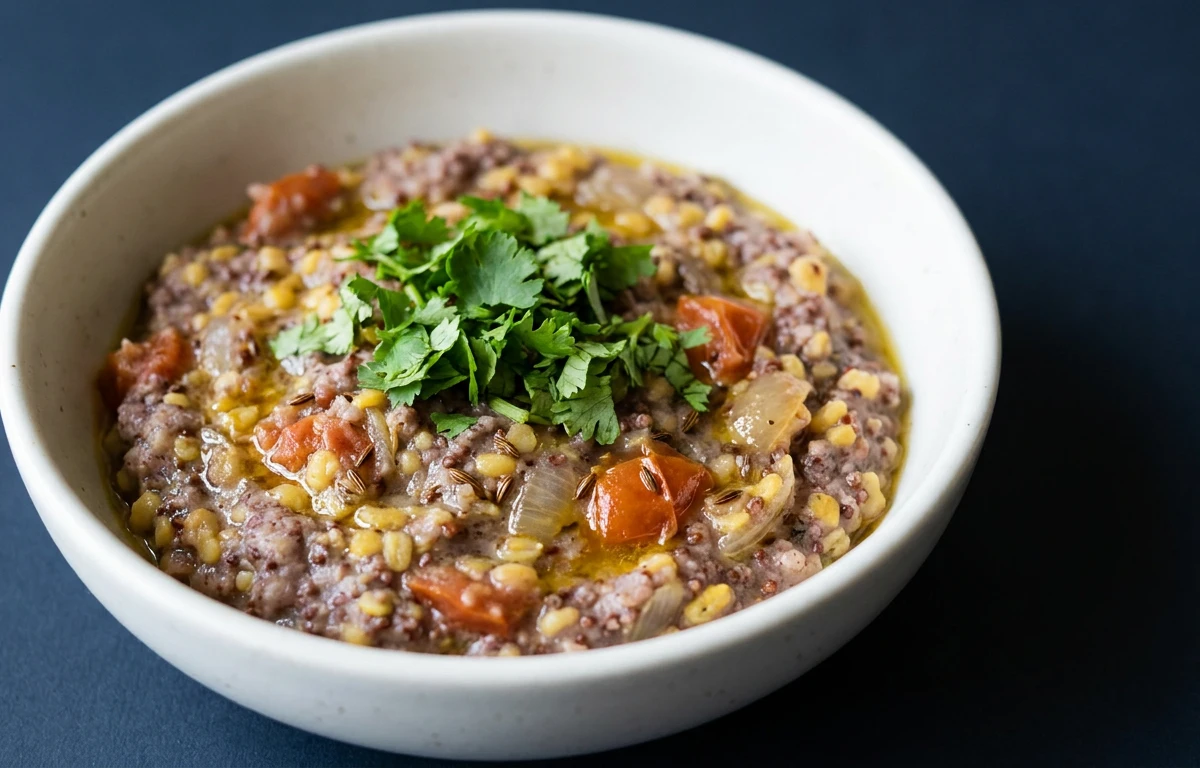
Ragi Moong Khichdi
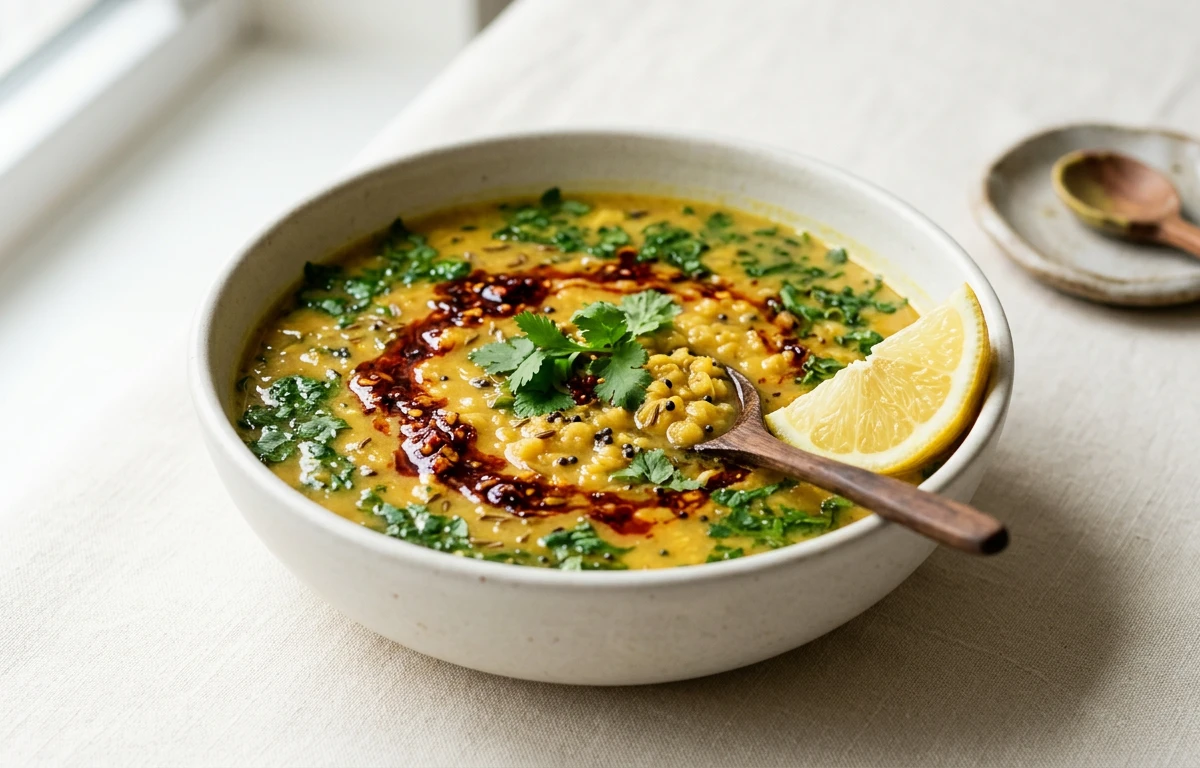
A warm, nourishing one-pot meal made from finger millet and split yellow moong dal. This rustic khichdi has an earthy, nutty flavor from the ragi, tempered with cumin and ghee for a comforting, easily digestible dish perfect for any day of the week.
For 4 servings
- prep
Soak the moong dal.
Wash the moong dal thoroughly under running water. Soak in enough water to cover for 30 minutes, then drain and set aside.
TIPSoaking helps the dal cook evenly and reduces bloating. - mix
Mix the ragi slurry.
In a bowl, combine the ragi flour with 1 cup of water. Whisk well to form a smooth, lump-free slurry. Set aside.
TIPMixing ragi with cold water prevents lumps from forming when added to hot water. - pressure cook · ~10 min
Pressure cook the dal.
1.Add the soaked, drained moong dal to the pressure cooker with 2 cups of water, turmeric powder, and salt.2.Close the lid and pressure cook on medium heat for 2 whistles.3.Let the pressure release naturally, then open the lid. - mix · ~8 min
Add ragi slurry to the cooked dal.
1.Place the open pressure cooker with the cooked dal back on low heat.2.Pour the ragi slurry into the dal while stirring continuously.3.Add the remaining 1 cup of water and keep stirring until the mixture thickens to a soft, porridge-like consistency.TIPContinuous stirring is crucial to prevent the ragi from scorching at the bottom. - temper · ~2 min
Make the tempering.
1.Heat ghee in a small pan over medium heat.2.Add cumin seeds and let them crackle for 30 seconds.3.Add black peppercorns, asafoetida, slit green chili, grated ginger, and curry leaves. Fry until fragrant, about 1 minute. - mix · ~2 min
Finish the khichdi.
1.Pour the tempering over the cooked ragi-dal mixture.2.Mix everything together, turn off the heat, and let it rest for 2 minutes. - garnish
Garnish with fresh coriander leaves and serve hot.
TIPServe immediately, as ragi khichdi thickens as it cools. Add a spoonful of warm ghee on top for extra richness.
What to keep in mind.
7 tips from the recipe — small details that make a real difference to the final dish.
- 1Whisk the ragi slurry thoroughly to avoid any lumps before adding to the dal.
- 2Stir continuously after adding the ragi slurry to prevent scorching at the bottom.
- 3Adjust the water quantity to achieve your preferred porridge-like consistency.
- 4Serve immediately; the khichdi thickens significantly as it cools.
- 5For a thinner texture, add a splash of hot water while reheating.
- 6Soaking moong dal for 30 minutes ensures even cooking and reduces gas.
- 7A dollop of warm ghee on top just before serving enhances flavor and richness.
Adapt it for your goals.
Vegan
Replace ghee with coconut oil or a neutral vegetable oil for the tempering to make the dish entirely plant-based.
low oilLow-oil
Skip the tempering entirely and simply stir in a pinch of asafoetida and cumin powder directly into the cooked khichdi for a lighter, low-fat version.
high proteinHigh-protein
Add 1/4 cup of cooked, shredded chicken or a handful of paneer cubes along with the tempering for an extra protein boost.
jainJain
Omit the green chili, asafoetida, and curry leaves; use a pinch of black pepper and a tempering of cumin seeds in ghee instead.
loaded veggieLoaded-veggie
Stir in 1/2 cup of finely chopped spinach or grated carrots along with the ragi slurry for added color, fiber, and nutrients.
Why this is on our healthy list.
Rich in Calcium
Finger millet (ragi) is one of the best plant sources of calcium, which supports strong bones and teeth.
High in Plant Protein
Moong dal provides easily digestible plant-based protein, making this dish a satisfying and nourishing meal.
Gluten-Free
Both ragi and moong dal are naturally gluten-free, making this khichdi suitable for those with gluten sensitivities.
Supports Digestion
The combination of ginger, asafoetida, and cumin aids digestion, while the porridge-like consistency is gentle on the stomach.
Low Glycemic Index
Ragi and moong dal have a low glycemic index, helping to maintain steady blood sugar levels and provide sustained energy.
Frequently asked questions
No, this recipe specifically requires ragi flour. Whole ragi grains need prolonged soaking and grinding to make a paste, and the texture would be very different.