
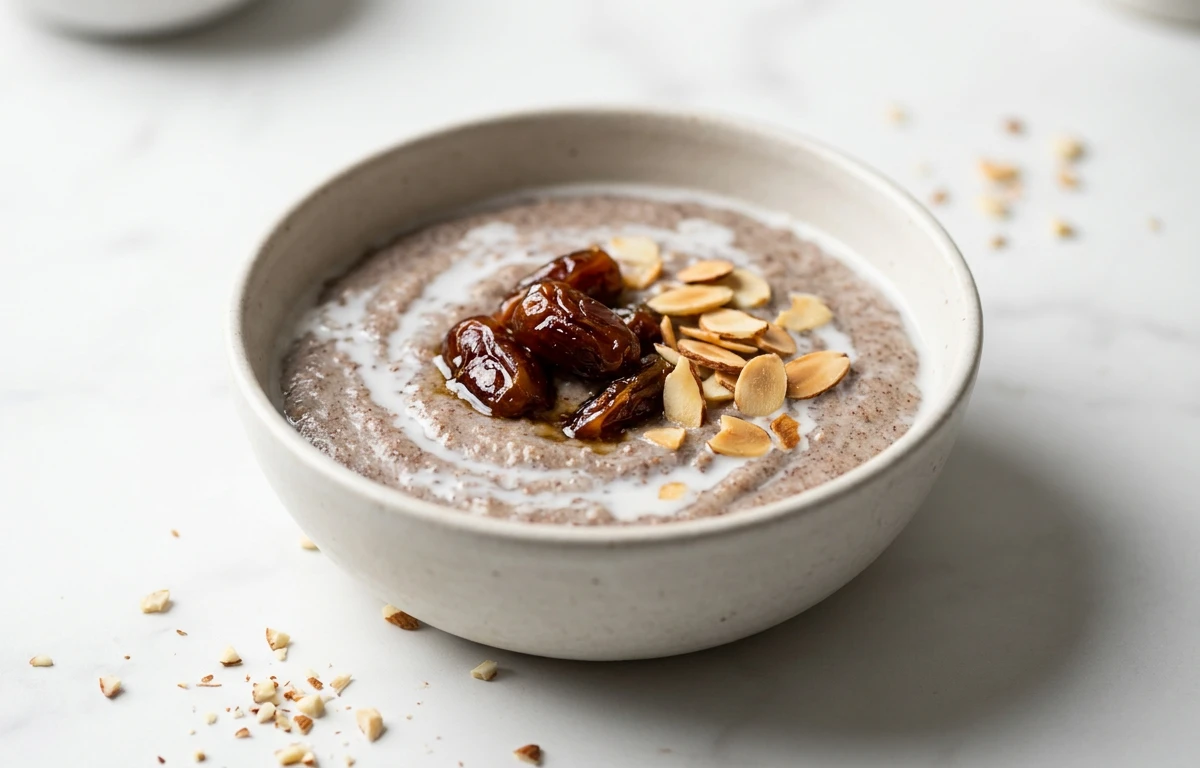
Ragi Porridge
A warm, creamy porridge made from nutrient-rich finger millet flour. This rustic South Indian breakfast staple comes together in under 15 minutes and has a naturally sweet, earthy flavor that pairs beautifully with a drizzle of ghee. Light enough for breakfast but satisfying enough to keep you full.
For 2 servings
- prep
Make the ragi slurry.
1.In a small bowl, combine 4 tbsp ragi flour with 3 tbsp water.2.Whisk until smooth with no lumps. Set aside.TIPMix the slurry with cold water — hot water causes instant lumps that are hard to break. - boil · ~5 min
Boil the water.
Pour 2 cups of water into a heavy-bottomed saucepan and bring it to a rolling boil over medium-high heat.
- simmer · ~7 min
Cook the ragi porridge.
1.Lower the heat to medium-low and slowly pour in the ragi slurry while whisking continuously.2.Add a pinch of salt and keep stirring to prevent lumps from forming.3.Cook for 5-7 minutes, stirring often, until the mixture thickens and turns glossy.4.Add 2 tbsp jaggery and stir until it melts completely into the porridge.TIPNever stop whisking when you first add the slurry — even 10 seconds of stillness can create lumps. - temper · ~1 min
Fry the cashew garnish.
In a separate small pan, heat 1 tsp ghee over medium heat. Add broken cashew nuts and fry until golden brown, about 1 minute.
TIPWatch the cashews closely — they go from golden to burnt in seconds. - mix
Finish and flavor the porridge.
1.Remove the porridge from heat.2.Sprinkle a pinch of cardamom powder over the top and stir through.3.Pour the fried cashews along with the ghee over the porridge. - serve
Serve warm.
Ladle into two bowls and serve immediately while warm and creamy.
TIPRagi porridge sets as it cools. If it gets too thick, stir in a splash of warm milk or water before serving.
What to keep in mind.
6 tips from the recipe — small details that make a real difference to the final dish.
- 1Always whisk the slurry with cold water first to avoid lumps that form with hot liquid.
- 2Use a heavy-bottomed saucepan to prevent the porridge from scorching at the bottom.
- 3Keep whisking continuously when adding the slurry — 10 seconds of stillness can create stubborn lumps.
- 4For a smoother texture, sift the ragi flour before making the slurry to remove any coarse bits.
- 5Ragi porridge thickens as it cools; stir in a splash of warm milk or water just before serving to adjust consistency.
- 6Fry the cashews only until golden — they go from browned to burnt in seconds.
Adapt it for your goals.
Vegan & Dairy-Free
Replace ghee with coconut oil or a neutral vegetable oil. Use coconut sugar or maple syrup instead of jaggery for a fully plant-based porridge that retains the earthy sweetness.
Savory Ragi PorridgeSavory Ragi Porridge
Omit jaggery and cardamom. Instead, season with salt, black pepper, turmeric, and a tadka of mustard seeds, curry leaves, and dried red chilies in ghee. Serve with a drizzle of lemon juice.
High Protein BoostHigh-Protein Boost
Add 1 tablespoon of roasted peanut powder or split roasted gram (pottu kadalai) flour along with the jaggery for an extra protein lift without altering the creamy texture.
Nut Free VersionNut-Free Version
Skip the cashew garnish and replace with toasted pumpkin seeds or shredded coconut. Both add crunch and complement the earthy ragi flavor without nuts.
Fruit Topped Sweet BowlFruit-Topped Sweet Bowl
Top the finished porridge with sliced banana, chopped mango, or berries. The fruit's natural acidity balances the sweetness of jaggery and adds a fresh contrast.
Why this is on our healthy list.
Rich in Calcium
Finger millet (ragi) is one of the best plant-based sources of calcium, which supports strong bones and teeth, making this porridge excellent for growing children and older adults.
Naturally Gluten-Free
Ragi is a gluten-free grain, so this porridge is safe for those with celiac disease or gluten sensitivity, providing a warm, comforting breakfast without any wheat.
High in Dietary Fiber
The whole-grain finger millet flour retains its bran, offering ample fiber that aids digestion and promotes a feeling of fullness, helping to stabilize blood sugar levels.
Good Source of Iron
Ragi contains a notable amount of iron, which helps combat fatigue and supports healthy red blood cell production, especially beneficial for those with low iron levels.
Low Glycemic Index
Compared to refined grains, ragi releases sugar slowly into the bloodstream, making this porridge a smart breakfast choice for managing blood sugar and sustained energy.
Frequently asked questions
Ragi malt is pre-roasted and finer; it will cook faster and produce a thinner porridge. Use the same quantity but reduce cooking time by 2-3 minutes, and expect a slightly maltier flavor.


