
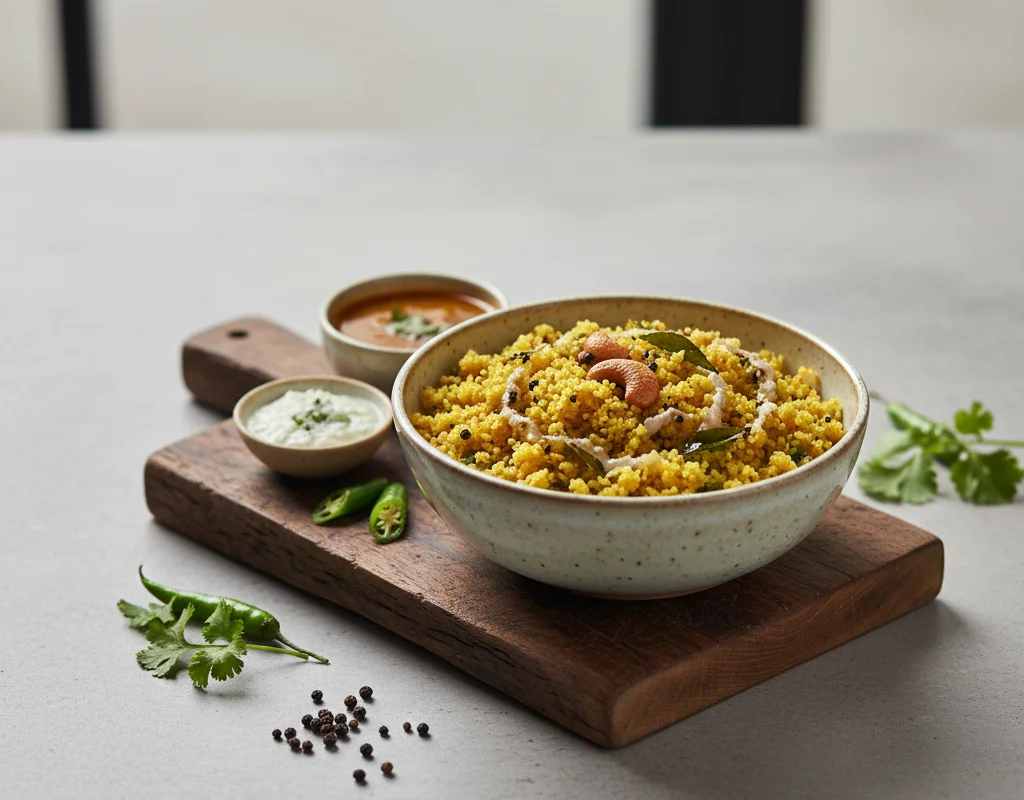
Rava Pongal
A quick and comforting South Indian pongal made with roasted semolina instead of rice. Light yet satisfying, it features the signature tempering of cumin, black pepper, and cashews in ghee. Perfect for a fast breakfast or light dinner.
For 4 servings
- roast · ~4 min
Dry roast the moong dal until golden.
Heat a heavy-bottom kadai over medium-low heat. Add the moong dal and dry roast for 3-4 minutes, stirring continuously until the dal turns golden and aromatic. Transfer to a plate and set aside.
TIPRoast on low heat — high heat will burn the dal before it cooks through. - roast · ~4 min
Roast the semolina until fragrant.
In the same pan, add the semolina and roast over medium heat for 3-4 minutes, stirring constantly until it emits a nutty aroma but remains pale. Transfer to the same plate as the dal.
TIPAvoid browning the rava too much — it should just turn crisp and aromatic. - mix · ~10 min
Cook the dal and semolina together.
Transfer the roasted dal and semolina to a pressure cooker. Add 4 cups of water and salt. Close the lid and pressure cook for 3 to 4 whistles on medium heat. Let the pressure release naturally.
- temper · ~3 min
Prepare the tempering.
1.Heat ghee in a small pan over medium heat.2.Add cumin seeds and black peppercorns; crackle for 30 seconds.3.Add cashew nuts and fry until golden.4.Add slit green chilies, chopped ginger, and curry leaves; sauté for 1 minute.5.Add asafoetida and stir briefly, then turn off the heat. - mix · ~2 min
Combine tempering with the cooked pongal.
Once the pressure has released naturally, open the cooker and gently mash the pongal with a ladle. Pour the tempering over the top and mix everything together until well combined.
- serve
Serve hot with coconut chutney or sambar.
Spoon the hot Rava Pongal into serving bowls and serve immediately with coconut chutney and sambar on the side.
What to keep in mind.
7 tips from the recipe — small details that make a real difference to the final dish.
- 1Roast the moong dal on low heat until just golden to avoid bitterness.
- 2Do not brown the semolina deeply; a light roast gives the right texture.
- 3Natural pressure release prevents the pongal from turning gluey.
- 4Use whole black peppercorns for bursts of heat in every bite.
- 5Gently mash the cooked pongal to a soft, porridge-like consistency.
- 6Add the tempering while the pongal is still hot to infuse the aroma.
- 7For a richer taste, increase ghee slightly when tempering cashews.
Adapt it for your goals.
Vegan
Replace ghee with coconut oil or a neutral oil. Use the same tempering — the result is equally aromatic and plant-based.
low oilLow-oil
Skip the tempering step. Instead, stir in a pinch of asafoetida, cumin powder, and pepper powder directly into the cooked pongal for a lighter version.
high proteinHigh-protein
Increase the moong dal to 1/2 cup and reduce semolina to 3/4 cup for a lentil-forward, protein-rich pongal.
jainJain
Omit onions and garlic (not used here anyway), and replace ghee with oil. Use black pepper sparingly or skip it for a milder version.
Why this is on our healthy list.
Easy to Digest
Moong dal is one of the lightest lentils and, combined with roasted semolina, makes this dish gentle on the stomach.
Good Source of Plant Protein
The moong dal contributes a moderate amount of plant-based protein, making this a filling yet light meal.
Warming Spices for Digestion
Cumin, black pepper, ginger, and asafoetida are traditionally used to stimulate digestion and reduce bloating.
Contains Healthy Fats
Ghee provides healthy fats that support fat-soluble vitamin absorption, and cashews add a small amount of heart-friendly unsaturated fats.
Frequently asked questions
Fine semolina will make the pongal too soft and pasty. Use coarse rava (sooji) for the best texture.


