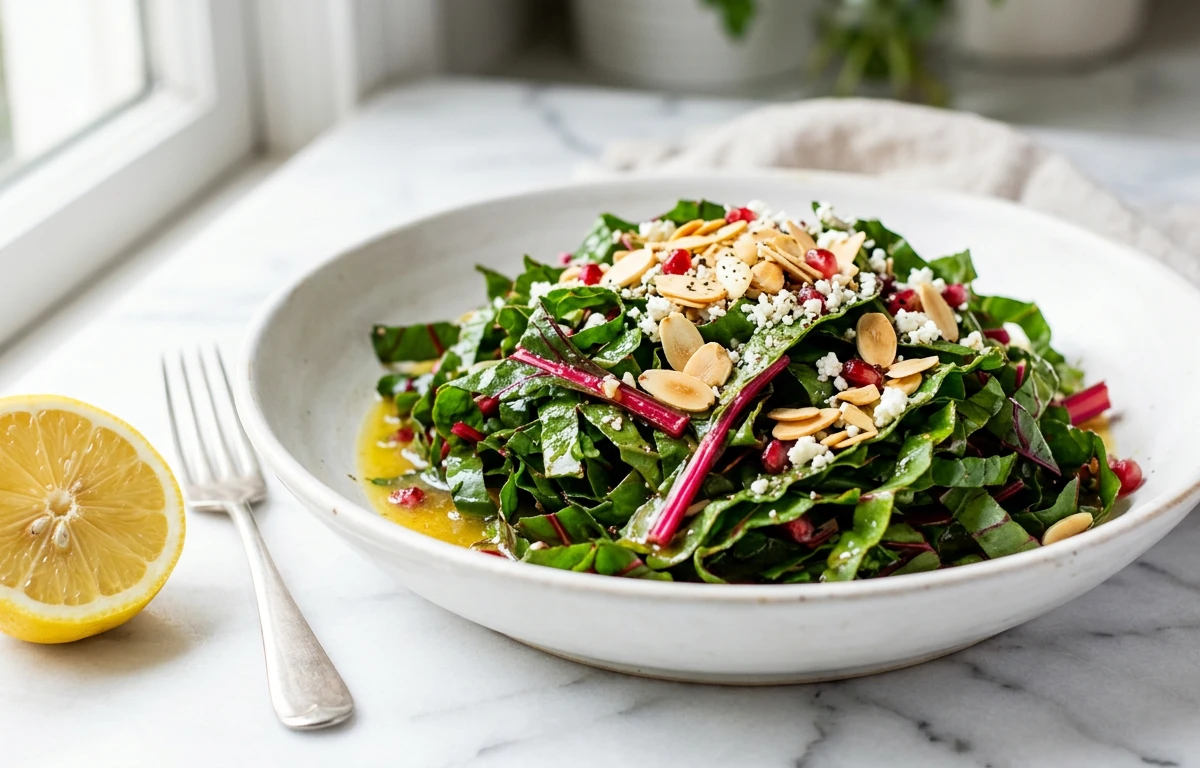
Raw Chard Ribbon Salad
Delicate ribbons of rainbow chard tossed with a bright, tangy lemon dressing and a sprinkle of toasted seeds. This vibrant no-cook salad comes together in minutes and adds a fresh, crisp contrast to rich main dishes, making it a go-to for quick weeknight meals or elegant dinner parties.
For 4 servings
- prep
Prepare the chard ribbons.
1.Wash the rainbow chard bunch thoroughly and pat completely dry with a clean kitchen towel.2.Fold each leaf in half lengthwise and slice off the thick center stem. Discard stems or save for another use.3.Stack the de-stemmed leaves, roll them tightly into a cigar shape, and slice crosswise into thin ribbons about half an inch wide.TIPMake sure the leaves are bone-dry before slicing. Wet leaves make a soggy, diluted salad. - mix
Whisk together the lemon dressing.
1.In a small bowl, combine olive oil, lemon juice, lemon zest, honey, and dijon mustard.2.Add a pinch of salt and a pinch of black pepper.3.Whisk vigorously until the dressing is smooth and emulsified.TIPTaste the dressing and adjust the tang by adding a drop more lemon if needed. - assemble · ~5 min
Toss the salad and let it rest.
Place the chard ribbons in a large mixing bowl. Pour the dressing over the top and toss gently with your hands, massaging the leaves very lightly for about 30 seconds to soften them just a touch. Let the dressed salad sit for 5 minutes at room temperature to allow the flavors to meld and the chard to tenderize slightly.
TIPMassaging chard gently breaks down its slight toughness without making it wilty. - garnish
Garnish with toasted pumpkin seeds and parmesan.
Transfer the salad to a serving platter or individual plates. Scatter the toasted pumpkin seeds over the top and finish with delicate shavings of parmesan cheese. A final crack of black pepper adds a nice finish.
What to keep in mind.
6 tips from the recipe — small details that make a real difference to the final dish.
- 1Pat the chard leaves bone-dry before slicing to prevent a watery dressing.
- 2Slice ribbons as uniformly as possible for even texture and better dressing cling.
- 3Massage the dressed chard gently for 30 seconds to soften its fibrous structure.
- 4Let the salad rest for exactly 5 minutes — longer can make the leaves limp.
- 5Toast pumpkin seeds in a dry pan until they pop and turn fragrant, about 2 minutes.
- 6Use a vegetable peeler to create feather-thin parmesan shavings for a prettier garnish.
Adapt it for your goals.
Vegan
Replace honey with maple syrup or agave, and omit the parmesan or swap for vegan parmesan. The salad stays bright and satisfying.
nutty crunchNutty crunch
Swap pumpkin seeds for toasted sunflower seeds or slivered almonds for a different crunch profile.
herbaceousHerbaceous
Add 1/4 cup of chopped fresh mint, basil, or parsley to the ribbons for an extra layer of freshness.
spicy kickSpicy kick
Add a small pinch of red pepper flakes to the dressing for gentle heat that complements the lemon.
Why this is on our healthy list.
Rich in Vitamins A, C, and K
Rainbow chard delivers a hefty dose of vitamins A, C, and K, supporting eye health, immunity, and bone strength.
Good Source of Magnesium
Chard is naturally high in magnesium, a mineral important for muscle function and relaxation.
Healthy Fats from Seeds and Oil
Olive oil and pumpkin seeds provide heart-friendly unsaturated fats that aid absorption of fat-soluble vitamins.
Frequently asked questions
You can slice the chard ribbons up to a day ahead and store them in a sealed bag in the fridge, but dress and toss the salad no more than 15 minutes before serving to keep it crisp.