Red Lentil Dal with Nigella Seed Tadka
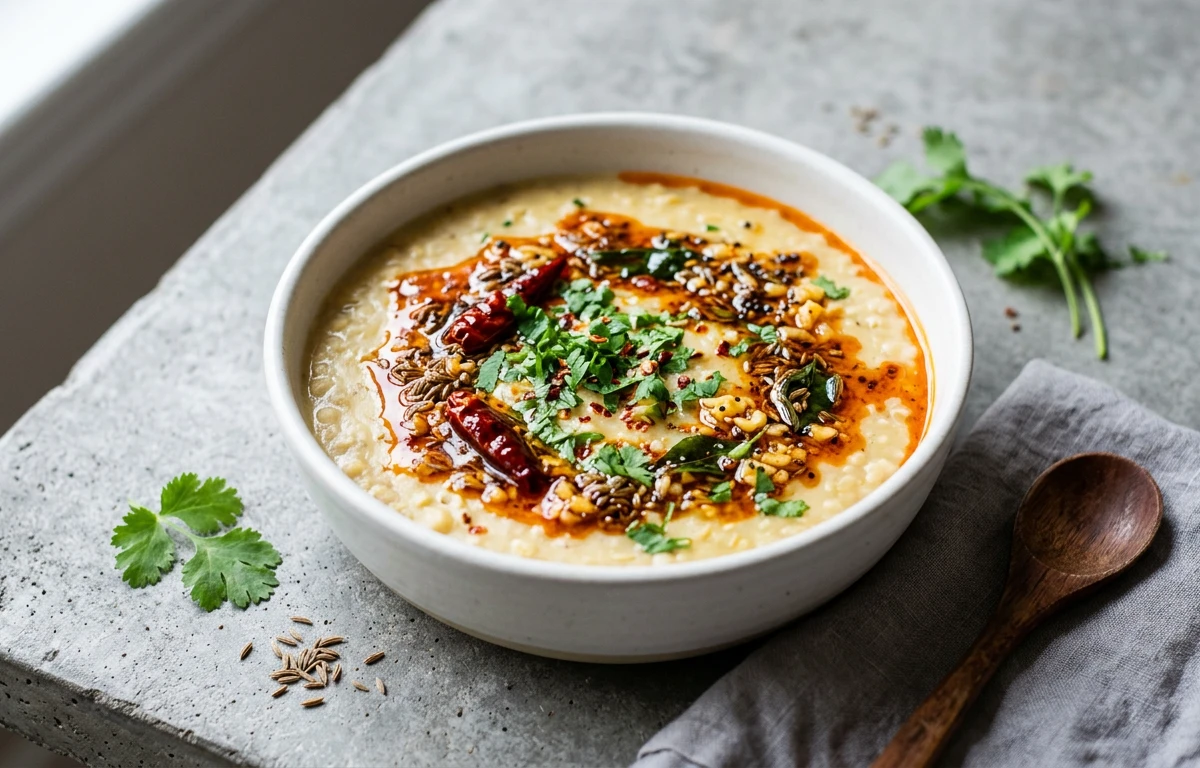
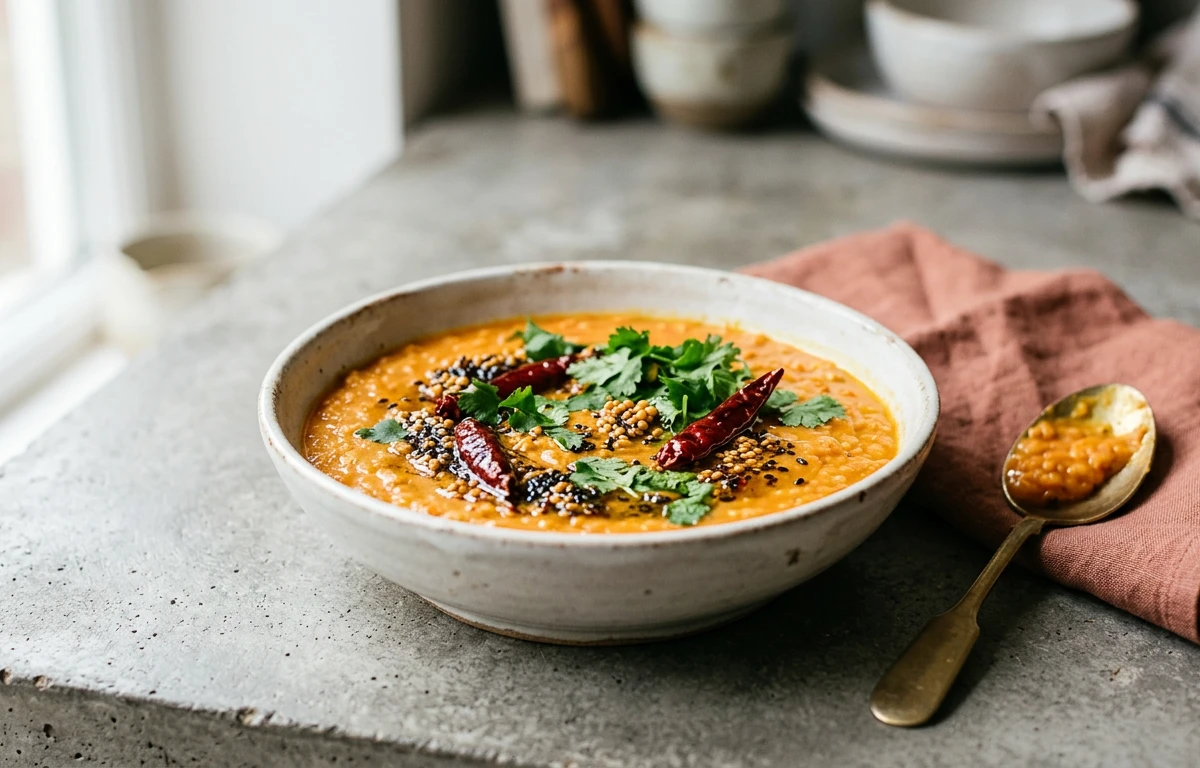
A comforting bowl of creamy red lentils slow-simmered with turmeric and ginger, finished with a crackling tadka of nigella seeds, garlic, and dried red chilies. The nutty, slightly peppery notes of nigella seeds set this dal apart from the everyday tadka dal.
For 4 servings
- prep
Rinse and prep the red lentils.
1.Rinse 1 cup masoor dal in cold water until water runs clear (3-4 changes).2.Grate 1-inch piece of ginger and slit 2 green chilies lengthwise.3.Thinly slice 4 garlic cloves and break 2 dried red chilies in half.TIPRinse the dal thoroughly — skimping leaves a starchy residue that clouds the final dal. - pressure cook · ~15 min
Pressure cook the dal.
1.Add rinsed dal to the pressure cooker with 3 cups water, turmeric powder, salt, grated ginger, and slit green chilies.2.Close the lid and pressure cook on medium heat for 3-4 whistles (about 12-15 min).3.Let the pressure release naturally. Open the lid and whisk the dal vigorously until smooth and creamy.TIPLetting pressure release naturally makes the dal creamier. Don't rush it. - simmer · ~5 min
Adjust consistency and simmer.
1.Check the dal consistency — if too thick, whisk in hot water a splash at a time until it coats the back of a spoon.2.Place the cooker back on low heat and let it simmer gently while you prepare the tadka.TIPThe dal thickens as it sits, so keep it slightly thinner than you think you need. - temper · ~3 min
Make the nigella seed tadka.
1.Heat 2 tbsp ghee in a small tadka pan over medium heat until shimmering.2.Add 1 tsp nigella seeds and let them sizzle and pop (15-20 seconds).3.Add sliced garlic and sauté until golden and fragrant (1-2 minutes).4.Add broken dried red chilies and a pinch of red chili powder. Swirl the pan once, then pour the hot tadka over the simmering dal immediately.TIPPour the tadka into the dal the moment it's sizzling — that crackle on contact releases the essential aromas. - mix
Finish and serve the dal.
1.Stir the tadka gently into the dal — do not over-mix; keep some of the sizzled spices visible on top.2.Remove from heat and squeeze in 1 tbsp fresh lemon juice.3.Garnish with chopped coriander leaves and serve hot.TIPServe immediately while the tadka oil still glistens on the surface.
What to keep in mind.
6 tips from the recipe — small details that make a real difference to the final dish.
- 1Rinse the lentils until the water runs completely clear to avoid a cloudy, starchy dal.
- 2Let the pressure release naturally for a creamier texture; don't use the quick-release method.
- 3Whisk the cooked dal vigorously with a wire whisk to break down the lentils into a silky consistency.
- 4Keep the dal slightly thinner than desired, as it will thicken significantly upon standing.
- 5Pour the sizzling tadka directly over the dal immediately — the crackling sound means the aromatics are being released.
- 6Serve the dal right away while the tadka oil still glistens on the surface for the best aroma.
Adapt it for your goals.
Coconut dal
Add 1/4 cup coconut milk after pressure-cooking the dal and stir through. This adds a rich, creamy sweetness that beautifully balances the spicy tadka, perfect for those who prefer a milder, more indulgent dal.
tomato tadka dalTomato tadka dal
Add 1 medium chopped tomato to the tadka pan and cook until soft before pouring over the dal. The acidity of tomato cuts through the richness of the ghee and adds a bright, tangy layer to the dish.
spinach dalSpinach dal
Stir a generous handful of fresh spinach leaves into the cooked dal just before serving, letting them wilt from the residual heat. This boosts the green vegetable content and adds a subtle earthy flavour.
vegan versionVegan version
Replace the ghee with a neutral oil like coconut or avocado oil. Toast the nigella seeds and garlic in the oil — the tadka remains fragrant and satisfying while keeping the dish entirely plant-based.
Why this is on our healthy list.
Rich in Plant-Based Protein
Red lentils provide a high-quality, low-fat source of protein, making this dal a hearty and satisfying meal for vegetarians and vegans alike.
Excellent Source of Dietary Fiber
The soluble fiber in red lentils supports healthy digestion and helps maintain steady blood sugar levels, keeping you fuller for longer.
Anti-Inflammatory with Turmeric
Turmeric, even in a small pinch, contains curcumin, a potent anti-inflammatory compound that may help reduce inflammation in the body.
Digestive Support from Ginger
Fresh ginger in the dal aids digestion and can help soothe the stomach, especially when combined with lentils.
Nigella Seeds for Antioxidants
Nigella seeds are rich in thymoquinone, a powerful antioxidant that supports overall immune health and adds a unique, peppery flavour.
Frequently asked questions
Yes, simmer the rinsed lentils with 4 cups of water, turmeric, and ginger in a pot. Cook covered on low heat for 25–30 minutes, adding extra water if needed, until the lentils break down and become creamy.



.webp)