
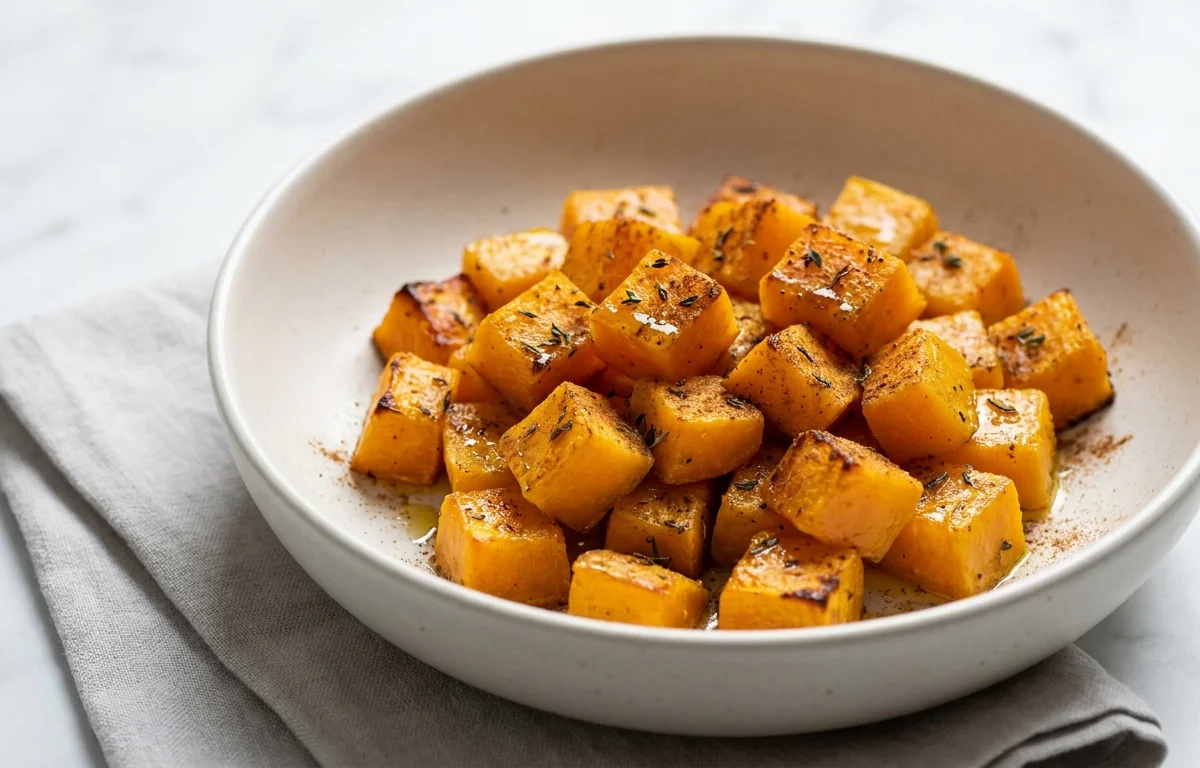
Roasted Butternut Squash
Tender, golden-brown cubes of butternut squash roasted until the edges caramelize and the centers turn buttery-soft. A simple toss with olive oil, salt, and pepper lets the natural sweetness shine through, making it an effortless side dish that pairs beautifully with roasted meats, grain bowls, or holiday spreads.
For 4 servings
- prep
Preheat the oven and prepare the baking sheet.
Preheat the oven to 425°F (220°C). Line a large rimmed baking sheet with parchment paper for easy cleanup.
TIPHigh heat is key — 425°F gives the squash those caramelized, golden edges without turning it mushy. - prep
Peel and cube the butternut squash.
1.Trim both ends off the squash. Peel with a vegetable peeler until the pale orange flesh is fully exposed.2.Cut the squash in half lengthwise and scoop out the seeds with a spoon.3.Cut the flesh into 1-inch cubes, keeping them as even as possible. - mix
Toss the squash with oil and seasonings.
Place the squash cubes in a large bowl. Drizzle with olive oil, then sprinkle with salt, black pepper, minced garlic, and thyme leaves. Toss well until every piece is evenly coated.
TIPDon't overcrowd the bowl — really toss so the oil and seasonings reach every cube. - roast
Spread on the baking sheet in a single layer.
Arrange the seasoned squash cubes on the prepared baking sheet in a single layer with space between them. Crowded cubes will steam instead of roast.
TIPUse two baking sheets if needed — air circulation around each piece is what creates those crispy caramelized edges. - roast · ~35 min
Roast for 30-35 minutes, flipping halfway.
Place the baking sheet on the middle rack. Roast for 15 minutes, then flip the squash with a spatula. Continue roasting another 15-20 minutes until the edges are golden brown and the centers are fork-tender.
TIPWatch closely in the last 5 minutes — the sugars in squash can go from caramelized to burnt quickly. - serve
Serve warm, straight from the oven.
Transfer the roasted squash to a serving bowl. Taste and add an extra pinch of salt or pepper if needed. Serve immediately while the edges are still crisp.
What to keep in mind.
6 tips from the recipe — small details that make a real difference to the final dish.
- 1Peel the squash with a sharp vegetable peeler to remove the tough skin safely.
- 2Cut cubes uniformly to 1 inch so they roast evenly and finish at the same time.
- 3Spread cubes in a single layer with at least ½ inch between them for proper browning.
- 4Flip halfway through roasting to ensure all sides get caramelized and golden.
- 5Let the squash rest on the hot baking sheet for 2 minutes after roasting to set the crust.
- 6Store leftovers in an airtight container in the fridge for up to 4 days; reheat in a 400°F oven to restore crispness.
Adapt it for your goals.
Spicy roasted squash
Add ½ teaspoon of smoked paprika and a pinch of cayenne pepper with the salt for a warm, smoky heat that complements the sweetness.
herb rosemary variationHerb-rosemary variation
Replace the thyme with 1 teaspoon of chopped fresh rosemary for a more earthy, pine-like aroma that pairs well with winter roasts.
balsamic glazedBalsamic-glazed
Drizzle 1 tablespoon of balsamic vinegar over the squash before roasting for a tangy-sweet finish that balances the rich caramel notes.
vegan parmesanVegan parmesan
Sprinkle 2 tablespoons of nutritional yeast over the squash halfway through roasting for a cheesy, umami boost without dairy.
Why this is on our healthy list.
Rich in Vitamin A
Butternut squash is packed with beta-carotene, which the body converts into vitamin A for healthy vision and immune support.
High in Fiber
A serving of roasted butternut squash provides a good amount of dietary fiber, aiding digestion and promoting satiety.
Low in Calories
With only a small amount of olive oil, this dish is a light, nutrient-dense side that fits well into calorie-conscious meals.
Source of Antioxidants
The olive oil and thyme contribute antioxidants that help protect cells from oxidative stress.
Frequently asked questions
Yes, the skin is tough and unpleasant to eat when roasted. Use a vegetable peeler to remove it completely before cubing.


