
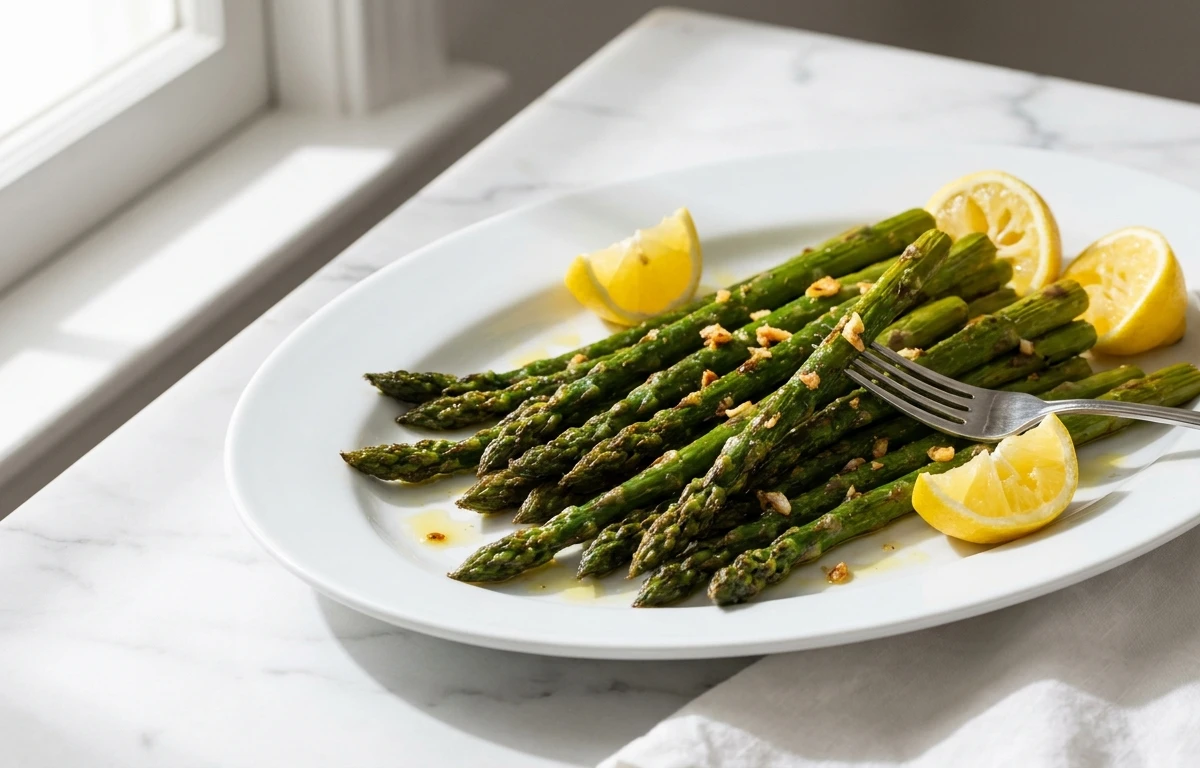
Roasted Lemon Asparagus
Bright, tender asparagus spears roasted until lightly charred and tossed with fresh lemon juice and zest. This quick side dish brings a perfect balance of earthy sweetness and citrusy zing to any meal, ready in under 20 minutes.
For 4 servings
- prep
Preheat the oven and prep the asparagus.
1.Preheat the oven to 425°F (220°C). Line a large rimmed baking sheet with parchment paper.2.Wash the asparagus and pat dry. Snap or trim off the woody bottom ends.3.Zest the lemon and set zest aside. Cut the lemon in half for juicing.TIPTo find the natural breaking point, bend one spear near the bottom — it will snap right where the woody part ends. - mix
Season the asparagus.
1.Spread asparagus spears on the prepared baking sheet in a single layer.2.Drizzle with olive oil and scatter garlic slices over the top.3.Sprinkle with salt and black pepper. Toss gently with your hands to coat evenly.TIPMake sure the spears are in a single layer — overcrowding steams them instead of roasting. - roast · ~11 min
Roast until tender and lightly charred.
Roast in the preheated oven for 10-12 minutes, shaking the pan once halfway through. Asparagus is done when bright green, tender-crisp, and tips have a light char.
TIPThin spears may need only 8 minutes; thick spears can take up to 14. Pierce with a fork to check tenderness. - garnish
Finish with lemon and serve.
1.Transfer roasted asparagus to a serving platter.2.Squeeze fresh lemon juice evenly over the spears.3.Sprinkle with lemon zest and a pinch of red pepper flakes if using.4.Serve immediately.
What to keep in mind.
7 tips from the recipe — small details that make a real difference to the final dish.
- 1Snap one asparagus spear to find the natural woody break point, then trim the rest to match.
- 2Pat the asparagus completely dry after washing to promote charring instead of steaming.
- 3Arrange spears in a single layer with space between them for even browning.
- 4Roast thick spears on the lower rack for extra caramelization without burning tips.
- 5Add the lemon juice only after roasting to keep the asparagus bright and crisp.
- 6Save the lemon zest for the very end — it loses its punch if heated.
- 7Leftover roasted asparagus keeps 2 days in the fridge; reheat in a dry skillet to revive crispness.
Adapt it for your goals.
Low-oil
Reduce olive oil to 1 teaspoon and toss the asparagus with 1 teaspoon of water; use a silicone baking mat instead of parchment to prevent sticking — cuts fat without sacrificing tenderness.
high proteinHigh-protein
Toss 200g of halved cherry tomatoes and 150g of cooked chickpeas onto the baking sheet with the asparagus — the chickpeas add plant protein and the tomatoes provide a juicy burst.
veganVegan
This recipe is already vegan; to add savory depth, sprinkle 1 tablespoon of nutritional yeast over the asparagus during the last 2 minutes of roasting.
low sodiumLow-sodium
Skip the salt and instead season the asparagus with a pinch of onion powder and a squeeze of lemon before roasting — rely on the lemon and black pepper for flavor.
Why this is on our healthy list.
Rich in Folate
Asparagus is a top source of folate, which supports cell growth and red blood cell formation.
High in Vitamin K
A single serving provides a significant amount of vitamin K, important for bone health and blood clotting.
Packed with Antioxidants
Asparagus contains glutathione, a powerful antioxidant that helps the body combat oxidative stress.
Low in Calories
This dish is naturally low-calorie, making it a smart addition to weight-management meals.
Good Source of Fiber
Asparagus provides both soluble and insoluble fiber, supporting digestive regularity and gut health.
Frequently asked questions
Fresh is best for roasting because frozen spears release too much water, leading to steaming. If using frozen, thaw and pat very dry, then roast at 450°F for 10-12 minutes.


