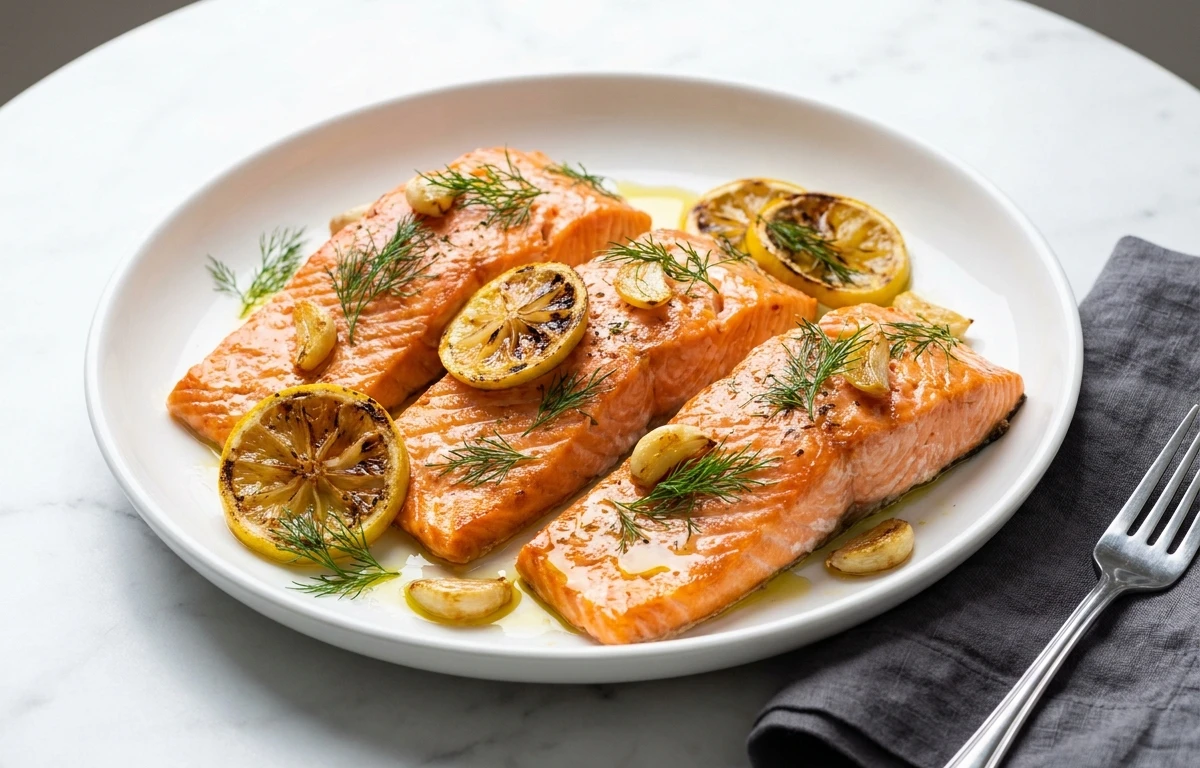
Roasted Lemon-Dill Salmon
Tender, flaky salmon fillets roasted until perfectly moist, topped with a bright, aromatic blend of fresh lemon and dill. A foolproof dinner that feels elegant yet comes together in under 30 minutes with minimal effort.
For 4 servings
- prep
Preheat oven and prepare the baking sheet.
Preheat the oven to 400°F (200°C). Line a baking sheet with parchment paper for easy cleanup.
- prep
Pat the salmon dry and check for bones.
Use paper towels to pat the salmon fillets completely dry. Run your fingers over the flesh to feel for any remaining pin bones and remove them with tweezers.
TIPDry salmon develops a nicer crust and prevents steaming in the oven. - mix
Make the lemon-dill oil.
1.In a small bowl, combine the olive oil, minced garlic, lemon zest, and half the chopped dill.2.Mix well with a spoon until the garlic and herbs are evenly distributed. - prep
Season the salmon.
1.Place the salmon fillets skin-side down on the prepared baking sheet.2.Brush the lemon-dill oil generously over the top and sides of each fillet.3.Season each fillet evenly with salt and black pepper.4.Lay the lemon slices over and around the salmon.TIPLet the salmon sit at room temperature for 10 minutes after seasoning so it cooks evenly. - bake · ~14 min
Roast the salmon until just flaky.
Place the baking sheet in the center of the preheated oven. Roast for 12 to 15 minutes, until the salmon is opaque throughout and flakes easily with a fork. The internal temperature should reach 135°F for medium or 145°F for well done.
TIPWatch closely after 10 minutes — salmon goes from perfectly cooked to overdone very quickly. - garnish
Finish with fresh dill and serve.
Remove the salmon from the oven. Sprinkle the remaining fresh dill over the fillets. Serve immediately with the roasted lemon slices on the side.
What to keep in mind.
6 tips from the recipe — small details that make a real difference to the final dish.
- 1Pat the salmon very dry with paper towels before seasoning to ensure a nice crust and prevent steaming.
- 2Let the seasoned salmon rest at room temperature for 10 minutes before roasting for more even cooking.
- 3Use a fish spatula or thin metal turner to lift the fillets off the parchment — the skin may stick to the pan.
- 4Check doneness at 12 minutes; salmon goes from perfectly flaky to dry in under a minute.
- 5For the juiciest result, pull the salmon at 135°F internal temp (medium) — it will carry-over cook to about 140°F.
- 6Leftover salmon keeps refrigerated for up to 2 days; flake it cold over salads or into pasta.
Adapt it for your goals.
Dairy-free
This recipe is already dairy-free as written — just skip any butter swaps if you're adding extra richness.
low oilLow-oil
Reduce olive oil to 1 tbsp and line the salmon on a silicone baking mat — the fish naturally releases enough fat to stay moist.
herb swapHerb swap
Replace dill with equal amounts of fresh tarragon or parsley for a different aromatic profile — tarragon pairs beautifully with lemon and garlic.
spicySpicy
Add 1/2 tsp red pepper flakes or a drizzle of sriracha to the lemon-dill oil for a subtle heat that complements the salmon's richness.
Why this is on our healthy list.
Rich in Omega-3s
Salmon is an excellent source of omega-3 fatty acids, which support heart and brain health.
High-Quality Protein
Each 150g fillet provides about 30g of complete protein, helping with muscle maintenance and satiety.
Vitamin D Boost
Wild or farmed salmon is one of the few natural food sources of vitamin D, important for bone health and immune function.
Low in Saturated Fat
This dish uses olive oil and lean fish, keeping saturated fat low while delivering healthy monounsaturated fats.
Frequently asked questions
Yes, but thaw them completely in the refrigerator overnight and pat very dry — frozen salmon releases more water and can steam instead of roasting.