Roasted Poha Chivda
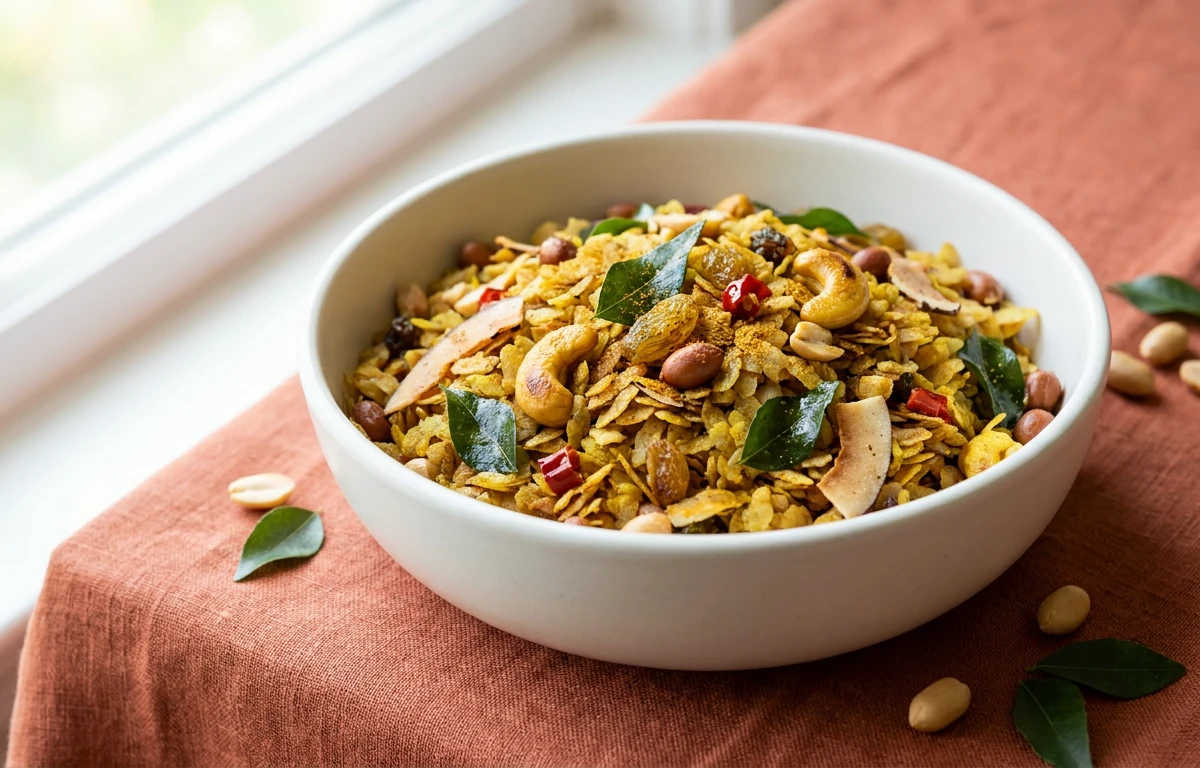
Crispy, golden roasted flattened rice tossed with crunchy peanuts, roasted chana dal, and fragrant curry leaves. This light maharashtrian snack mix is gently spiced and perfect with evening chai. Ready in under 25 minutes with simple pantry ingredients.
For 8 servings
- prep
Spread poha on a clean kitchen towel.
Pick through and remove any husks or impurities. Do not wash — the poha must stay completely dry to crisp properly.
TIPThick poha works best. Thin poha will burn and crumble. - roast · ~8 min
Roast the poha until crisp and lightly golden.
1.Heat a kadhai over low-medium heat. Add the poha.2.Dry roast, stirring continuously, for 6-8 minutes until crisp and very lightly golden.3.The poha should feel crunchy when pressed. Transfer to a large plate and set aside.TIPKeep the heat low and stir constantly. Poha burns in seconds. - roast · ~7 min
Roast peanuts, chana dal, and coconut.
1.In the same kadhai, dry roast peanuts over low heat until speckled and aromatic (3-4 min). Set aside with the poha.2.Dry roast chana dal until golden and nutty (2-3 min). Set aside.3.Dry roast desiccated coconut until just lightly browned (30-45 sec). Set aside.TIPRoast each ingredient separately — they all brown at different speeds. - temper · ~2 min
Make the tempering.
1.Heat oil in the same kadhai over medium heat.2.Add mustard seeds and let them pop completely (30 sec).3.Add cumin seeds, let them sizzle and turn aromatic (15 sec).4.Add slit green chilies and curry leaves. Fry until leaves turn crisp (20 sec).5.Add turmeric powder, give a quick stir.TIPCover the pan loosely when mustard seeds pop — they jump everywhere. - mix · ~3 min
Combine everything and season.
1.Lower heat to the minimum. Add the roasted poha back to the kadhai.2.Add roasted peanuts, chana dal, and coconut.3.Sprinkle red chili powder, salt, and sugar.4.Gently toss everything for 2-3 minutes until well mixed and warmed through.5.Turn off heat. Let the chivda cool completely in the pan.TIPMix gently so the crispy poha flakes don't break. - serve
Cool completely and store or serve.
Let the chivda cool to room temperature — it gets crunchier as it cools. Transfer to an airtight container. Stays crisp for up to 2 weeks.
TIPDon't seal the container until the chivda is fully cool, or trapped steam will soften it.
What to keep in mind.
6 tips from the recipe — small details that make a real difference to the final dish.
- 1Always use thick, unwashed poha; thin poha will burn and crumble during dry roasting.
- 2Dry roast each ingredient separately since peanuts, chana dal, and coconut brown at different rates.
- 3Keep the heat low when roasting poha and stir continuously — it can go from golden to burnt in seconds.
- 4Let the chivda cool completely before storing; any trapped steam will make it soft and chewy.
- 5Cover the pan loosely when mustard seeds start to pop to prevent them from jumping out.
- 6Toss the poha gently when mixing to avoid breaking the delicate flakes into powder.
Adapt it for your goals.
Low-oil
Reduce oil to 1 tablespoon and use a non-stick pan for tempering. The chivda will be slightly less glossy but still crisp and flavourful.
high proteinHigh-protein
Add 2 tablespoons of roasted pumpkin seeds and 1 tablespoon of roasted sunflower seeds after tempering for extra protein and crunch.
jainJain
Skip the garlic and onion (none present here). Avoid peanuts if observant — many Jains do not eat underground vegetables — and replace with extra chana dal and cashews.
veganVegan
This chivda is naturally vegan — no dairy or animal products are used. Confirm the desiccated coconut is unsweetened and oil is plant-based.
nut freeNut-free
Replace peanuts with an equal quantity of roasted chana dal or roasted moong dal. The flavour shifts to a more lentil-forward taste and is entirely nut-free.
Why this is on our healthy list.
Rich in Plant Protein
Peanuts and chana dal together provide a solid plant-based protein boost, making this snack more satisfying than plain puffed rice.
Good Source of Healthy Fats
Peanuts and oil deliver heart-friendly unsaturated fats that help absorb fat-soluble nutrients from the curry leaves and turmeric.
Low in Added Sugar
With just half a teaspoon of optional sugar, this snack is far lower in sweeteners than most commercial crisps or namkeen.
Antioxidant-Rich Spices
Turmeric and curry leaves are known for their antioxidant and anti-inflammatory properties, adding flavour and wellness benefits.
Naturally Gluten-Free
Poha (flattened rice) is made from rice and contains no wheat, making this chivda a safe snack for those avoiding gluten.
Frequently asked questions
No — this recipe uses unwashed poha. Washing adds moisture that prevents crisping and makes the chivda soft. Dry roasting is all you need.



.webp)