Roasted Pumpkin Wedges with Sage
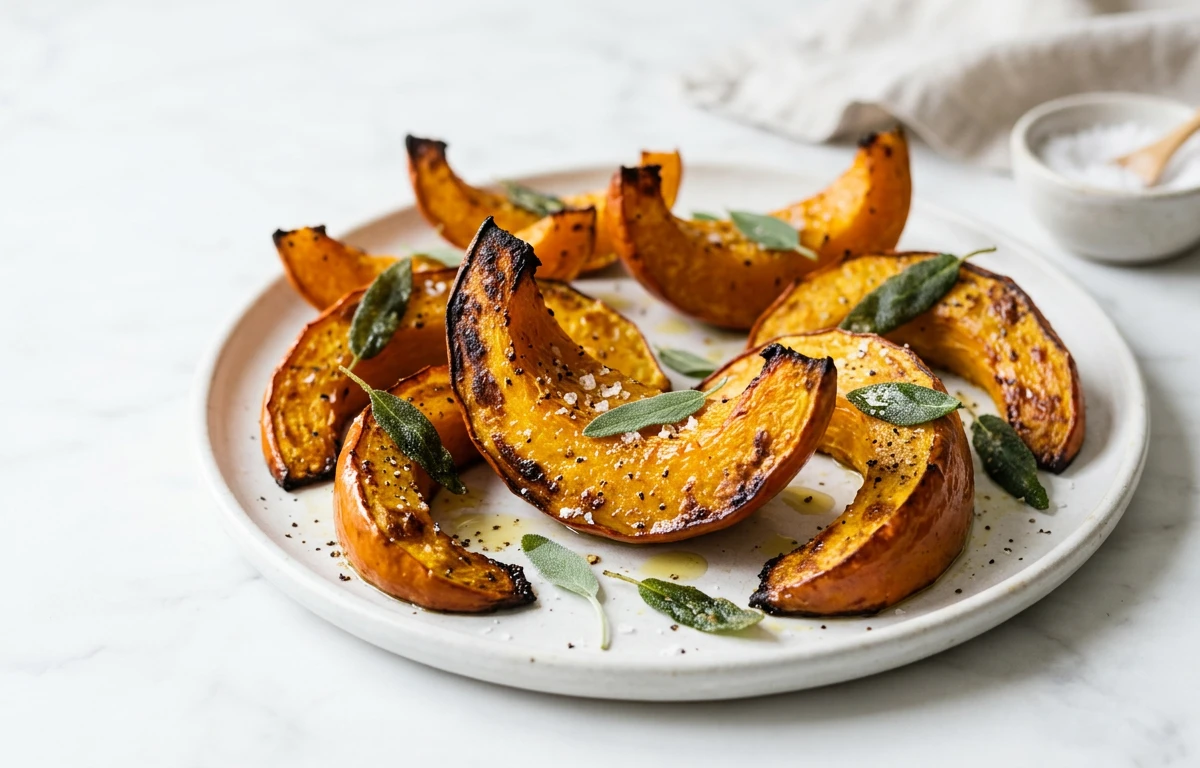
Caramelized edges and tender centers make these roasted pumpkin wedges irresistible. Fresh sage leaves turn wonderfully crispy in the oven, infusing the pumpkin with an earthy, aromatic flavor. A simple, rustic side dish that celebrates autumn produce at its finest.
For 4 servings
- prep
Preheat the oven and prep the pumpkin.
1.Preheat oven to 400°F (200°C) and line a large baking sheet with parchment paper.2.Wash the pumpkin, cut it in half, and scoop out the seeds with a spoon.3.Cut each half into 2-inch thick wedges, leaving the skin on.TIPSugar pumpkins work best here. Avoid large carving pumpkins — they are watery and bland. - mix
Toss the pumpkin with oil and seasonings.
1.Place pumpkin wedges in a large bowl.2.Drizzle with olive oil and sprinkle with salt and black pepper.3.Toss well with your hands to coat every wedge evenly.TIPGet oil on all surfaces. Dry spots won't caramelize and will steam instead. - roast
Arrange on the baking sheet and add aromatics.
1.Spread the wedges in a single layer on the prepared baking sheet, cut side down.2.Tuck the smashed garlic cloves and sage leaves among the pumpkin wedges.3.Make sure the sage leaves are coated with a little oil so they crisp, not burn.TIPCrowding the pan steams rather than roasts. Use two trays if needed. - roast · ~35 min
Roast until caramelized and tender.
Roast for 20 minutes, then flip the wedges. Continue roasting another 15 minutes until the pumpkin is deeply golden at the edges and fork-tender. The skin should be blistered and the sage leaves crispy.
TIPDon't rush the flip. Wait until the bottoms release easily from the parchment. - serve
Serve warm, topped with crispy sage.
Transfer to a serving platter. Scatter the crispy sage leaves and roasted garlic cloves over the top. Finish with a light sprinkle of flaky salt if you like.
TIPSqueeze the roasted garlic out of its skin and spread it onto the pumpkin — it's soft, sweet, and buttery.
What to keep in mind.
6 tips from the recipe — small details that make a real difference to the final dish.
- 1Leave the skin on pumpkin wedges—it becomes tender and adds texture.
- 2Arrange wedges cut-side down for maximum caramelization and browning.
- 3Don't flip the wedges until they release easily from the parchment paper.
- 4Use two baking sheets if needed to avoid overcrowding and ensure crisp edges.
- 5Make ahead: Roast wedges, then reheat in a 400°F oven for 5 minutes to restore crispness.
- 6Store leftovers in an airtight container in the fridge for up to 3 days.
Adapt it for your goals.
Spicy
Add 1/2 teaspoon of red pepper flakes or a pinch of cayenne with the salt and pepper for a warm, spicy kick.
herb swapHerb swap
Substitute fresh rosemary or thyme sprigs for the sage leaves for a different aromatic profile.
sweet & savorySweet & savory
Drizzle with balsamic glaze or pomegranate molasses after roasting for a tangy-sweet finish.
low oilLow-oil
Use a spray bottle to lightly coat the wedges with oil, reducing the amount to 1 tablespoon while still achieving browning.
dairy freeDairy-free
Serve with a sprinkle of nutritional yeast or toasted pumpkin seeds for a cheesy, nutty flavor without dairy.
Why this is on our healthy list.
Rich in Vitamin A
Pumpkin is packed with beta-carotene, which the body converts into vitamin A, supporting eye health and immune function.
High in Fiber
With the skin left on, these wedges provide dietary fiber that aids digestion and helps maintain steady blood sugar levels.
Antioxidant Properties
Sage and garlic contribute antioxidant compounds that may help reduce inflammation and oxidative stress.
Low-Calorie Side
A naturally low-calorie, nutrient-dense option that pairs well with lean proteins for a balanced meal.
Frequently asked questions
Yes, but avoid large carving pumpkins. Use sugar pumpkins, butternut squash, or kabocha squash for best texture and sweetness.