Roasted Salmon Fillets
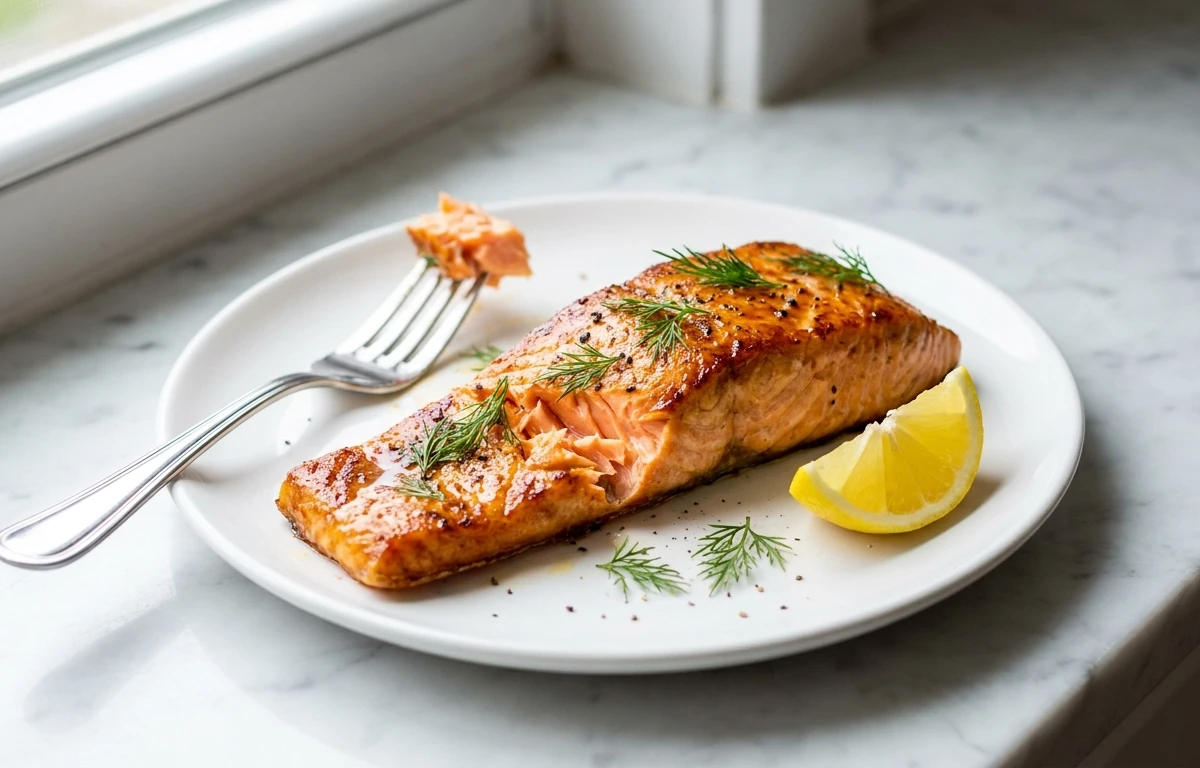
Flaky, tender salmon fillets with a beautifully caramelized top, roasted simply in the oven with lemon, garlic, and fresh herbs. A quick, foolproof way to get perfectly cooked salmon on the table in under 30 minutes.
For 4 servings
- prep
Preheat the oven and prepare the baking sheet.
1.Preheat oven to 400°F (200°C).2.Line a baking sheet with parchment paper or aluminum foil for easy cleanup. - mix
Make the lemon-herb mixture.
In a small bowl, combine olive oil, minced garlic, lemon juice, dijon mustard, dried dill, salt, and black pepper. Whisk until well blended.
TIPRoom temperature lemon juice blends better with the oil; take the lemon out 30 minutes ahead. - prep
Season the salmon fillets.
1.Place salmon fillets skin-side down on the prepared baking sheet, leaving space between each.2.Pat the top of the fillets dry with a paper towel.3.Spoon the lemon-herb mixture evenly over the top of each fillet, spreading to coat.TIPDrying the surface helps the topping adhere and encourages better browning. - bake · ~15 min
Roast the salmon.
Place baking sheet on the middle rack and roast until the salmon is opaque and flakes easily with a fork, about 12 to 15 minutes. The internal temperature should reach 145°F (63°C) at the thickest part.
TIPStart checking at 10 minutes — thinner fillets cook faster. The salmon will carry-over cook another 1-2 minutes after removal. - garnish
Finish and serve.
1.Remove from oven and let the salmon rest on the sheet for 2 minutes.2.Garnish with fresh chopped parsley and serve with lemon slices on the side.
What to keep in mind.
6 tips from the recipe — small details that make a real difference to the final dish.
- 1Pat the salmon fillets dry before applying the herb mixture to ensure the seasoning sticks and the surface browns beautifully.
- 2Space the fillets at least 2 cm apart on the baking sheet to allow hot air to circulate evenly for consistent cooking.
- 3Check doneness at 10 minutes for thinner fillets; the fish will carry-over cook by 1-2 minutes once out of the oven.
- 4Use room-temperature lemon juice (sit out 30 minutes) so it blends seamlessly with the olive oil and mustard.
- 5Let the salmon rest on the baking sheet for 2 minutes after roasting to redistribute juices and avoid dry flakes.
- 6For easy cleanup, line the pan with parchment paper — the caramelized bits lift right off without sticking.
Adapt it for your goals.
Herb-swap
Replace dried dill with dried thyme or oregano for a Mediterranean twist, and garnish with fresh basil or chives instead of parsley — ideal for pairing with roasted tomatoes or olives.
spicy kickSpicy kick
Add 1/2 teaspoon smoked paprika and a pinch of cayenne to the lemon-herb mixture for a warm, smoky heat that complements the salmon's richness.
maple mustard glazeMaple-mustard glaze
Replace the lemon juice with 1 tablespoon maple syrup and increase Dijon mustard to 2 teaspoons for a sweet-savory glaze that caramelizes deeply under the broiler for the last 2 minutes.
low oilLow-oil
Reduce olive oil to 1 tablespoon and add 2 tablespoons of low-sodium chicken or vegetable broth to the herb mix — you'll still get moisture and flavor with fewer calories.
citrus herb with orangeCitrus-herb with orange
Substitute the lemon juice with fresh orange juice and add 1/2 teaspoon orange zest for a sweeter, less acidic citrus note; garnish with fresh dill instead of parsley.
Why this is on our healthy list.
Rich in Omega-3s
Salmon is naturally packed with long-chain omega-3 fatty acids EPA and DHA, which support heart and brain health.
High-Quality Protein
Each 110g fillet provides a generous amount of complete protein to aid muscle repair and satiety.
Garlic Supports Immunity
Fresh garlic contains compounds like allicin that may help support the immune system when eaten as part of a balanced diet.
Low in Saturated Fat
This recipe uses only 2 tablespoons of olive oil per four servings, keeping saturated fat minimal while adding heart-friendly monounsaturated fats.
Frequently asked questions
The salmon is done when it flakes easily with a fork and the internal temperature at the thickest part reaches 145°F (63°C). Start checking at 10 minutes.