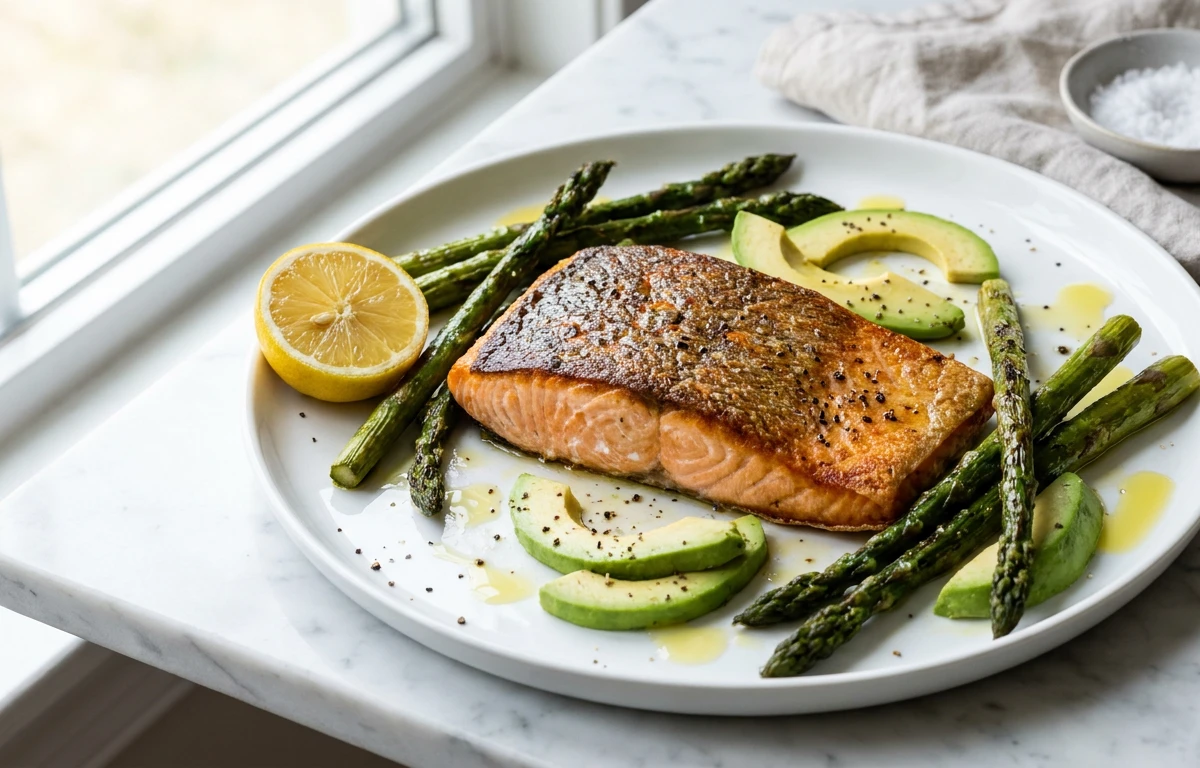
Roasted Salmon with Asparagus & Avocado
Tender, flaky salmon fillets roasted alongside crisp-tender asparagus, then topped with creamy avocado. A vibrant, healthy sheet-pan dinner that comes together in under 30 minutes with minimal cleanup. Bright lemon and fresh dill tie everything together beautifully.
For 4 servings
- prep
Preheat oven and prep the sheet pan.
1.Preheat oven to 200°C (400°F).2.Line a large rimmed sheet pan with parchment paper. - prep
Season the salmon and asparagus.
1.Pat salmon fillets dry with paper towels and place on one side of the sheet pan.2.Arrange asparagus on the other side in a single layer.3.Drizzle olive oil over salmon and asparagus.4.Scatter minced garlic evenly. Season everything with salt and black pepper.5.Lay lemon slices over the salmon fillets. - roast · ~15 min
Roast until salmon flakes easily.
Place the sheet pan in the preheated oven. Roast for 12-15 minutes, until salmon is opaque and flakes easily with a fork, and asparagus is tender but still bright green with a slight bite.
TIPFor perfectly cooked salmon, aim for an internal temperature of 63°C (145°F). If fillets are thick, add 2-3 minutes. - assemble
Add avocado and finish.
1.Remove sheet pan from oven. Discard lemon slices.2.Scatter diced avocado over the salmon and asparagus.3.Squeeze fresh lemon juice over everything.4.Sprinkle with chopped fresh dill.TIPAdd the avocado after roasting so it stays fresh, creamy, and bright green. - serve
Serve immediately.
Divide salmon, asparagus, and avocado among four plates. Spoon any pan juices over the top and serve warm.
What to keep in mind.
6 tips from the recipe — small details that make a real difference to the final dish.
- 1Pat the salmon completely dry before seasoning to ensure a crisp, browned exterior.
- 2Arrange asparagus in a single layer and avoid overlapping so they roast evenly, not steam.
- 3Use a ripe but firm avocado; dice just before serving so it doesn't turn mushy or brown.
- 4For thick salmon fillets, check doneness at the thickest part — 63°C (145°F) internal temp is ideal.
- 5Let the roasted salmon rest 2 minutes after removing from oven so juices redistribute.
- 6Leftovers keep in the fridge up to 1 day; reheat salmon gently to avoid drying it out.
Adapt it for your goals.
Herb swap
Replace dill with fresh parsley, chives, or tarragon — each herb brings a different brightness that complements the salmon and avocado.
low oilLow-oil
Reduce olive oil to 1 tablespoon and use a nonstick sheet pan or silicone mat; the natural fats in salmon and avocado keep the dish moist.
high proteinHigh-protein
Serve over a bed of quinoa or farro to add extra protein and fiber while soaking up the pan juices.
jainJain
Omit the garlic (as per Jain dietary restrictions) and add a pinch of asafoetida (hing) for a similar savory depth without onion/garlic.
Why this is on our healthy list.
Rich in Omega-3s
Salmon provides a high concentration of heart-healthy omega-3 fatty acids, which support brain function and reduce inflammation.
Good Source of Folate
Asparagus is packed with folate, a B vitamin essential for cell growth and DNA repair, especially beneficial during pregnancy.
Healthy Fats from Avocado
Avocado contributes monounsaturated fats that help absorb fat-soluble vitamins and promote cardiovascular health.
Low in Refined Carbs
This dish is naturally low in carbohydrates and free of refined grains, making it suitable for low-carb and balanced eating patterns.
Frequently asked questions
Yes, but thaw it completely in the refrigerator overnight and pat very dry before seasoning; add 2-3 minutes of roasting time if fillets are thicker.