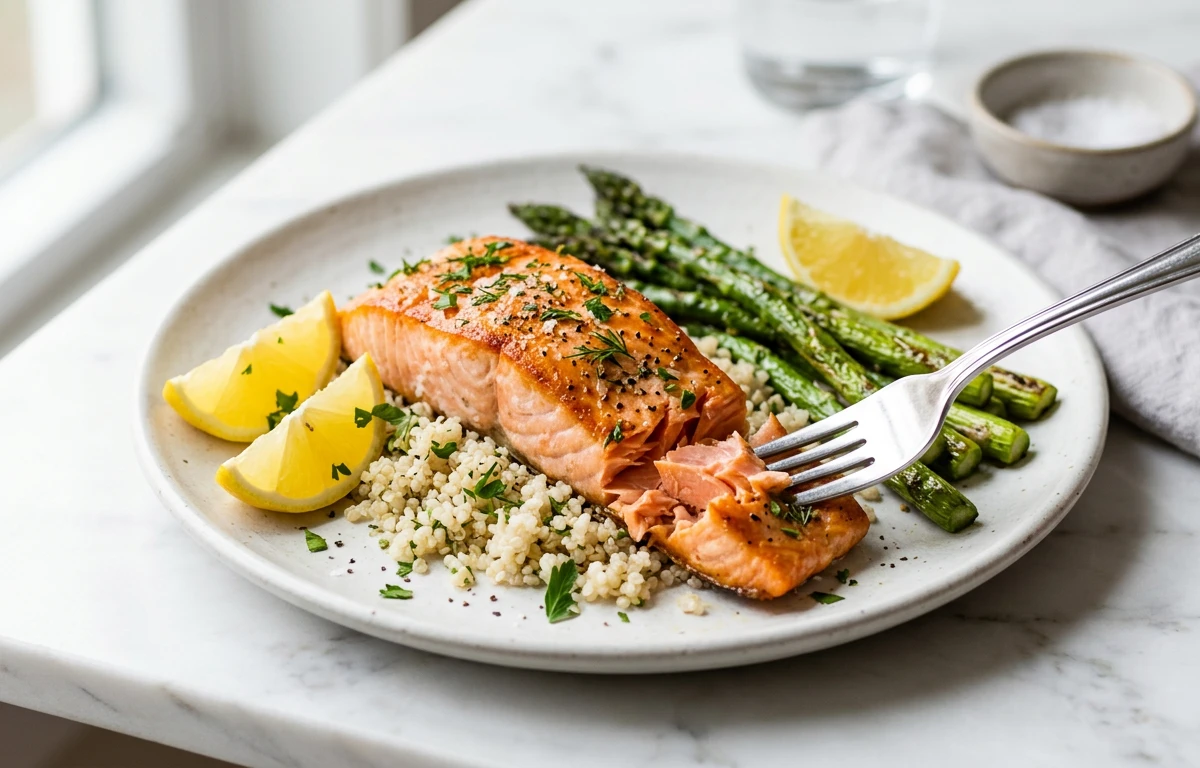
Roasted Salmon with Lemon & Asparagus
Tender, flaky salmon fillets roasted alongside crisp-tender asparagus spears, brightened with fresh lemon and a touch of garlic. This one-pan dinner feels elegant but comes together in just 25 minutes with minimal cleanup. The high-heat roast gives the salmon a delicate crust while keeping the inside buttery and moist.
For 4 servings
- prep
Preheat oven and prepare the sheet pan.
Heat oven to 425°F (220°C). Line a large rimmed sheet pan with parchment paper for easy cleanup.
- prep
Season the salmon and asparagus.
1.Pat salmon fillets dry with paper towels.2.Toss asparagus spears with 1 tablespoon olive oil, half the minced garlic, a pinch of salt, and a pinch of black pepper.3.Spread asparagus in a single layer on one half of the sheet pan. - prep
Arrange salmon on the pan.
1.Brush salmon fillets with remaining 1 tablespoon olive oil.2.Rub the remaining minced garlic over the salmon.3.Season evenly with salt and black pepper.4.Place salmon fillets skin-side down on the empty side of the sheet pan.5.Lay lemon slices on and around the salmon. - roast · ~12 min
Roast until salmon is cooked through.
Roast for 10-12 minutes, until salmon flakes easily with a fork and reaches an internal temperature of 135-140°F for medium. Asparagus should be tender-crisp and lightly charred at the tips.
TIPFor a golden crust, switch the oven to broil for the last 1-2 minutes. Watch closely to avoid burning. - garnish
Finish with fresh lemon and dill.
1.Drizzle the fresh lemon juice over the salmon and asparagus.2.Scatter chopped fresh dill on top.3.Serve immediately straight from the sheet pan.
What to keep in mind.
6 tips from the recipe — small details that make a real difference to the final dish.
- 1Pat salmon fillets completely dry before seasoning to ensure a golden crust.
- 2Place asparagus in a single layer with space between spears for even roasting.
- 3Use an instant-read thermometer to check salmon doneness: 135-140°F for medium.
- 4If asparagus is very thick, blanch it for 1 minute in boiling water before roasting.
- 5Switch to broil for the last minute if you want a slightly crisper salmon top.
- 6Store leftovers in an airtight container in the fridge for up to 2 days; reheat gently.
Adapt it for your goals.
Herb-crusted
Mix 2 tablespoons of fresh chopped parsley and 1 teaspoon of dried thyme with the garlic before rubbing onto the salmon for an earthy, aromatic twist.
low carbLow-carb
Replace asparagus with zucchini ribbons or broccoli florets; cooking time remains similar, making it perfect for keto or low-carb diets.
spicySpicy
Add 1/2 teaspoon of red pepper flakes to the olive oil before brushing the salmon for a gentle heat that complements the lemon.
dairy free pestoDairy-free pesto
Swap the dill garnish for a spoonful of dairy-free pesto (basil, pine nuts, olive oil, and nutritional yeast) for a richer, nutty flavor.
Why this is on our healthy list.
Rich in Omega-3s
Salmon is packed with omega-3 fatty acids, which support heart and brain health.
Good Source of Vitamin K
Asparagus provides vitamin K, important for bone health and blood clotting.
High-Quality Protein
Each serving of salmon delivers about 30 grams of protein, aiding muscle repair and satiety.
Low in Saturated Fat
This dish uses only a small amount of olive oil, keeping saturated fat low while adding beneficial monounsaturated fats.
Frequently asked questions
Yes, thaw it completely in the fridge overnight and pat very dry to avoid excess moisture during roasting.