
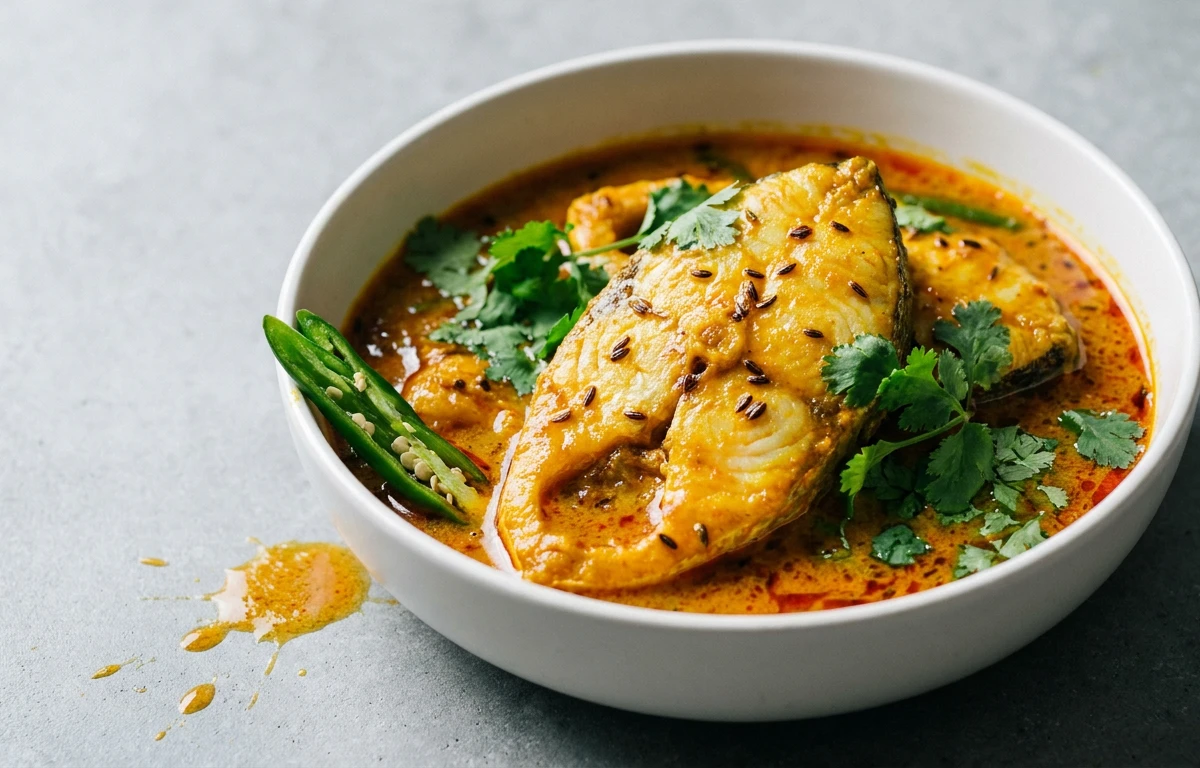
Rohu Fish Curry
Tender, flaky rohu fish steaks gently simmered in a light, aromatic mustard-turmeric gravy. This Bengali-style fish curry is bright with mustard oil, green chilies, and a touch of tomato tang — pure comfort food ladled over hot rice.
For 4 servings
- prep · ~10 min
Marinate the fish.
1.Pat the rohu steaks completely dry with a kitchen towel.2.Rub both sides with 0.25 tsp salt and 1 pinch turmeric powder.3.Let the fish rest for 10 minutes at room temperature.TIPDry fish ensures a good sear and prevents sticking to the pan. - fry · ~8 min
Shallow-fry the fish and potatoes.
1.Heat 2 tbsp mustard oil in a kadai over medium-high heat until it just reaches the smoking point — then lower the flame slightly.2.Carefully slide in the marinated fish steaks and fry for 1.5 minutes per side until light golden. Remove with a slotted spoon and set aside.3.In the same oil, add the halved potatoes. Fry until lightly browned on all sides (3-4 minutes). Remove and set aside.TIPGetting mustard oil to its smoking point removes the raw pungency — don't skip this step. - saute · ~11 min
Build the aromatic base.
1.In the same pan with the remaining oil, add the sliced onions. Sauté until soft and golden (5-7 minutes).2.Add the minced garlic and ginger paste. Cook for 1 minute until the raw smell fades.3.Add the chopped tomatoes. Cook until they turn soft and mushy, about 3 minutes.TIPScrape up the browned bits from frying the fish — they add deep flavor to the gravy. - saute · ~1 min
Cook the spice masala.
1.Lower the heat and add 1 pinch turmeric powder, 1 pinch red chili powder, 1 tsp cumin powder, and 1 tsp coriander powder.2.Stir continuously for 30 seconds to toast the spices without burning.3.Add 2-3 tablespoons of water if the masala sticks to the pan.TIPToasting the powdered spices on low heat wakes up their essential oils and deepens the curry flavor. - simmer · ~14 min
Simmer the gravy with potatoes.
1.Pour in 2 cups of hot water and add 0.25 tsp salt. Stir well.2.Gently drop in the fried potatoes and slit green chilies.3.Bring to a boil, then reduce the heat, cover, and simmer for 12 minutes until the potatoes are fork-tender.TIPSimmering the potatoes in the gravy lets them absorb the spiced liquid from the inside out. - simmer · ~6 min
Finish with the fish.
1.Gently slide the fried fish steaks into the simmering gravy, submerging them partially.2.Simmer uncovered for 5-6 minutes so the fish absorbs the gravy without breaking.3.Taste and adjust the seasoning if needed. Turn off the heat.TIPDon't over-stir once the fish is in — rohu steaks are delicate and will flake apart. - garnish · ~2 min
Garnish and serve hot.
Scatter fresh chopped coriander leaves over the curry and let it rest for 2 minutes. Serve straight from the pan with steamed rice.
TIPThe curry tastes even better after resting 15-20 minutes — the flavors settle and the fish absorbs more gravy.
What to keep in mind.
7 tips from the recipe — small details that make a real difference to the final dish.
- 1Always heat mustard oil until it reaches the smoking point to mellow its sharp pungency.
- 2Pat the rohu steaks completely dry before marinating for a better sear and to prevent sticking.
- 3Fry the fish on medium-high heat for just 1.5 minutes per side to keep the flesh tender and flaky.
- 4Simmer the potatoes in the gravy first so they absorb the spices before you add the delicate fish.
- 5Slip the fried fish into the gravy gently and do not stir once added to keep the steaks intact.
- 6Let the finished curry rest for 15-20 minutes off the heat — the flavors deepen and the fish absorbs more liquid.
- 7If reheating, warm the curry on low heat and avoid boiling to prevent the fish from breaking apart.
Adapt it for your goals.
Low-oil
Replace shallow-frying with pan-searing the fish in a non-stick skillet using just 1 teaspoon of mustard oil, and skip frying the potatoes altogether — add them raw to the gravy and simmer 5 minutes longer. This cuts oil significantly while keeping authentic flavor.
high proteinHigh-protein
Swap the potatoes for 200g of paneer cubes (fried until golden) or 200g of boiled chickpeas. This reduces carbs and boosts protein, making the curry more suitable for a low-carb or post-workout meal.
veganVegan
Replace rohu fish with 300g of firm tofu or king oyster mushrooms sliced into thick steaks. Marinate and fry them exactly like the fish — they absorb the mustard-turmeric gravy beautifully and provide a satisfying texture.
jainJain
Omit garlic and onion entirely; increase ginger paste to 2 teaspoons and add a pinch of asafoetida (hing) with the tomatoes. The curry remains aromatic and flavorful while adhering to Jain dietary restrictions.
Why this is on our healthy list.
Rich in Omega-3s from Rohu
Rohu carp is a freshwater fish naturally high in omega-3 fatty acids, which support heart health, reduce inflammation, and promote brain function.
Anti-Inflammatory Spices
Turmeric, ginger, and cumin in the gravy provide natural anti-inflammatory compounds like curcumin and gingerol, aiding digestion and joint health.
Good Source of Lean Protein
Rohu fish offers high-quality, low-fat protein essential for muscle repair, satiety, and overall body maintenance.
Potassium from Potatoes
Potatoes add a significant dose of potassium, which helps regulate blood pressure and supports proper nerve and muscle function.
Vitamin C and Lycopene from Tomatoes
Tomatoes contribute vitamin C for immune support and lycopene, a powerful antioxidant linked to reduced risk of chronic diseases.
Frequently asked questions
Yes, substitute with firm white fish like catfish, tilapia, or sea bass. Adjust cooking time — thinner fillets need only 3-4 minutes in the gravy.




-curry.webp)
.webp)