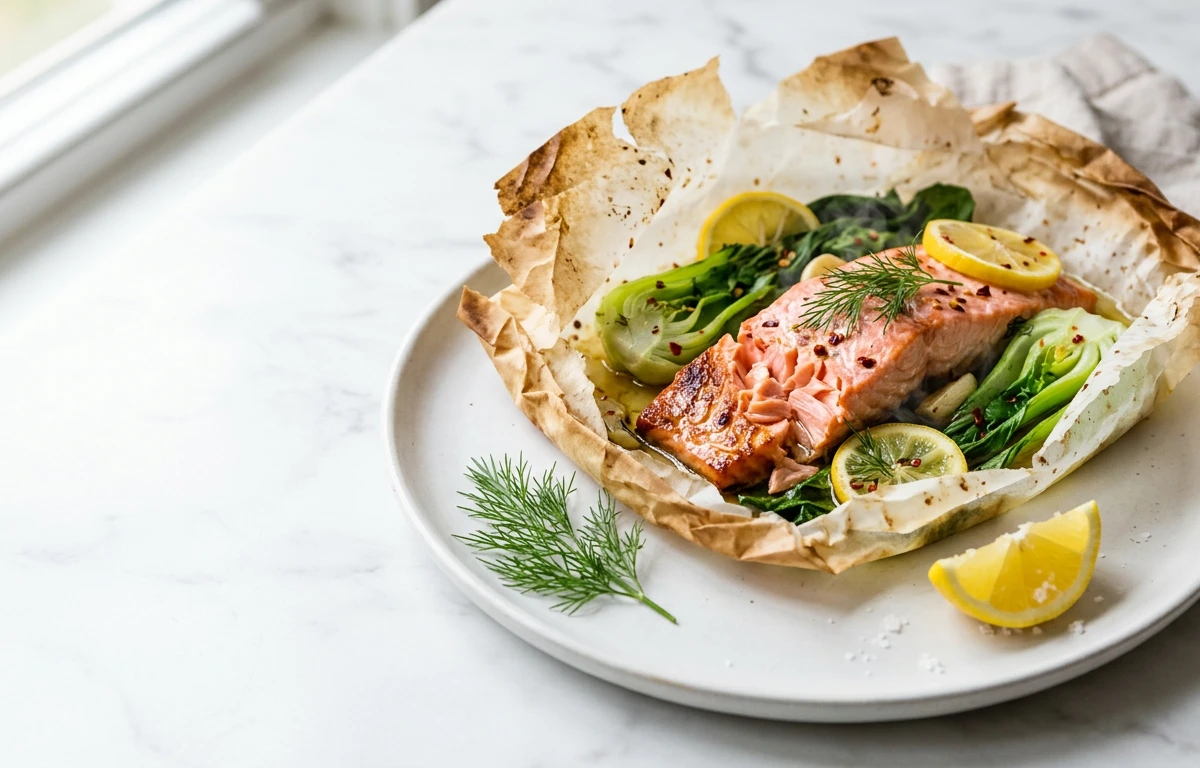
Salmon & Bok Choy Parchment Packet
Flaky, tender salmon fillets steamed in parchment paper with crisp bok choy and a delicate ginger-garlic aroma. The packet locks in all the moisture, creating its own fragrant sauce. A light, healthy dinner that feels fancy but comes together in minutes.
For 4 servings
- prep
Preheat the oven and cut parchment.
Preheat oven to 400°F (200°C). Cut 4 large squares of parchment paper, about 15 inches each. Fold each square in half to create a crease, then open it back up.
- mix
Mix the aromatic sauce.
1.In a small bowl, whisk together soy sauce, sesame oil, and rice vinegar.2.Season with a pinch of salt and crack in the black pepper. - assemble
Assemble the parchment packets.
1.Place a bed of bok choy halves on one half of each parchment sheet, near the crease.2.Scatter julienned carrot, sliced garlic, and julienned ginger over the bok choy.3.Place a salmon fillet on top of the vegetables on each packet.4.Drizzle the soy-sesame mixture evenly over each salmon fillet.TIPArrange vegetables in a flat, even layer so everything steams at the same rate. - assemble
Seal the parchment packets.
1.Fold the empty half of the parchment over the salmon and vegetables.2.Starting at one corner, make small overlapping folds along the open edge to create a tight seal.3.Twist the final corner tightly to lock in steam.TIPMake sure the folds are tight — this traps the steam and cooks the fish gently. - bake · ~18 min
Bake the packets.
Place the sealed packets on a baking sheet. Bake on the middle rack for 15 to 18 minutes, until the salmon is just cooked through and flakes easily with a fork.
TIPPeek into one packet at 15 minutes — salmon should be opaque and separate into flakes. - serve
Garnish and serve immediately.
Carefully open each packet — watch for the hot steam. Scatter sliced scallions over the salmon, add a lemon wedge on the side, and serve right in the parchment.
TIPServe the packets directly on plates for a dramatic presentation at the table.
What to keep in mind.
7 tips from the recipe — small details that make a real difference to the final dish.
- 1Cut parchment sheets large enough to allow room for folding and sealing.
- 2Pat salmon fillets dry before assembling to help the sauce cling better.
- 3Arrange bok choy in a single layer so it cooks evenly with the fish.
- 4Fold and crimp parchment edges tightly to trap steam and prevent leaking.
- 5Check doneness at 15 minutes: salmon should flake easily and be opaque.
- 6Serve packets on individual plates and let guests open them at the table.
- 7Leftover cooked salmon keeps refrigerated for up to 2 days, but best warm.
Adapt it for your goals.
Low-oil
Replace sesame oil with a splash of vegetable broth or mirin to cut fat while keeping moisture and sweetness.
high proteinHigh-protein
Swap bok choy for broccoli florets or snap peas for extra fiber and a heartier texture without adding carbs.
jainJain
Omit garlic and onion-family vegetables; use asafoetida (hing) and extra ginger for a Jain-friendly savory base.
veganVegan
Substitute salmon with thick slices of firm tofu or king oyster mushrooms and bake 20-22 minutes for a plant-based pouch.
spicySpicy
Add one thinly sliced red chili or a teaspoon of chili crisp to the sauce for a spicy kick that complements the ginger.
Why this is on our healthy list.
Rich in Omega-3s
Salmon provides heart-healthy omega-3 fatty acids that support brain function and reduce inflammation.
Low-Carb Meal
This dish contains no grains or starches, making it suitable for low-carb and keto-friendly diets.
Packed with Vitamins
Bok choy is loaded with vitamins A, C, and K, plus calcium and iron for bone and immune health.
High-Quality Protein
Each salmon fillet delivers about 30g of lean protein, aiding muscle repair and satiety.
Frequently asked questions
Yes, but thaw them completely in the refrigerator and pat dry before assembling to avoid excess water in the packet.