
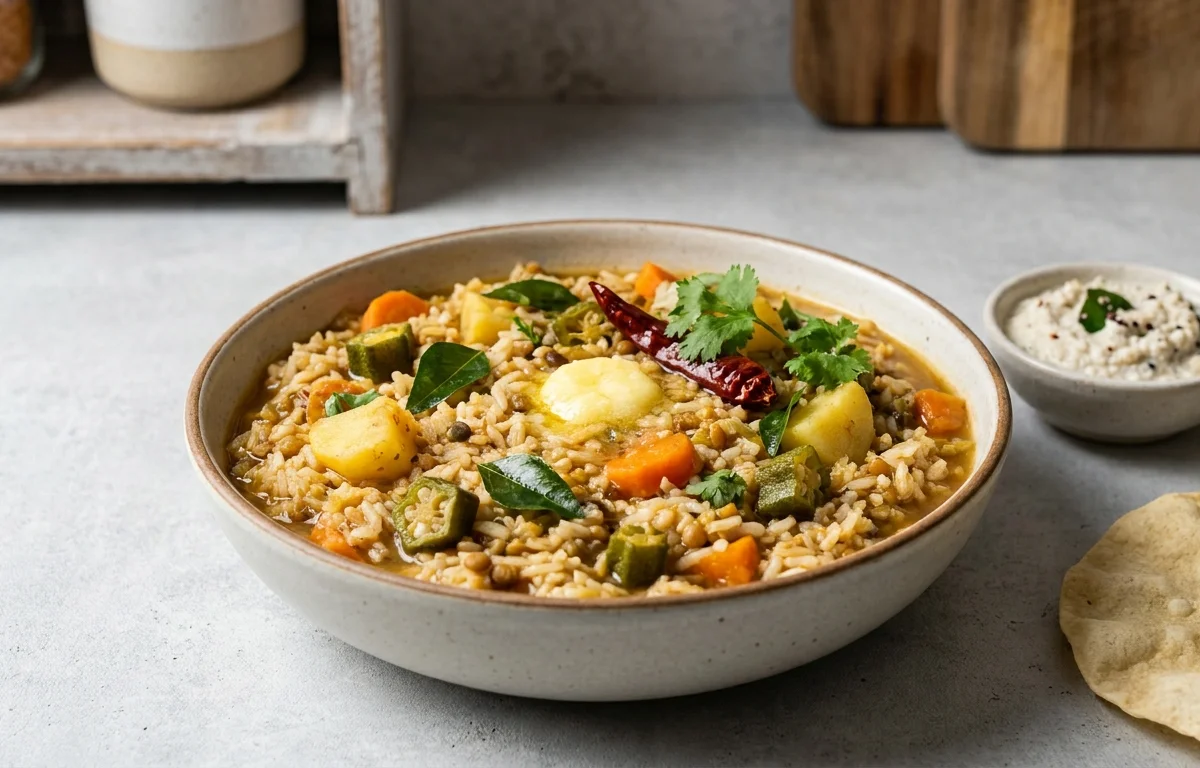
Sambar Rice
A comforting one-pot meal that brings together fluffy rice and hearty lentil-laden sambar in perfect harmony. Studded with vegetables and finished with a fragrant tempering of mustard seeds, curry leaves, and asafoetida, this South Indian classic hits all the right notes of tangy, savory, and mildly spiced.
For 4 servings
- prep
Soak the dal and rice.
1.Wash toor dal thoroughly and soak in water for 30 minutes.2.Wash sona masoori rice and soak in water separately for 20 minutes.3.Drain both before cooking.TIPSoaking dal softens it and helps it cook evenly with the rice. - temper · ~2 min
Temper the whole spices.
1.Heat oil in a pressure cooker over medium heat.2.Add mustard seeds and let them splutter (30 sec).3.Add cumin seeds, asafoetida, curry leaves, and dried red chili. Sauté until fragrant (20 sec).TIPAsafoetida burns quickly — keep the heat medium and move fast. - saute · ~8 min
Sauté the aromatics and vegetables.
1.Add chopped onion and sauté until translucent (3-4 min).2.Add turmeric powder, red chili powder, and sambar powder. Stir for 30 sec to bloom the spices.3.Add chopped tomatoes, carrot, drumstick pieces, and diced eggplant. Cook for 2 min, stirring occasionally.4.Add salt and the tamarind water. Cook for 1 min more.TIPDon't skip blooming the spice powders — it removes any raw taste and deepens the sambar flavor. - pressure cook · ~15 min
Pressure cook the rice, dal, and vegetables together.
1.Add the drained rice and drained toor dal to the cooker.2.Pour in 4.5 cups of water and stir everything well.3.Close the lid and pressure cook on medium heat for 3 whistles (approx 12-15 min).4.Let the pressure release naturally — don't force-open.TIPNatural pressure release is key — forcing it open makes the rice mushy and unevenly cooked. - mix · ~2 min
Mash and mix the sambar rice.
Once the pressure drops, open the lid. The rice and dal will be soft and cooked through. Gently mash everything together with the back of a ladle until well combined but not completely smooth — some texture is nice.
- garnish · ~1 min
Finish with ghee and coriander leaves.
Drizzle ghee over the hot sambar rice, sprinkle with chopped coriander leaves, and gently fold once more. Serve hot.
TIPThe ghee added at the end lifts the entire dish — don't skip it.
What to keep in mind.
6 tips from the recipe — small details that make a real difference to the final dish.
- 1Soaking toor dal for at least 30 minutes ensures it cooks to the same softness as the rice.
- 2Bloom the sambar powder in oil for 30 seconds to remove raw taste and deepen flavor.
- 3Let the pressure release naturally — forcing it open makes the rice mushy.
- 4Use a heavy ladle to gently mash the cooked rice and dal; leave some texture for a better mouthfeel.
- 5Add ghee only at the very end to preserve its nutty aroma and richness.
- 6Adjust tamarind paste to your preferred level of tanginess before pressure cooking.
Adapt it for your goals.
Low-oil
Reduce oil to 1 tablespoon for the tempering and skip the final ghee drizzle — the sambar powder and vegetables still provide plenty of flavor.
high proteinHigh-protein
Add 1/2 cup of cubed paneer or boiled soy chunks along with the vegetables for an extra protein boost that pairs well with the sambar spices.
jainJain
Omit onion, garlic, and carrot; use only tomato, eggplant, and drumstick, and substitute asafoetida for any missing allium flavor.
veganVegan
Skip the ghee finish and use coconut oil for the tempering — the dish remains completely plant-based and just as flavorful.
Why this is on our healthy list.
Rich in Plant Protein
Toor dal (split pigeon peas) provides a good source of plant-based protein, which supports muscle repair and keeps you full longer.
High in Dietary Fiber
The combination of lentils, vegetables (carrot, eggplant, drumstick), and rice supplies both soluble and insoluble fiber for healthy digestion.
Packed with Antioxidants
Turmeric, curry leaves, and tamarind are rich in antioxidants that help combat oxidative stress and support overall immunity.
Naturally Low in Fat
This one-pot meal uses minimal oil and ghee, making it a heart-friendly option when prepared as directed.
Frequently asked questions
Yes, you can substitute with masoor dal (red lentils) or moong dal (split yellow gram) — just note they cook faster and may need slightly less water.


