
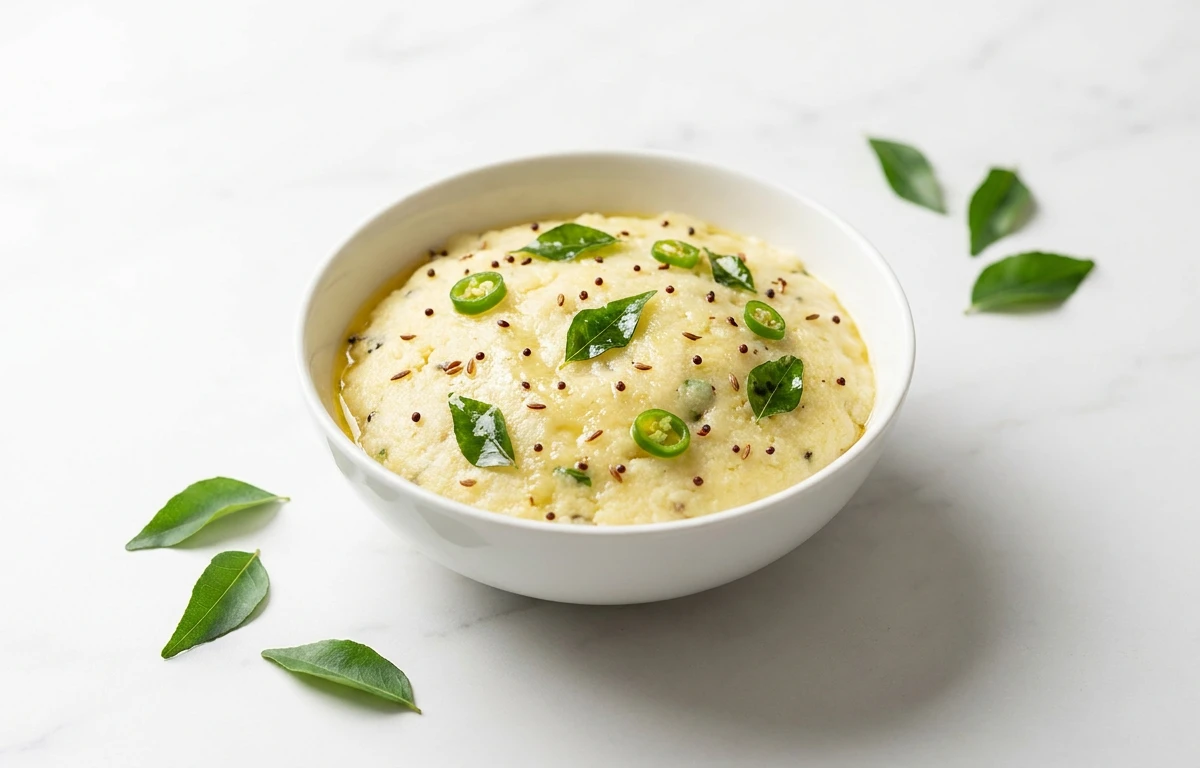
Sattvic Upma
A light, fluffy semolina porridge made without onion or garlic, staying true to sattvic principles. Fresh ginger, green chilies, and curry leaves provide warmth, while crunchy cashews and urad dal add texture. A gentle squeeze of lemon and fresh coconut finish this peaceful bowl in just 20 minutes.
For 4 servings
- roast · ~4 min
Dry roast the semolina.
Heat a heavy-bottomed pan over medium-low heat. Add semolina and dry roast for 3-4 minutes, stirring continuously, until it turns aromatic and just starts to change color to pale golden. Do not brown it. Transfer to a plate and set aside.
TIPStir constantly — semolina can burn in seconds. The moment you smell a nutty aroma, it is done. - boil · ~5 min
Bring water to a boil.
In a separate saucepan or kettle, bring 2.5 cups of water to a rolling boil. Keep it hot and ready; adding hot water prevents lumps when mixed with roasted semolina.
- temper · ~2 min
Make the sattvic tempering.
1.Heat ghee and oil together in the same pan over medium heat.2.Add mustard seeds and let them splutter for 10 seconds.3.Add cumin seeds, urad dal, and chana dal. Sauté until the lentils turn light golden, about 30 seconds.4.Add cashew nuts and fry until they turn lightly golden, about 30 seconds.5.Add chopped ginger, green chilies, and curry leaves. Sauté for 30 seconds until fragrant.TIPKeep the heat at medium — sattvic cooking avoids burnt spices, which add bitterness and rajasic energy. - saute · ~3 min
Sauté the vegetables.
1.Add finely diced carrot to the pan and sauté for 2 minutes until slightly softened.2.Add green peas and sauté for another 1 minute.TIPKeeping the vegetables finely diced ensures they cook quickly and evenly alongside the upma. - mix · ~1 min
Combine semolina with the tempering.
Lower the heat to minimum. Add the roasted semolina to the tempered mixture in the pan. Stir gently for 30 seconds to coat all semolina grains with the aromatic ghee mixture.
TIPTurning the heat down before adding semolina prevents it from clumping or scorching when hot water hits it. - simmer · ~7 min
Add hot water and cook covered.
1.Pour the boiling water into the pan in a steady stream while stirring continuously with the other hand.2.Add salt and stir well to break any lumps.3.Cover the pan with a tight-fitting lid and cook on low heat for 4-5 minutes.4.Open the lid and stir once. Cover again and cook for another 1-2 minutes until all water is absorbed and the upma is fluffy.TIPPour the water in a thin, steady stream while stirring — this is the most important step to avoid lumps. Do not dump all the water at once. - mix · ~2 min
Fluff and finish the upma.
Turn off the heat. Add fresh lemon juice and gently fluff the upma with a fork. Cover again and let it rest for 2 minutes so the flavors settle.
TIPUsing a fork instead of a spoon keeps the semolina grains separate and airy. - garnish
Garnish with fresh coconut and cilantro. Serve warm.
Transfer the sattvic upma to serving bowls. Sprinkle generously with freshly grated coconut and chopped cilantro. Serve warm with a side of coconut chutney or a wedge of lemon.
TIPFresh coconut lifts the sattvic quality and adds a sweet, gentle richness that balances the warming spices.
What to keep in mind.
7 tips from the recipe — small details that make a real difference to the final dish.
- 1Dry roast semolina on medium-low heat until fragrant but not browned to ensure a fluffy texture.
- 2Pour boiling water in a thin stream while stirring to prevent lumps from forming.
- 3Keep the tempering at medium heat to avoid burning spices, which adds bitterness.
- 4Let the upma rest covered for 2 minutes after cooking to allow grains to absorb steam and fluff up.
- 5Use a fork to fluff the final upma instead of a spoon for separate, airy grains.
- 6Freshly grated coconut and lemon juice should be added just before serving for maximum brightness.
- 7Store leftover upma in an airtight container in the fridge for up to 2 days; reheat with a splash of water.
Adapt it for your goals.
Gluten-free
Replace semolina with roasted rice rava (idli podi) or buckwheat semolina for a gluten-free version that still cooks into a soft, fluffy porridge.
veganVegan
Substitute ghee with an equal amount of coconut oil or more cold-pressed oil for a fully plant-based, sattvic upma.
high proteinHigh-protein
Boost protein by adding a handful of roasted peanuts or cooked yellow moong dal along with the semolina, perfect for a post-workout breakfast.
simpleSimple
Skip the vegetables and coconut for a minimalist sattvic upma that lets the roasted semolina and tempering shine; ideal for a light evening meal.
Why this is on our healthy list.
Easy to Digest
Semolina is light on the stomach, and the absence of onion and garlic aligns with sattvic guidelines for calm, clear digestion.
Rich in Plant-Based Protein
Urad dal and chana dal add a modest protein boost, while cashews contribute healthy fats and essential minerals like magnesium.
High in Antioxidants
Curry leaves are rich in antioxidants and anti-inflammatory compounds, supporting overall wellness with each serving.
Frequently asked questions
Lumps form when semolina is added to cold water or when water is poured too quickly; always use boiling water and pour in a thin stream while stirring.


