Satvik Vegetable Sabzi
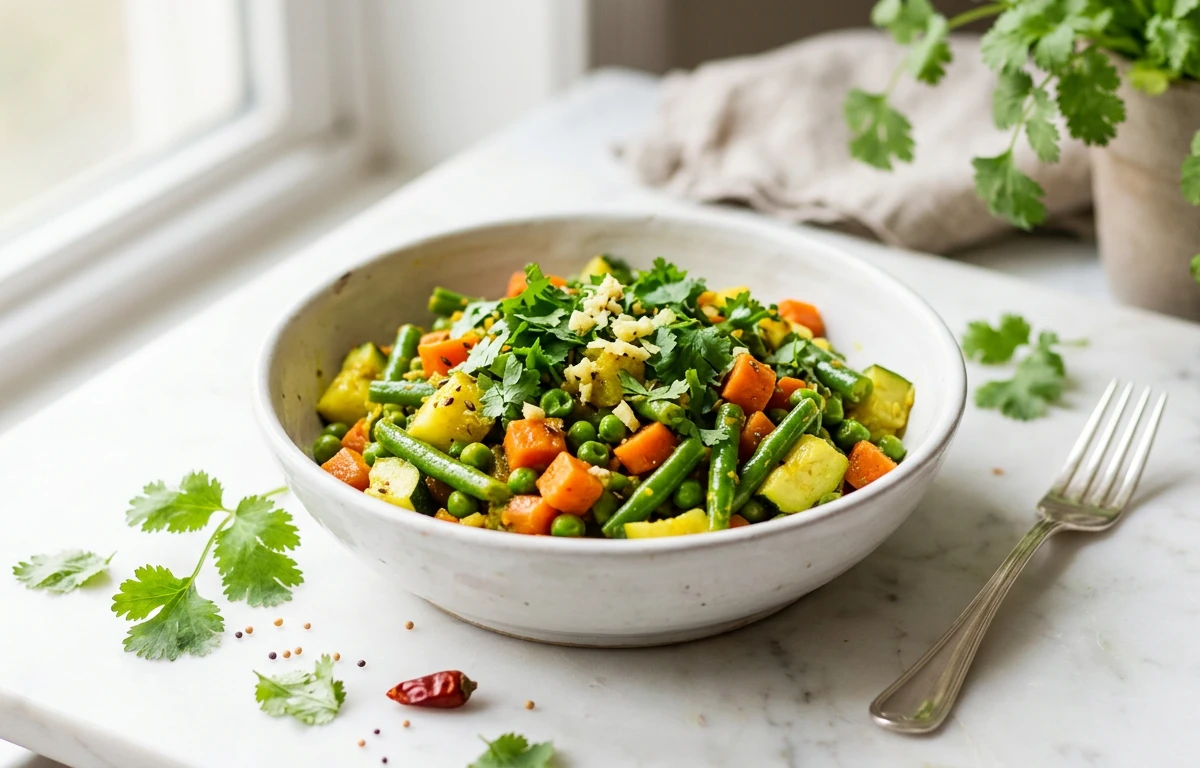
A light, gently spiced vegetable medley cooked without onion or garlic, following satvik dietary principles. Seasonal vegetables are simmered with cumin, ginger, and mild green chilies until tender, then finished with a splash of lemon. This pure, easily digestible sabzi pairs beautifully with roti or steamed rice for a wholesome meal.
For 4 servings
- prep · ~10 min
Steam the vegetables.
1.Place potato, carrot, green beans, peas, and cauliflower in a steamer basket.2.Steam over boiling water for 8-10 minutes until just fork-tender.3.Remove from heat and set aside.TIPDon't overcook — the vegetables will finish cooking in the pan. They should still have a slight bite. - temper · ~2 min
Make the tempering.
1.Heat ghee in a kadai over medium heat until warm and fragrant.2.Add cumin seeds and let them splutter (30 seconds).3.Add julienned ginger and slit green chilies, sauté for 30 seconds until aromatic.TIPKeep the heat medium — satvik cooking avoids browning or burning. You want the ginger to soften, not crisp. - saute
Bloom the spice powders.
1.Lower the heat completely.2.Add turmeric powder, cumin powder, coriander powder, and black pepper.3.Sauté for 15-20 seconds until fragrant, stirring constantly to prevent burning.TIPIf the spices stick, add a splash of water. Burnt spices turn bitter and ruin the delicate flavor. - saute · ~2 min
Toss in the steamed vegetables.
1.Add all steamed vegetables to the pan.2.Sprinkle salt evenly over the top.3.Add 3 tablespoons of water and gently toss to coat vegetables with the spice mixture. - simmer · ~5 min
Simmer until flavors meld.
1.Cover the pan with a lid and cook on low heat for 4-5 minutes.2.Open the lid, give it a gentle stir, and check that vegetables are cooked through.3.Cook uncovered for 1 more minute if any excess moisture remains.TIPThe gentle steam finishes the cooking. The sabzi should look glossy from the ghee, not swimming in liquid. - garnish · ~1 min
Finish with lemon and cilantro.
1.Turn off the heat.2.Squeeze fresh lemon juice over the sabzi.3.Sprinkle chopped cilantro on top and give a final gentle toss. - serve
Serve hot with roti or steamed rice.
What to keep in mind.
7 tips from the recipe — small details that make a real difference to the final dish.
- 1Steam vegetables until just fork-tender; they will cook further in the pan and become mushy if overcooked.
- 2Keep the heat medium-low when tempering—satvik cooking avoids browning or burning the ghee or ginger.
- 3Add a splash of water if spice powders stick to the pan; burnt spices turn bitter and ruin the delicate flavor.
- 4Use a heavy-bottomed kadai or pan for even heat distribution and to prevent the sabzi from scorching.
- 5Finish with lemon juice off the heat so its bright acidity stays fresh and doesn't cook away.
- 6For best texture, cut all vegetables into similarly sized pieces so they steam evenly.
- 7This sabzi can be made ahead and stored in the fridge for up to 2 days; reheat gently on low heat with a splash of water.
Adapt it for your goals.
Vegan
Replace ghee with an equal amount of coconut oil or a neutral vegetable oil. The nutty aroma of coconut oil complements the cumin and ginger beautifully, while keeping the dish fully plant-based.
low oilLow-oil
Reduce ghee to 1/2 tablespoon and use a non-stick pan. Steam the vegetables until fully tender, then skip the oil-rich simmer and simply toss them with the bloomed spices and a splash of veggie broth.
seasonal veg swapSeasonal veg swap
Substitute any of the listed vegetables with equal amounts of seasonal produce like zucchini, bell peppers, or sweet potato. Adjust steaming time based on density—softer veggies like zucchini need only 4-5 minutes.
Why this is on our healthy list.
Rich in Dietary Fiber
The combination of carrots, green beans, peas, and cauliflower provides a hearty dose of fiber, supporting healthy digestion and prolonged satiety.
Onion-Garlic Free & Easily Digestible
Following satvik principles, this sabzi omits onion and garlic, making it gentle on the stomach and suitable for those following a low- FODMAP or Ayurvedic diet.
Packed with Antioxidants
Turmeric, ginger, and cilantro are all rich in antioxidant compounds that help combat oxidative stress and support overall wellness.
Frequently asked questions
Yes, simply thaw and pat them dry before steaming to remove excess moisture. Reduce steaming time by 2-3 minutes since frozen vegetables are often pre-blanched.