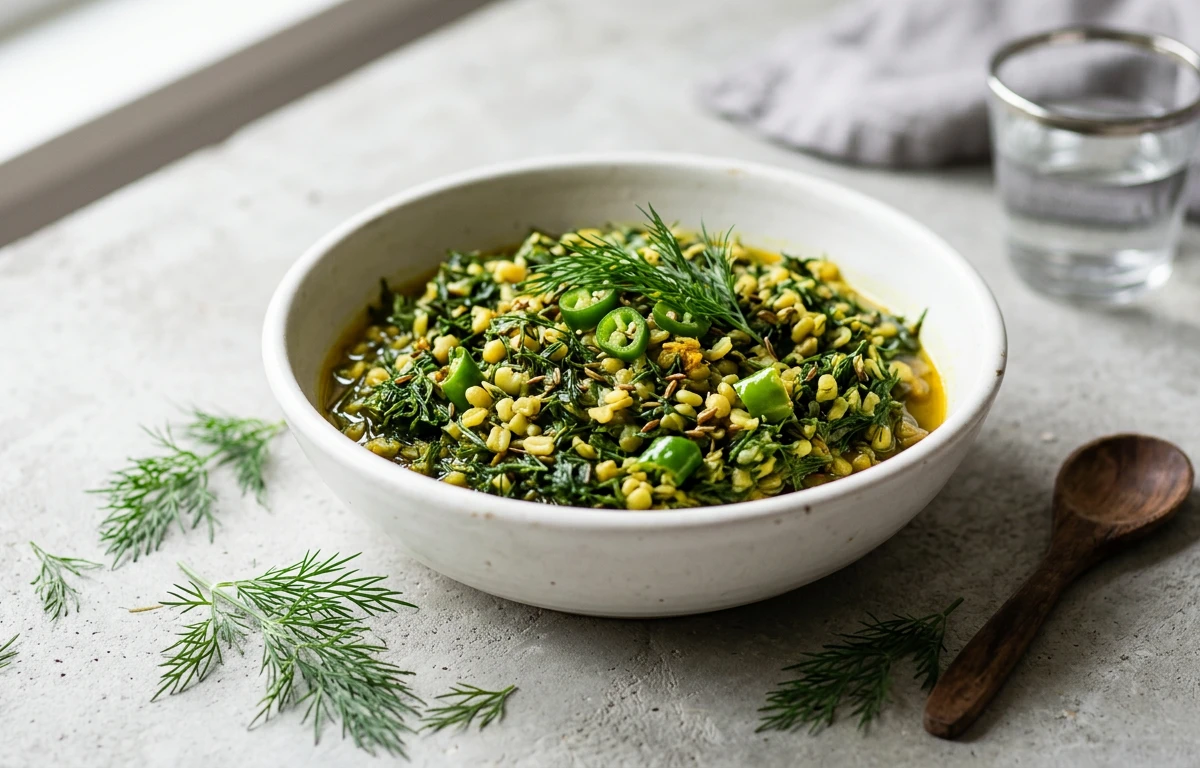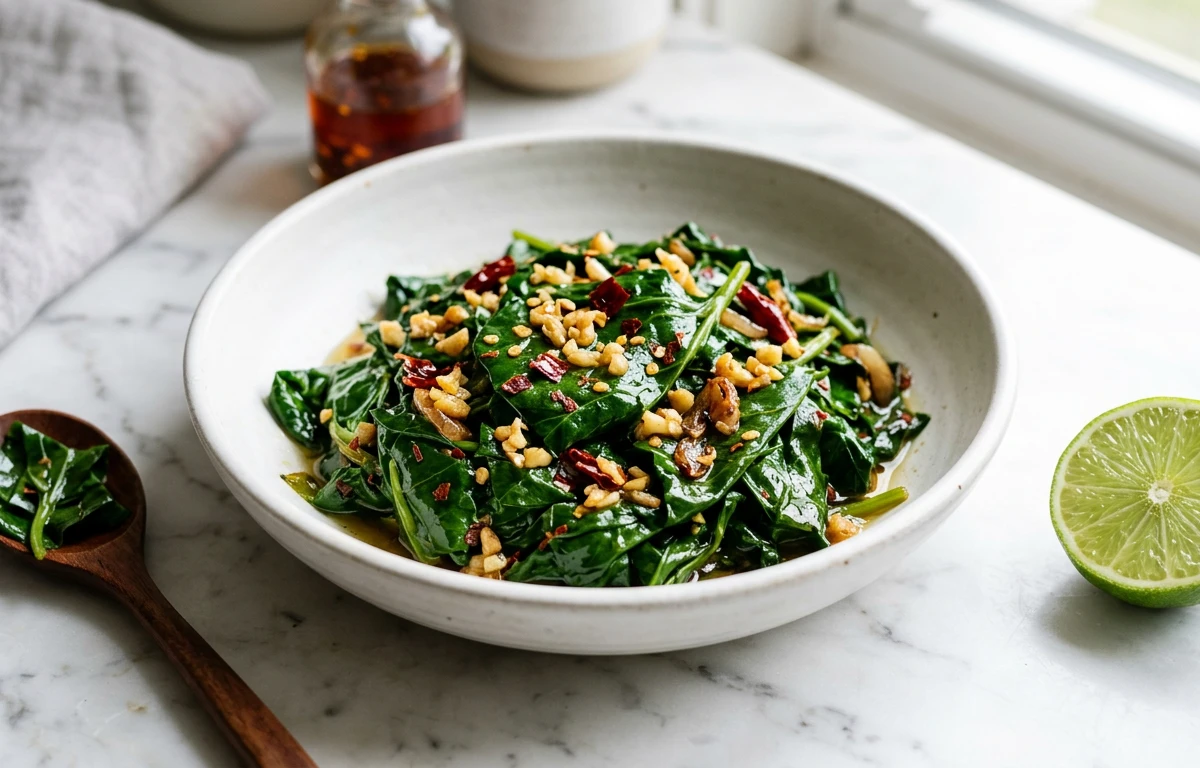
Sautéed Taro Leaves with Garlic
Tender taro leaves cooked simply with loads of garlic and a subtle kick of green chili. This rustic, no-fuss sabzi has a silky texture similar to spinach but with a distinct earthy flavor. A quick, nutritious side that pairs beautifully with rotis or dal-rice.
For 4 servings
- prep
Prep the taro leaves.
Wash the taro leaves thoroughly. Remove the thick stems and central veins. Stack a few leaves, roll them tightly, and slice into thin ribbons, then chop finely. Set aside.
TIPWear kitchen gloves or oil your hands before handling taro leaves; the raw sap can cause skin irritation. - temper · ~2 min
Make the tempering.
1.Heat oil in a kadai or wide pan over medium heat.2.Add cumin seeds and let them sizzle and turn aromatic (30 sec).3.Add chopped garlic and slit green chilies. Sauté until garlic turns light golden (1-2 min).TIPDon't let the garlic brown too much — it turns bitter and will overpower the delicate leaves. - saute · ~10 min
Cook the taro leaves.
1.Add the chopped taro leaves to the pan.2.Sprinkle turmeric powder and salt over the leaves.3.Stir well to coat the leaves with the tempering.4.Cover and cook on low heat for 8-10 minutes, stirring once halfway. The leaves will release moisture and cook down.TIPNo need to add water — taro leaves release enough moisture to steam themselves. Adding water makes them slimy. - saute · ~3 min
Dry out the sabzi.
Remove the lid, increase heat to medium, and sauté for another 2-3 minutes until any remaining moisture evaporates. The leaves should look glossy and slightly wilted, with no water pooling at the bottom.
- garnish
Finish with lemon juice and serve.
Turn off the heat. Squeeze fresh lemon juice over the sabzi and give it a final stir. Transfer to a serving bowl and serve hot.
TIPThe lemon juice brightens the earthy flavor of the leaves — don't skip it.
What to keep in mind.
5 tips from the recipe — small details that make a real difference to the final dish.
- 1Always wash taro leaves multiple times to remove any grit or soil trapped in the folds.
- 2Wear gloves when chopping raw taro leaves to avoid skin irritation from the sap.
- 3Finely chopping the leaves ensures even cooking and a pleasant, non-stringy texture.
- 4Cook covered on low heat so the leaves steam in their own moisture without added water.
- 5Squeeze fresh lemon juice only after turning off the heat to preserve its bright flavor.
Adapt it for your goals.
With coconut
Add 2 tablespoons of fresh or desiccated coconut along with the turmeric for a mild sweetness and richer texture, common in coastal Maharashtrian versions.
low oilLow-oil
Reduce oil to 1 tablespoon and use a non-stick pan. After tempering, add a splash of water to help the leaves wilt instead of relying on oil for moisture.
with peanutsWith peanuts
Crush a handful of roasted peanuts and sprinkle them in during the final dry-out stage for a crunchy, nutty contrast to the soft leaves.
jainJain
Skip the garlic and use a pinch of asafoetida (hing) in the tempering along with cumin seeds to keep the dish Jain-friendly while retaining depth.
Why this is on our healthy list.
Rich in Dietary Fiber
Taro leaves are packed with fiber, which aids digestion and promotes a feeling of fullness.
Good Source of Vitamin A
The deep green leaves provide beta-carotene, which the body converts into vitamin A for eye health and immunity.
Low in Calories
This sabzi is naturally low in calories, making it a light yet satisfying side dish.
Iron from Leafy Greens
Taro leaves contain iron, which supports healthy blood and energy levels, especially when paired with the vitamin C from lemon juice.
Frequently asked questions
Yes, but thaw and squeeze out excess moisture before cooking, as frozen leaves release more water and may become mushy.



.webp)