
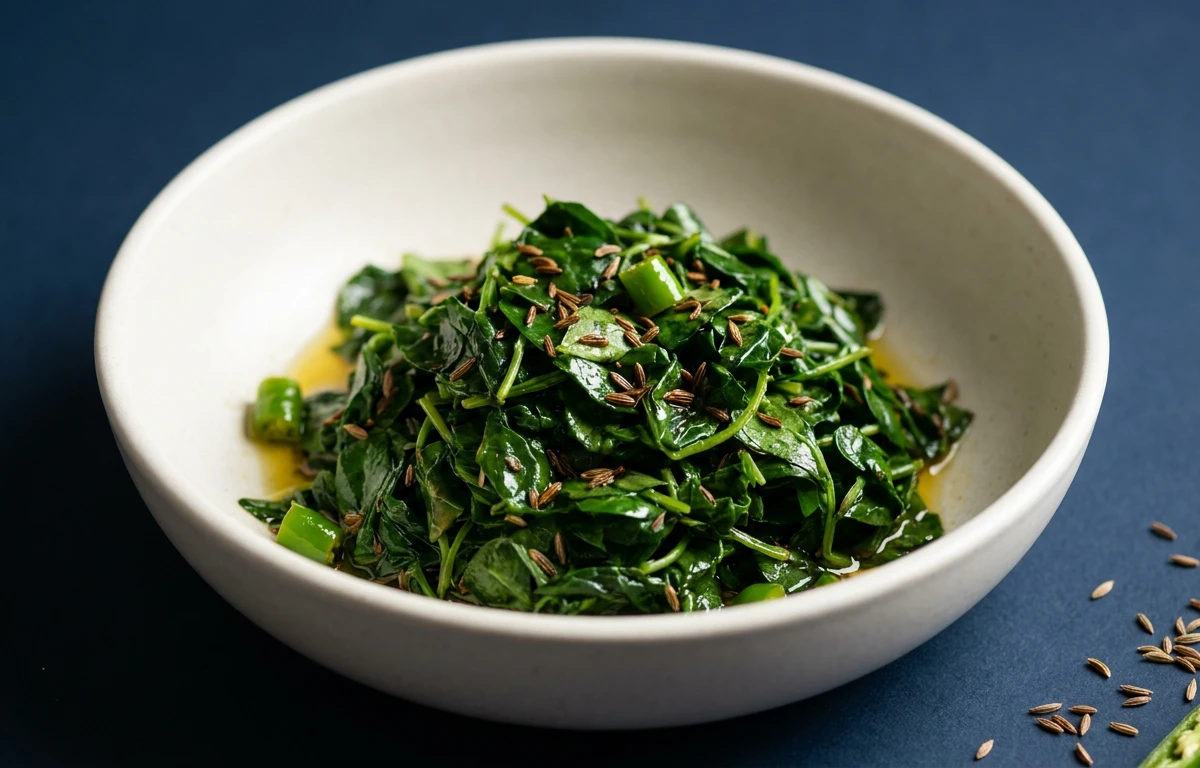
Sautéed Methi
Fresh fenugreek leaves sautéed with gentle spices, garlic, and green chilies. A slightly bitter, deeply aromatic Indian side dish that cooks down in minutes and pairs perfectly with roti or dal-rice. This simple home-style preparation lets the unique flavor of methi shine through.
For 4 servings
- prep
Prep the methi leaves.
Pluck the methi leaves from the thick stems. Wash thoroughly in several changes of water to remove any grit. Drain well and roughly chop the leaves.
TIPWash methi at least 2-3 times — the leaves trap soil easily. - saute · ~5 min
Sauté the aromatics.
1.Heat oil in a kadai or wide pan over medium heat.2.Add cumin seeds and let them crackle for 15-20 seconds.3.Add chopped garlic and slit green chilies, sauté until garlic turns light golden (30-40 seconds).4.Add chopped onion and cook until translucent (3-4 minutes). - saute · ~7 min
Add methi leaves and spices.
1.Add the chopped methi leaves to the pan along with turmeric powder, red chili powder, and salt.2.Toss everything together gently so the spices coat the leaves.3.Cook uncovered on medium heat, stirring occasionally, until the leaves wilt completely and release their moisture (5-7 minutes).TIPDon't cover the pan — covering traps steam and makes methi mushy. You want a dry sauté. - saute · ~2 min
Dry out any remaining moisture.
Once the leaves are wilted, increase the heat slightly and stir continuously for another 2 minutes to evaporate any pooled liquid. The methi should look glossy and dry, not watery.
- garnish
Finish with lemon juice and serve.
Turn off the heat. Squeeze fresh lemon juice over the methi and give it a final gentle toss. Serve hot with roti or as a side with dal and rice.
TIPLemon juice brightens the dish and balances the natural bitterness of methi.
What to keep in mind.
7 tips from the recipe — small details that make a real difference to the final dish.
- 1Pluck methi leaves only from tender stems — thick stems are fibrous and unpleasant to eat.
- 2Wash the leaves in a large bowl of water, lifting them out gently so grit settles at the bottom; repeat 2–3 times.
- 3After washing, spread the methi on a kitchen towel or pat dry — excess water makes the sauté soggy.
- 4Cook the methi uncovered the entire time; a lid traps steam and turns the leaves mushy.
- 5Increase heat at the end and stir actively to evaporate any pooled liquid — the final texture should be dry and glossy.
- 6Use fresh methi within a day of purchase; leftover leaves can be wrapped in a paper towel and refrigerated for 1–2 days.
- 7This dish stores well in the fridge for up to 2 days; reheat in a dry pan — do not microwave or it will turn limp.
Adapt it for your goals.
With potato (methi-aloo)
Add 1 small diced boiled potato along with the methi in step 3. The soft potato absorbs the spices and mellows the bitterness, making it a heartier side dish.
low oilLow-oil
Use only 1 tablespoon oil and finish with a splash of water if needed. The onions and methi release enough moisture to cook without extra fat.
veganVegan
This recipe is already vegan — no changes needed. Skip any optional ghee finish if you use it, but the lemon juice keeps it plant-based.
with garlic crunchWith garlic crunch
Reserve half the chopped garlic and add it only in the final 2 minutes of cooking. It stays crisp and gives a punchier garlic hit.
Why this is on our healthy list.
Rich in Iron
Fenugreek leaves are a good source of dietary iron, which supports healthy blood and energy levels.
High in Fiber
Methi leaves provide natural dietary fiber that aids digestion and promotes a feeling of fullness.
Low in Calories
This dish uses minimal oil and no heavy creams, keeping the calorie count low while delivering robust flavor.
Contains Antioxidants
Turmeric and fenugreek both contain antioxidant compounds that help protect cells from everyday oxidative stress.
Frequently asked questions
Fresh methi is best for this dry sauté recipe. Frozen methi releases a lot of water and turns mushy; dried methi needs a different cooking approach.


