Sauteed Spinach
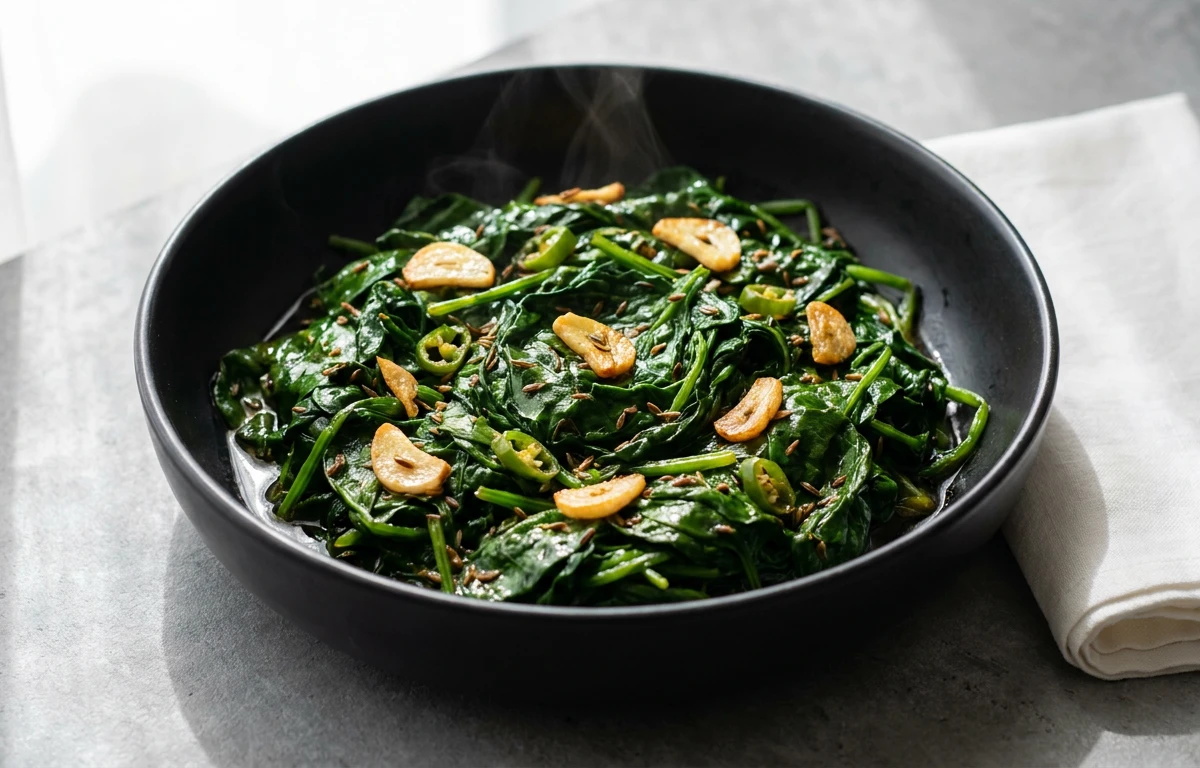
Fresh spinach leaves wilted with a gentle tempering of cumin, garlic, and green chilies. This simple everyday Indian sabzi comes together in minutes and delivers a clean, earthy flavor that pairs beautifully with roti or dal rice.
For 4 servings
- prep
Wash and chop the spinach.
Rinse the spinach leaves thoroughly under running water to remove any grit. Roughly chop the leaves and set aside in a colander to drain.
- temper · ~2 min
Make the tempering.
1.Heat oil in a large pan over medium heat.2.Add cumin seeds and let them sizzle until fragrant (30 sec).3.Add chopped garlic and slit green chilies; sauté until garlic turns light golden (1 min).TIPKeep the heat medium — garlic burns quickly and turns bitter. - saute · ~5 min
Wilt the spinach in batches.
Add the chopped spinach to the pan in batches, stirring as each batch wilts down to make room for more. Sprinkle salt evenly over the leaves. Cover and cook on medium heat for 3-4 minutes, stirring once halfway.
TIPSpinach releases its own water — no need to add any extra liquid. Covering the pan traps steam and helps it wilt evenly. - saute · ~2 min
Dry out excess moisture.
Remove the lid and increase the heat slightly. Stir continuously for 1-2 minutes until any pooled water in the pan evaporates and the spinach looks glossy but not soupy.
TIPDon't overcook — the spinach should remain vibrant green, not turn dull and khaki. - garnish
Finish with lemon juice and serve.
Turn off the heat. Squeeze fresh lemon juice over the spinach and give it a final toss. Transfer to a serving bowl and serve hot with roti or as part of a dal-rice meal.
TIPThe lemon juice brightens the earthy spinach flavor — add it only after turning off the heat to keep the acidity fresh.
What to keep in mind.
7 tips from the recipe — small details that make a real difference to the final dish.
- 1Always wash spinach in a large bowl of water, swish it around, and lift the leaves out to leave grit behind — repeat if needed.
- 2Slit the green chilies lengthwise so they infuse the oil without making the dish fiery; remove them before serving for a milder heat.
- 3Do not crowd the pan with spinach at once; add it in batches so it wilts quickly without releasing excess water at the start.
- 4Cover the pan while wilting to trap steam — this helps the spinach cook evenly in its own moisture without added water.
- 5After wilting, remove the lid and cook off the extra liquid on higher heat until the spinach looks glossy, not soupy.
- 6Add the lemon juice only after turning off the heat — this preserves its bright, fresh acidity and prevents a cooked, flat taste.
- 7This sabzi is best served immediately; reheating makes spinach lose its vibrant green color and turn mushy.
Adapt it for your goals.
High-protein
Add a handful of roasted peanuts or crumbled paneer after wilting the spinach for extra protein and a nutty, creamy contrast to the earthy greens.
low oilLow-oil
Use only 1 teaspoon of oil and dry-roast the cumin seeds first, then add a splash of water to deglaze the pan before adding garlic — reduces fat while keeping flavor.
jainJain
Replace garlic and onion with asafoetida (hing) and omit green chilies if strict; use a tiny pinch of hing in hot oil for a similar savory depth without root vegetables.
veganVegan
This recipe is already vegan — simply ensure your oil is plant-based (the recipe uses vegetable oil) and skip any dairy garnishes to keep it fully plant-based.
Why this is on our healthy list.
Rich in Iron and Folate
Spinach is a top source of non-heme iron and folate, which support red blood cell production and overall energy, especially when paired with vitamin C from lemon juice to boost absorption.
High in Vitamin K
A single serving of this spinach sabzi provides a generous amount of vitamin K, essential for blood clotting and maintaining strong bones.
Low in Calories and Fat
With only 2 teaspoons of oil and no added cream or butter, this dish is a light, low-calorie side that fits easily into weight-conscious meal plans.
Supports Digestion
Cumin seeds and garlic in the tempering are traditionally used in Indian cooking to aid digestion and reduce bloating after a heavy meal.
Frequently asked questions
Yes, but thaw it first and squeeze out as much water as possible before adding — frozen spinach contains more moisture, which can make the dish watery and less flavorful.