
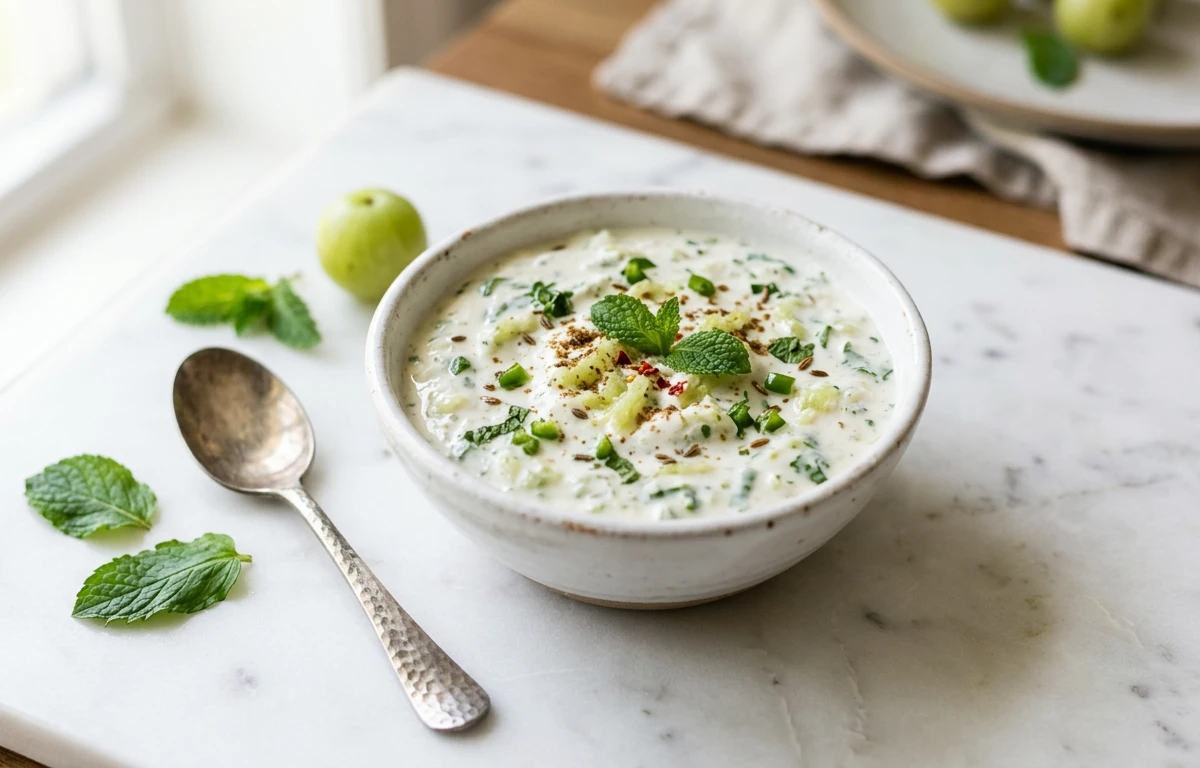
Savory Amla Raita
A refreshing, tangy yogurt side dish studded with grated fresh Indian gooseberries. A quick tempering of mustard seeds, curry leaves, and dried red chili adds a savory depth that balances amla's natural sourness. This simple raita comes together in minutes and pairs wonderfully with pulao, biryani, or any Indian flatbread.
For 4 servings
- prep · ~5 min
Grate the amla.
Rinse the fresh amla and pat dry. Using a box grater, grate the amla flesh away from the seed, discarding the central seed. You should get about 3-4 tablespoons of coarse grated amla.
- mix · ~1 min
Mix the raita base.
In a medium bowl, whisk the yogurt until completely smooth. Stir in the water and salt. Fold in the grated amla and mix gently until evenly distributed.
TIPRoom-temperature yogurt gives the raita a creamier mouthfeel — cold yogurt can feel stiff. - temper · ~2 min
Make the tempering.
1.Heat oil in a small tadka pan over medium heat until shimmering.2.Add mustard seeds and wait until they pop (30 seconds).3.Add cumin seeds and let them sizzle (10 seconds).4.Drop in the dried red chili and curry leaves, fry until fragrant (15 seconds).5.Remove from heat, add hing, and swirl the pan.TIPDon't let the curry leaves burn — remove from heat the moment they turn crisp. - mix · ~1 min
Pour the tempering over the raita and fold gently.
Immediately pour the hot tempering, along with all the oil and spices, over the amla-yogurt mixture. Fold everything together with a light hand until the tadka is swirled through.
- rest · ~10 min
Rest the raita for 10 minutes.
Cover and let the raita sit at room temperature for 10 minutes so the yogurt absorbs the flavors from the tempering.
TIPThis short rest makes a real difference — the tempering oils mellow into the yogurt. - garnish
Garnish with coriander leaves and serve.
Sprinkle chopped coriander leaves on top just before serving. Serve at room temperature or lightly chilled alongside pulao, biryani, or paratha.
What to keep in mind.
7 tips from the recipe — small details that make a real difference to the final dish.
- 1Grate amla just before mixing to prevent it from oxidizing and losing its bright color.
- 2Use full-fat yogurt for a creamier raita that balances amla's sharp tanginess.
- 3Let the tempering cool for 15 seconds after adding hing to avoid a bitter, burnt flavor.
- 4Fold the tadka gently with a light hand to keep the raita from turning watery.
- 5Rest the raita for a full 10 minutes — this allows the curry leaf and mustard oil to infuse the yogurt deeply.
- 6Serve at room temperature; cold yogurt dulls the fragrance of the tempering.
- 7For a smoother texture, grate amla on the fine side of the box grater rather than the coarse side.
Adapt it for your goals.
No-tadka
Skip the tempering and simply stir in a pinch of roasted cumin powder and black salt for a quicker, milder version that still has that earthy warmth.
herbaceousHerbaceous
Add a handful of finely chopped mint or dill along with the coriander for a fresh, cooling note that plays up amla's green character.
spicierSpicier
Include a finely chopped green chili when you mix the amla into the yogurt, or add a pinch of red chili flakes in the tadka for extra heat.
veganVegan
Replace the dairy yogurt with a thick, unsweetened plant-based yogurt (like coconut or cashew) — the tempering works the same way.
Why this is on our healthy list.
Rich in Vitamin C
Amla (Indian gooseberry) is one of the best natural sources of vitamin C, which supports immune function and collagen production.
Probiotic Support
The live cultures in yogurt promote a healthy gut microbiome, aiding digestion and nutrient absorption.
Anti-Inflammatory Spices
Curry leaves, cumin, mustard seeds, and asafoetida contain phenolic compounds that help reduce inflammation in the body.
Low-Calorie Side Dish
This raita is a light, refreshing accompaniment that adds flavor and nutrients without adding many calories.
Frequently asked questions
Fresh amla gives the best texture and bright tang. Dried amla is very tough and sour; if you must substitute, rehydrate it and then grate — but the raita will be much more tart.


