
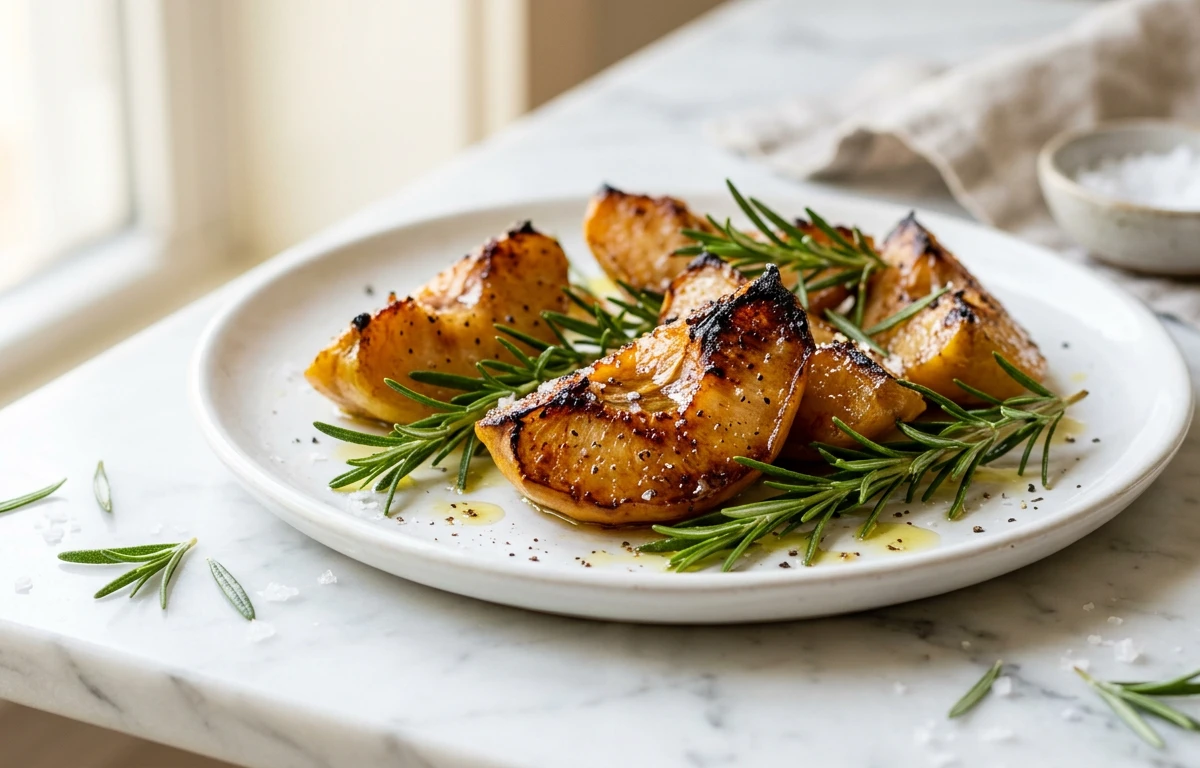
Savory Roasted Quince with Rosemary
Golden, fork-tender quince wedges roasted until their natural sweetness intensifies and edges caramelize. Fragrant rosemary, a touch of honey, and a crack of black pepper turn this often-overlooked fruit into an elegant side dish or simple dessert. It pairs beautifully with roast pork or a sharp cheese board.
For 4 servings
- prep
Preheat the oven and prepare the baking dish.
1.Preheat the oven to 375°F (190°C).2.Lightly grease a medium baking dish with a drizzle of olive oil. - prep
Core and slice the quince.
1.Quarter each quince lengthwise.2.Use a paring knife to remove the core and any hard bits from each wedge.3.Slice each quarter into 2 or 3 wedges, about ½ inch thick.TIPQuince flesh is dense and tough when raw. Don’t worry — roasting transforms it completely. Leave the skin on; it softens and adds beautiful color. - mix
Toss the quince with the seasonings.
1.Place the quince wedges in the prepared baking dish.2.Drizzle with olive oil, honey, and lemon juice.3.Sprinkle with chopped rosemary, salt, and black pepper.4.Toss everything gently with your hands until the wedges are evenly coated. - bake · ~50 min
Roast the quince until tender and caramelized.
1.Spread the wedges into a single, even layer.2.Roast for 25 minutes, then remove from the oven and gently flip each wedge.3.Return to the oven and roast another 20–25 minutes.4.The quince is done when fork-tender and the edges are golden and slightly blistered.TIPIf your quince seems dry during roasting, add 2 tablespoons of water to the dish. This creates steam and helps them soften without burning. - serve
Serve warm, drizzled with pan juices.
Transfer the roasted wedges to a serving platter, spoon any sticky pan juices over the top, and serve warm.
What to keep in mind.
7 tips from the recipe — small details that make a real difference to the final dish.
- 1Choose quince that are heavy for their size and fragrant; unripe ones lack sweetness.
- 2Don't peel the quince—the skin softens during roasting and adds a rosy tint.
- 3Use a sharp knife to core quince; their dense flesh can be tough to cut.
- 4Flip the wedges halfway through roasting for even caramelization.
- 5If the pan looks dry, add a splash of water to create steam and prevent burning.
- 6Leftover roasted quince keeps for 3 days in the fridge; reheat gently in a skillet.
- 7Serve warm or at room temperature—the flavor deepens as it cools.
Adapt it for your goals.
Spiced variation
Add 1 cinnamon stick and 2 cloves to the baking dish before roasting for a warm, aromatic twist that pairs beautifully with pork or cheese.
savory sweet with balsamicSavory-sweet with balsamic
Replace honey with 1 tbsp balsamic vinegar and add a minced garlic clove—the acidity cuts richness and adds depth for serving alongside roasted meats.
veganVegan
Substitute honey with maple syrup or agave nectar; the caramelization and flavor profile remain nearly identical, making this dish fully plant-based.
low oilLow-oil
Reduce olive oil to 1 tsp and roast on a silicone mat or parchment paper—quince releases its own moisture and still becomes tender, though less glossy.
Why this is on our healthy list.
Rich in Dietary Fiber
Quince are a good source of soluble and insoluble fiber, which supports digestion and helps maintain steady blood sugar levels.
High in Vitamin C
One quince provides a significant amount of vitamin C, an antioxidant that supports immune function and skin health.
Natural Antioxidants from Rosemary
Fresh rosemary contains rosmarinic acid and other antioxidants that help fight oxidative stress and inflammation.
Low Glycemic Impact
Despite a touch of honey, quince have a low glycemic index when roasted whole, making this a dessert-friendly option for blood sugar management.
Frequently asked questions
Yes—the skin softens significantly during roasting and becomes tender, adding a lovely rosy hue and extra fiber. No need to peel.


