Scrambled Eggs with Herbs
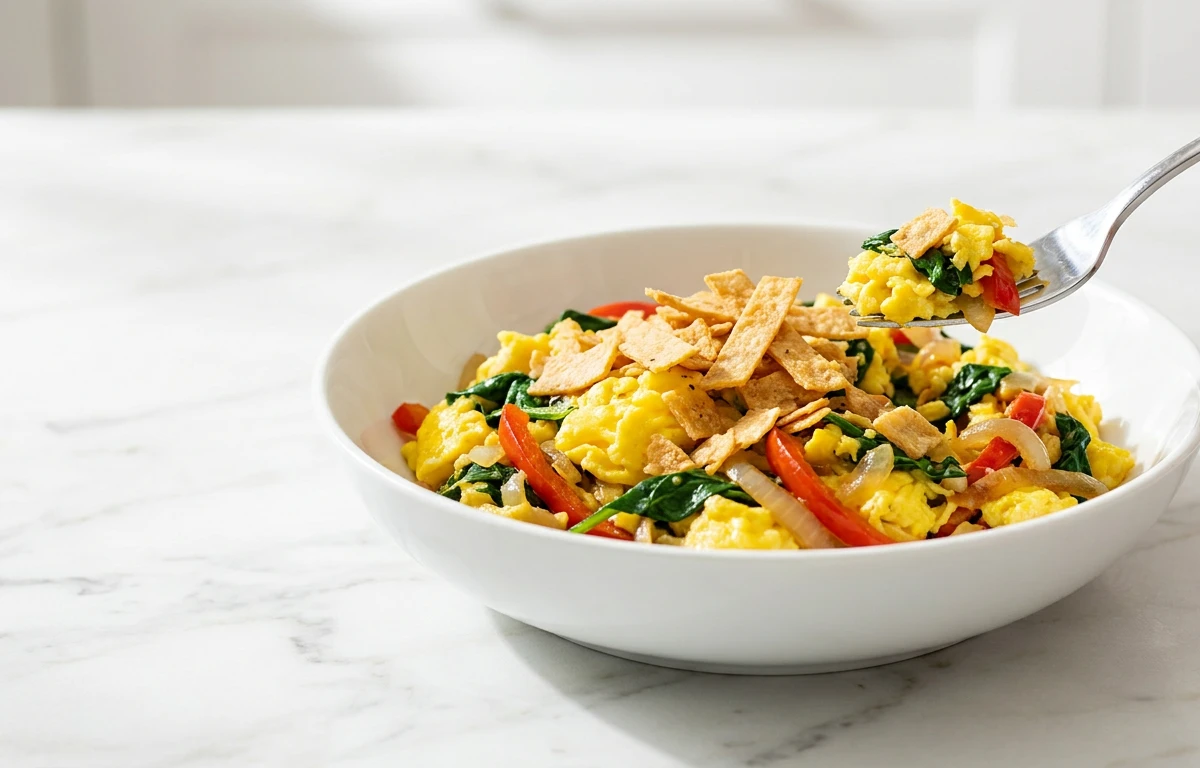
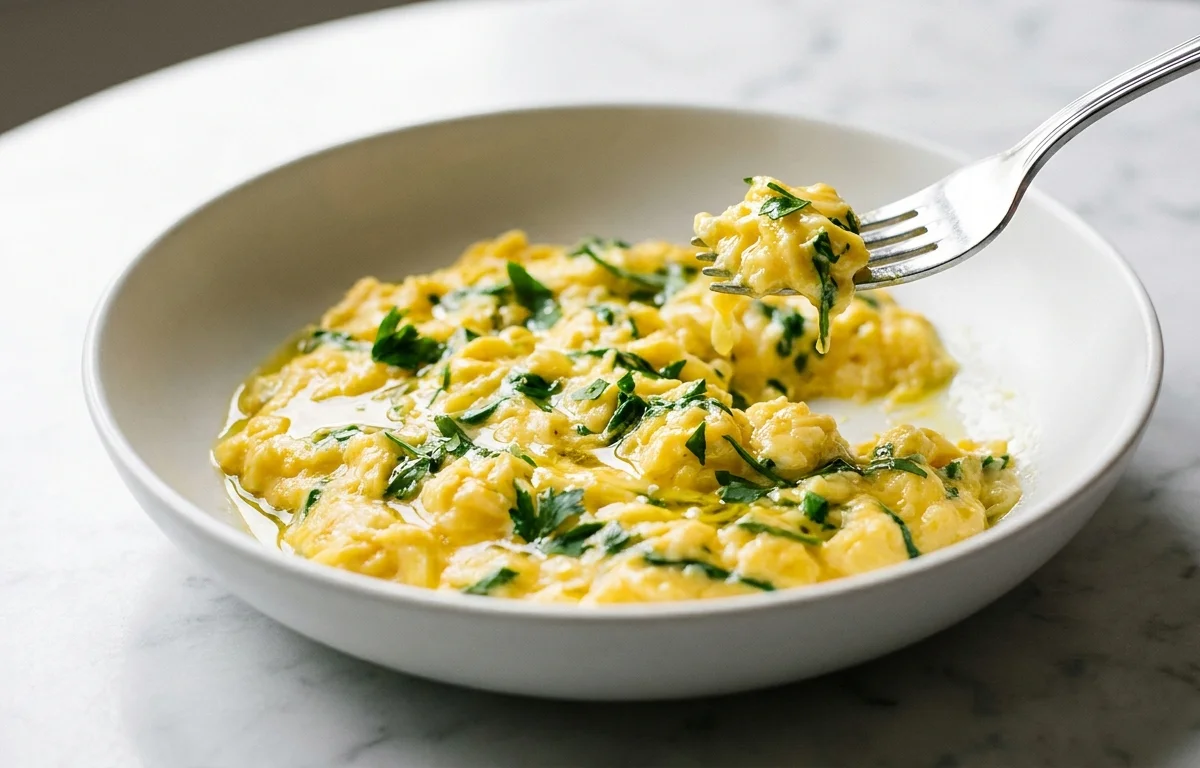
Soft, creamy scrambled eggs flecked with fresh chives and parsley, cooked low and slow for the most tender curds. A simple breakfast classic that feels special enough for a weekend brunch, ready in under 10 minutes.
For 4 servings
- prep · ~1 min
Whisk the eggs.
Crack the eggs into a medium mixing bowl. Add the salt and black pepper. Whisk vigorously until the yolks and whites are fully combined and the mixture is uniform in color, about 30 seconds.
TIPWhisk until no streaks of white remain — uniform color means even cooking. - prep · ~1 min
Melt the butter over low heat.
Place the nonstick skillet over low heat and add 1.5 tablespoons of the butter. Let it melt slowly, swirling the pan so the butter coats the bottom evenly. Do not let it brown.
TIPLow heat is the secret to creamy scrambled eggs. Rushing with high heat makes them dry and rubbery. - saute · ~3 min
Pour in the eggs and cook gently.
Pour the whisked eggs into the skillet. Let them sit undisturbed for 15 seconds until the edges just begin to set. Then, using the silicone spatula, gently push the eggs from the edges toward the center in slow, sweeping motions. Continue this low-and-slow stirring, breaking up any large curds that form.
TIPConstant gentle stirring creates small, tender curds instead of large rubbery chunks. - assemble · ~1 min
Finish with herbs and remaining butter.
When the eggs are mostly set but still look slightly wet and glossy, remove the skillet from the heat. Immediately add the remaining half tablespoon of butter along with the chopped chives and parsley. Fold everything together gently; the residual heat will melt the butter and finish cooking the eggs.
TIPPull the eggs off the heat while they still look a little wet — carryover cooking finishes them perfectly. - serve
Plate and serve immediately.
Spoon the scrambled eggs onto warm plates or over toasted bread. Serve right away while they are soft and creamy.
What to keep in mind.
5 tips from the recipe — small details that make a real difference to the final dish.
- 1Use a nonstick skillet for the smoothest curds and easy cleanup.
- 2Whisk the eggs just until uniform; over-whisking incorporates too much air, making the eggs frothy.
- 3Cook on the lowest possible heat so the eggs form soft, creamy curds instead of setting too fast.
- 4Remove the pan from the heat while the eggs still look slightly wet and glossy—they will continue to cook from residual heat.
- 5Add the cold butter and fresh herbs off the heat to stop cooking instantly and add a silky finish.
Adapt it for your goals.
Dairy-free
Replace butter with 2 tablespoons of olive oil or a plant-based butter. The eggs will still be creamy if you cook low and slow, and the olive oil adds a fruity note that pairs well with herbs.
high proteinHigh-protein
Add a splash of milk or a small dollop of cottage cheese to the whisked eggs. This increases protein content and makes the scramble extra fluffy without altering the delicate herb flavor.
low fatLow-fat
Use only 1 tablespoon of butter and supplement with a tablespoon of nonfat Greek yogurt stirred in at the end. The yogurt adds creaminess and tang while cutting fat and calories.
extra herbyExtra-herby
Substitute half the parsley with fresh tarragon or dill for a more aromatic, French-inspired flavor profile. Tarragon lends a subtle anise note that elevates the eggs beautifully.
Why this is on our healthy list.
High-Quality Protein
Eggs are a complete protein source, providing all nine essential amino acids, which support muscle maintenance and repair.
Rich in Choline
Egg yolks are one of the best dietary sources of choline, a nutrient vital for brain health and cell membrane function.
Packed with Vitamins A and D
The yolks supply significant amounts of vitamin A (for immune function and vision) and vitamin D (for bone health).
Low in Carbohydrates
This dish is naturally low-carb, making it a great choice for keto or low-glycemic eating patterns.
Fresh Herbs Add Antioxidants
Chives and parsley contribute vitamins C and K, along with antioxidant flavonoids that support overall wellness.
Frequently asked questions
This happens when the heat is too high or you cook them too long. Stick to low heat and pull the eggs off while they still look glossy and slightly wet.