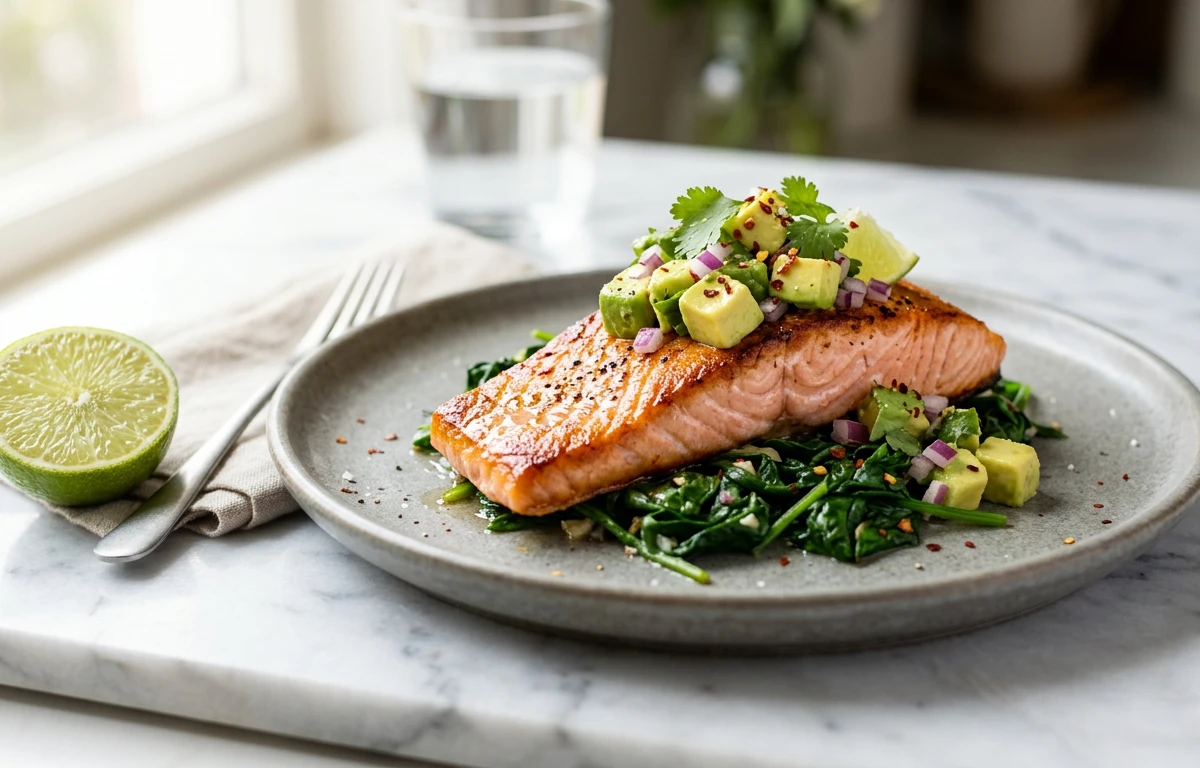
Seared Salmon with Spinach & Avocado Salsa
Crispy-skinned salmon fillets with a tender, flaky center, served over a bed of wilted garlicky spinach. A bright, creamy avocado salsa with lime, red onion, and cilantro adds freshness and a silky finish. This light, wholesome dinner comes together in just 30 minutes from pan to plate.
For 4 servings
- prep
Pat the salmon dry and season.
1.Remove salmon from fridge 15 minutes before cooking.2.Pat fillets completely dry with paper towels (critical for crispy skin).3.Season flesh side with half the salt and the black pepper.TIPDry skin = crispy skin. Moisture is the enemy of a good sear. - mix · ~5 min
Make the avocado salsa.
1.In a mixing bowl, combine diced avocado and red onion.2.Add lime juice and chopped cilantro.3.Season with salt and toss gently to mix. Set aside.TIPUse avocados that yield slightly to pressure. Too firm and they won't be creamy. - saute · ~7 min
Sear the salmon skin-side down.
1.Set a large non-stick skillet over medium-high heat.2.Add 2 tbsp olive oil and heat until shimmering (not smoking).3.Place fillets skin-side down, pressing gently with a fish spatula for 10 seconds.4.Cook undisturbed until skin is golden and crisp (5-6 minutes).TIPOnce the salmon is in the pan, don't move it. It releases naturally when the skin is crisp. - grill · ~4 min
Flip and finish cooking salmon.
1.Gently flip fillets and cook the flesh side until the salmon is just opaque in the center (3-4 minutes for medium).2.Check doneness: the center should flake easily with a fork but still be moist.3.Transfer salmon to a plate to rest.TIPSalmon continues cooking after it leaves the pan — 130°F to 135°F is the sweet spot for medium. - saute · ~3 min
Wilt the spinach with garlic.
1.Reduce heat to medium. Add 1 tbsp olive oil to the same skillet.2.Add minced garlic and sauté until fragrant (30 seconds).3.Add spinach in batches, tossing until just wilted (2-3 minutes).4.Season with salt.TIPThe residual pan flavor seasons the spinach, so cook it right after the fish. - assemble · ~2 min
Plate and top with salsa.
1.Divide wilted spinach among four plates.2.Place a salmon fillet on top of the spinach, skin-side up.3.Spoon a generous mound of avocado salsa over the salmon. - serve
Serve immediately while the salmon skin is still crisp.
What to keep in mind.
7 tips from the recipe — small details that make a real difference to the final dish.
- 1Pat salmon skin bone-dry with paper towels before searing to ensure maximum crispiness.
- 2Let the salmon rest for 2-3 minutes after cooking so the juices redistribute evenly.
- 3Use a non-stick skillet and preheat oil until shimmering to prevent the skin from sticking.
- 4For the best texture, choose avocados that yield slightly to gentle pressure, not mushy ones.
- 5Wilt the spinach in batches if your pan is small to avoid steaming instead of sautéing.
- 6Taste the salsa and adjust lime and salt just before serving to brighten the flavors.
- 7Store leftover salsa separately from the spinach and salmon to keep it from turning brown.
Adapt it for your goals.
Low-carb / keto
Replace the spinach with sautéed zucchini noodles or asparagus for an even lower-carb plate that still soaks up the pan juices.
dairy freeDairy-free
The recipe is already dairy-free; double-check your spinach is washed but not pre-seasoned with butter.
spicySpicy
Add a finely diced jalapeño (seeds removed for less heat) to the avocado salsa for a fresh, fiery kick.
grain bowlGrain bowl
Serve the salmon and salsa over a bed of warm quinoa or brown rice instead of spinach for a heartier meal.
herb switchHerb switch
Substitute cilantro with fresh mint or basil in the salsa for a different herbal brightness that pairs well with lime.
Why this is on our healthy list.
Rich in Omega-3s
Salmon is a top source of long-chain omega-3 fatty acids, which support heart and brain health.
High in Vitamin K & Iron
A generous bed of spinach provides vitamin K for bone health and iron for energy transport.
Healthy Fats from Avocado
Avocado supplies monounsaturated fats that help absorb fat-soluble vitamins from the spinach and salmon.
Naturally Gluten-Free
This whole-food meal contains no grains or gluten, making it suitable for gluten-sensitive diets.
Frequently asked questions
Yes, but thaw it completely in the refrigerator overnight and pat it very dry before searing to avoid steaming the skin.