Sesame-Crusted Tuna Steak
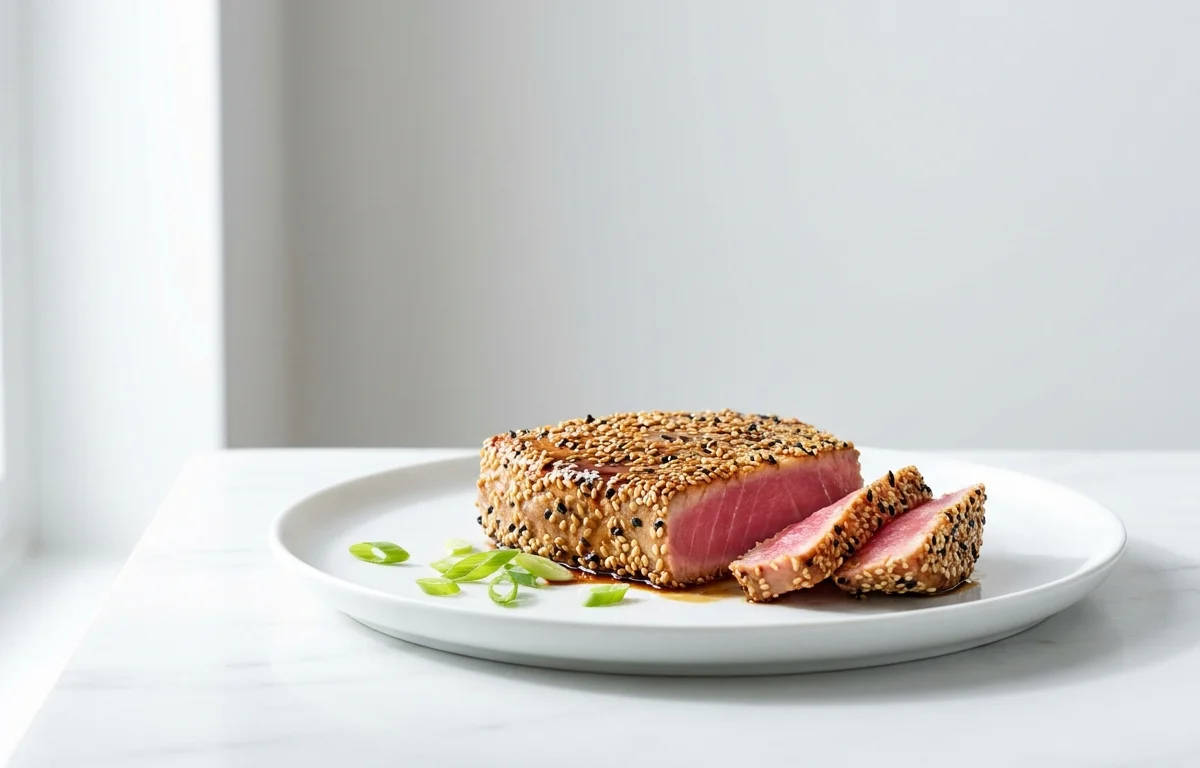
Restaurant-quality tuna steaks with a golden, nutty sesame crust and a perfectly rare, ruby-red center. Quick-seared in a hot pan, this dish comes together in under 15 minutes for an impressive weeknight dinner or special occasion meal.
For 2 servings
- prep
Pat the tuna steaks completely dry.
Remove tuna steaks from refrigerator 15 minutes before cooking. Pat dry thoroughly with paper towels—any surface moisture prevents the sesame crust from sticking.
TIPDry tuna is essential for a good sear. Even sushi-grade fish should be patted dry. - prep
Season and coat with sesame seeds.
1.Season both sides of each tuna steak with a pinch of salt and freshly cracked black pepper.2.Mix white and black sesame seeds on a flat plate.3.Press each tuna steak firmly into the sesame seed mix, coating all sides evenly. Use your hands to pat seeds onto the edges.TIPPress firmly so the seeds adhere. The natural moisture of the fish helps them stick. - fry · ~2 min
Sear the tuna steaks.
1.Heat oil in a cast iron skillet over high heat until shimmering and just beginning to smoke.2.Carefully lay the sesame-crusted tuna steaks in the pan. Sear for 45 to 60 seconds per side for rare, or 90 seconds for medium-rare.3.Use tongs to also briefly sear the edges—about 15 seconds each edge—to set the crust all around.TIPHigh heat is crucial. The pan must be screaming hot to form a golden crust while keeping the center rare. Do not move the fish once it hits the pan. - rest · ~2 min
Rest the tuna briefly.
Transfer seared tuna steaks to a cutting board and let rest for 2 minutes. This allows the juices to settle before slicing.
TIPResting prevents the rare center from bleeding out when sliced. - assemble
Slice and serve.
1.Using a sharp knife, slice each tuna steak against the grain into ½-inch thick slices.2.Fan the slices on a plate. Serve immediately with a drizzle of soy sauce and a lime wedge on the side.TIPSlice cleanly in one motion—do not saw back and forth—to keep the crust intact.
What to keep in mind.
6 tips from the recipe — small details that make a real difference to the final dish.
- 1Let the tuna rest at room temperature for 15 minutes before cooking for even searing.
- 2Pat the tuna extremely dry with paper towels so the sesame seeds adhere and the crust stays intact.
- 3Use a cast iron or heavy stainless steel pan; it holds heat best for a fast, high-temp sear.
- 4Do not move the tuna once it hits the pan—let it develop a crisp, golden crust undisturbed.
- 5Slice the rested tuna against the grain in one clean stroke to keep the sesame crust from crumbling.
- 6Briefly sear the edges (15 seconds each) to lock the crust all around and prevent the coating from falling off.
Adapt it for your goals.
Spicy-sesame
Add 1/2 teaspoon of red pepper flakes or a drizzle of sriracha to the sesame seed mix for a kick of heat that complements the nutty crust.
ginger soy glazeGinger-soy glaze
Brush the cooked tuna with a mixture of 1 tablespoon soy sauce, 1 teaspoon honey, and 1 teaspoon grated ginger instead of plain soy sauce for a sweet-salty glaze.
low oilLow-oil
Instead of pan-searing, cook the sesame-crusted tuna on a non-stick skillet lightly misted with cooking spray to reduce oil while still achieving a crust.
herb crustedHerb-crusted
Mix 1 tablespoon each of finely chopped fresh cilantro and chives into the sesame seeds for an herby, aromatic twist.
Why this is on our healthy list.
Rich in Lean Protein
Ahi tuna provides high-quality, low-fat protein that supports muscle repair and keeps you satisfied.
Heart-Healthy Fats
Tuna is naturally rich in omega-3 fatty acids, which contribute to cardiovascular health and reduce inflammation.
High in Selenium
Tuna is an excellent source of selenium, an antioxidant that helps protect cells from damage and supports thyroid function.
Mineral Boost from Sesame
Sesame seeds add calcium, magnesium, and zinc, supporting bone health and immune function.
Low in Carbohydrates
This dish contains minimal carbs from the sesame seeds and no added sugars, making it suitable for low-carb and keto diets.
Frequently asked questions
Yes, but you must thaw it completely in the refrigerator overnight and pat it very dry to avoid excess moisture that will prevent a good sear.