Sesame-Ginger Glazed Salmon
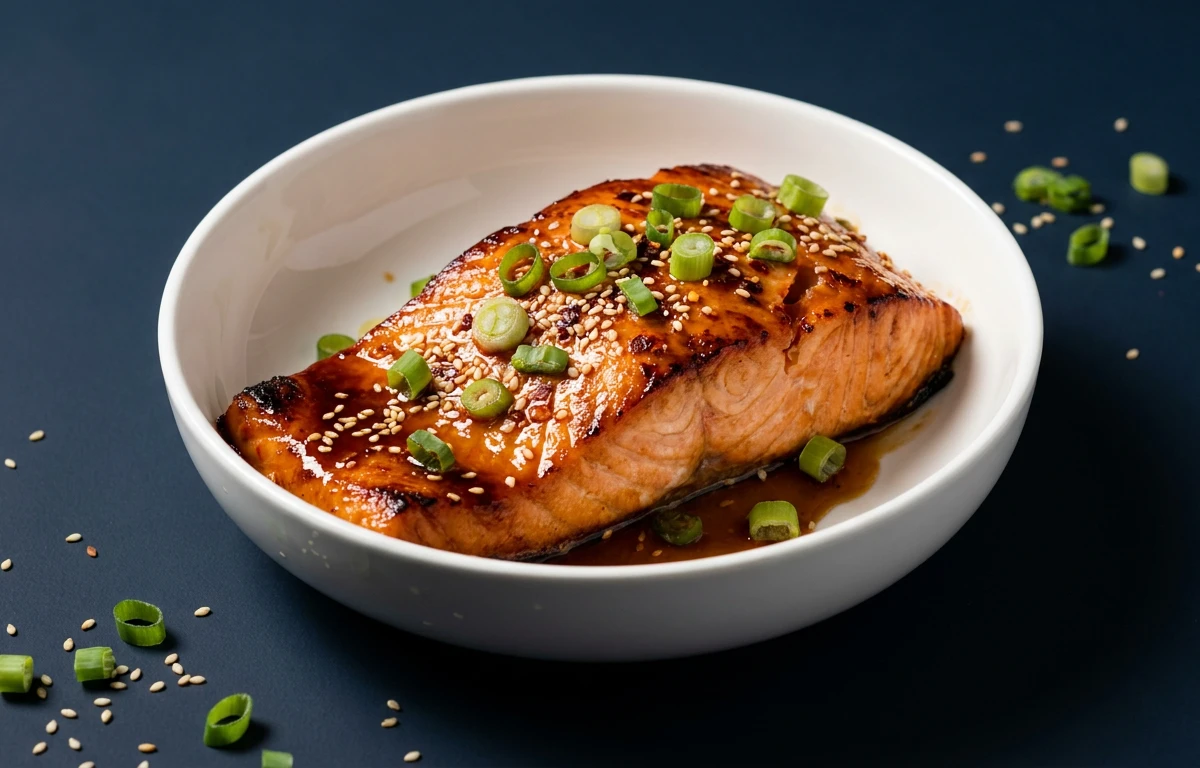
Flaky, tender salmon fillets pan-seared to golden perfection and lacquered with a sticky, savory-sweet sesame-ginger glaze. The sauce balances warm ginger, nutty toasted sesame, and a gentle kick of garlic, finished with a sprinkle of sesame seeds and fresh green onions. A quick weeknight dinner that feels elegant enough for guests, ready in under 30 minutes.
For 4 servings
- prep
Pat the salmon dry and season.
Remove salmon fillets from the fridge 15 minutes before cooking. Pat completely dry with paper towels. Season the flesh side with a pinch of salt.
TIPRoom-temperature salmon cooks more evenly and prevents the center from staying raw while the outside overcooks. - mix
Whisk together the glaze.
In a small bowl, combine soy sauce, honey, rice vinegar, sesame oil, minced garlic, and grated ginger. Whisk until the honey dissolves completely.
- prep
Make the cornstarch slurry.
In a separate small bowl, mix cornstarch with 1 tablespoon water until smooth and lump-free.
- fry · ~5 min
Sear the salmon skin-side down.
Heat oil in a large non-stick skillet over medium-high heat until shimmering. Place salmon fillets skin-side down and press gently with a spatula for 10 seconds. Cook undisturbed for 4–5 minutes until the skin is crisp and golden.
TIPDon't move the fillets once they hit the pan. Letting them sit undisturbed develops a perfectly crispy skin. - fry · ~3 min
Flip and cook the other side.
Carefully flip the fillets using tongs. Cook for another 2–3 minutes until the salmon is just opaque and flakes easily with a fork.
TIPInternal temperature should reach 125–130°F for medium, 140°F for well-done. - simmer · ~1 min
Simmer the glaze in the pan.
Reduce heat to medium-low. Pour the glaze mixture into the skillet around the salmon (not directly on top). Let it bubble gently for 1 minute.
- mix · ~1 min
Stir in the slurry and thicken.
Pour the cornstarch slurry into the pan with the glaze. Stir gently and cook for another 30–60 seconds until the sauce turns glossy and coats the back of a spoon.
- assemble
Coat the salmon in the glaze.
Using a spoon, baste the thickened glaze over each salmon fillet until well coated. Turn off the heat.
- garnish
Garnish with sesame seeds and green onion.
Transfer salmon to plates. Drizzle any remaining glaze from the pan over the top. Sprinkle with toasted sesame seeds and sliced green onion.
What to keep in mind.
6 tips from the recipe — small details that make a real difference to the final dish.
- 1Pat the salmon very dry before searing to ensure the skin turns shatteringly crisp.
- 2Wait to flip the salmon until the skin releases easily from the pan to avoid tearing.
- 3For even cooking, remove the salmon from the fridge 15 minutes before you start.
- 4Use low-sodium soy sauce so the glaze isn't overly salty after it reduces.
- 5Don't pour the glaze directly over the salmon while it simmers — pour it around the fillets to keep the crispy skin intact.
- 6Make extra glaze if you plan to serve with rice; the sauce is too good to ration.
Adapt it for your goals.
Spicy
Add 1 teaspoon sriracha or a pinch of red pepper flakes to the glaze for a spicy-sweet kick that cuts through the richness of the salmon.
low sugarLow-sugar
Replace the honey with a sugar-free alternative like monk fruit syrup or allulose to reduce carbs while keeping the sticky sweetness.
gluten freeGluten-free
Use tamari or coconut aminos instead of soy sauce to make the dish entirely gluten-free without sacrificing umami.
air fryer adaptationAir-fryer adaptation
Brush the glaze on the salmon after air-frying at 375°F for 8-10 minutes for a hands-off version with the same lacquered finish.
Why this is on our healthy list.
Rich in Omega-3s
Salmon is one of the best natural sources of omega-3 fatty acids, which support heart and brain health.
High-Quality Protein
A single serving provides a substantial amount of complete protein to help build and repair tissues.
Contains Ginger's Anti-Inflammatory Properties
Fresh ginger in the glaze adds gingerol, a compound known for its natural anti-inflammatory effects.
Low in Unhealthy Fats
Pan-searing with minimal oil keeps the dish light compared to deep-fried options, relying on salmon's own healthy fats.
Frequently asked questions
The salmon is done when it flakes easily with a fork and the internal temperature reaches 125–130°F for medium or 140°F for well-done.