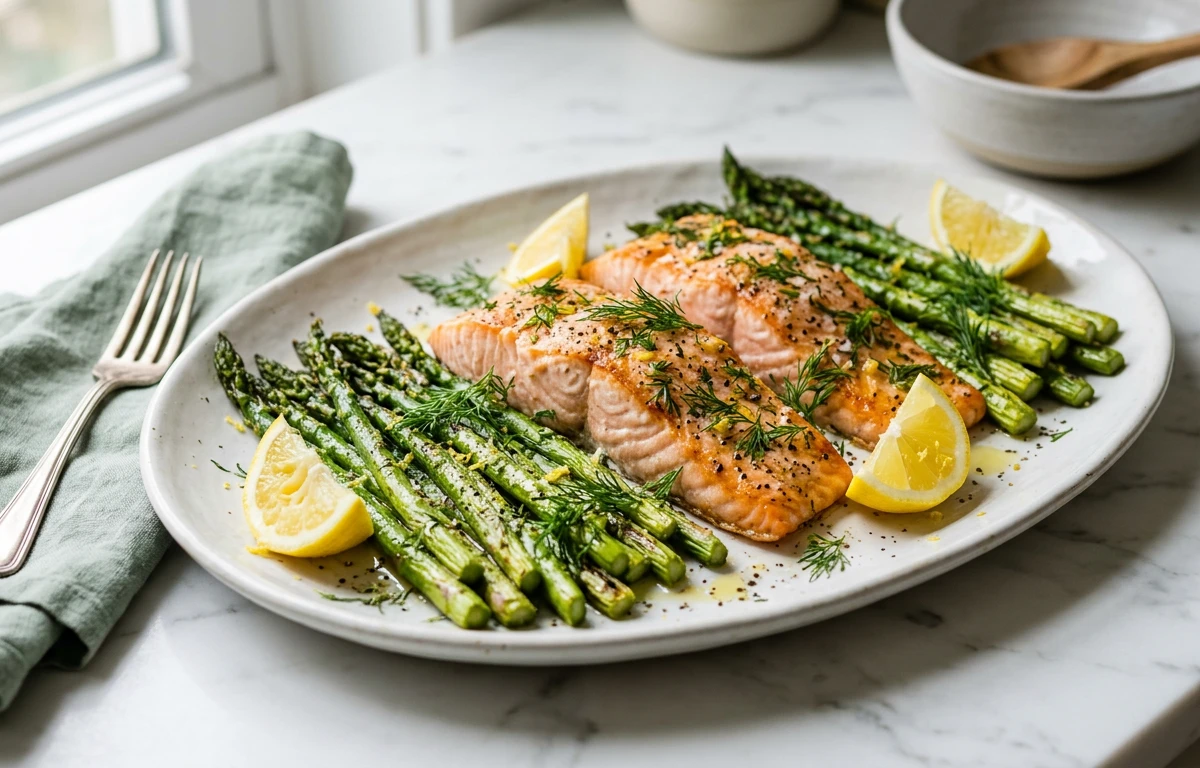
Sheet Pan Lemon Dill Salmon & Asparagus
Tender, flaky salmon fillets roasted alongside vibrant asparagus on a single sheet pan for a quick, elegant dinner with minimal cleanup. Fresh lemon and dill brighten the rich fish, while garlic adds savory depth. Ready in under 30 minutes, this is a weeknight hero that doubles as effortless entertaining.
For 4 servings
- prep
Preheat oven and prepare the sheet pan.
Preheat the oven to 400°F (200°C). Line a large rimmed sheet pan with parchment paper for easy cleanup.
- prep · ~5 min
Season the salmon and asparagus.
1.Pat the salmon fillets dry with a paper towel and place them on one side of the prepared sheet pan.2.Arrange the trimmed asparagus on the other side in a single layer.3.Drizzle everything with olive oil, then sprinkle evenly with minced garlic, lemon zest, half the dill, salt, and black pepper.4.Toss the asparagus gently to coat. Rub the seasoning all over each salmon fillet.TIPDry salmon skin-side down promotes even roasting and a gentle lift-off after cooking. - assemble
Layer lemon slices over the salmon.
Place thin lemon rounds on top of each salmon fillet, overlapping slightly for even flavor.
- bake · ~15 min
Roast until salmon is tender and asparagus is crisp-tender.
Place the sheet pan in the preheated oven and roast for 12–15 minutes, until the salmon flakes easily with a fork and the asparagus is bright green with lightly caramelized tips.
TIPIf your asparagus spears are very thick, start them 3–4 minutes ahead by roasting alone before adding the salmon to the same pan. - garnish
Garnish with remaining fresh dill and serve.
Remove from the oven, sprinkle the reserved dill over everything, and serve immediately with a squeeze of fresh lemon if desired.
What to keep in mind.
6 tips from the recipe — small details that make a real difference to the final dish.
- 1Pat the salmon dry before seasoning — moisture is the enemy of a good sear and promotes steaming instead of roasting.
- 2Arrange the asparagus in a single layer to ensure even cooking; overcrowding traps steam and prevents caramelization.
- 3If your asparagus spears are thick, start them roasting 3–4 minutes before adding the salmon so both finish at the same time.
- 4Use thin, even lemon slices — thick slices will release too much liquid and steam the salmon rather than perfuming it.
- 5Check doneness at 12 minutes: the salmon should flake easily with a fork and the center should be just opaque.
- 6Reserve a portion of fresh dill for finishing — heat dulls fresh herbs, so the final sprinkle gives a burst of brightness.
Adapt it for your goals.
Herb Swap
Replace dill with fresh parsley, tarragon, or thyme for a different flavor profile — tarragon pairs beautifully with the lemon and adds a subtle anise note.
Spicy KickSpicy Kick
Add 1/4 tsp red pepper flakes or a thinly sliced chili to the garlic and oil mixture for a gentle heat that complements the rich salmon.
Low OilLow-Oil
Reduce olive oil to 1 tablespoon and use a nonstick baking mat or extra parchment. The salmon and asparagus will still cook perfectly with less fat.
Add GrainsAdd Grains
Serve over cooked quinoa, farro, or couscous to turn this into a hearty main. The lemony pan juices double as a simple dressing.
Dairy InfusedDairy-Infused
Swap the lemon zest for a sprinkle of grated Parmesan over the asparagus before roasting, or dot the salmon with a little butter for extra richness.
Why this is on our healthy list.
Rich in Omega-3 Fatty Acids
Salmon is one of the best sources of EPA and DHA omega-3s, which support heart and brain health.
High-Quality Protein Source
Each 150g salmon portion provides about 30g of complete protein for satiety and muscle maintenance.
Packed with Antioxidants
Asparagus is naturally rich in vitamin E, vitamin C, and glutathione, which help combat oxidative stress.
Good Source of Folate
Asparagus provides a significant amount of folate (vitamin B9), important for cell growth and DNA repair.
Low in Saturated Fat
This dish uses heart-healthy olive oil and naturally lean protein, keeping saturated fat content minimal.
Frequently asked questions
Yes, but thaw it completely in the refrigerator overnight and pat it very dry with paper towels before seasoning to avoid excess moisture during roasting.