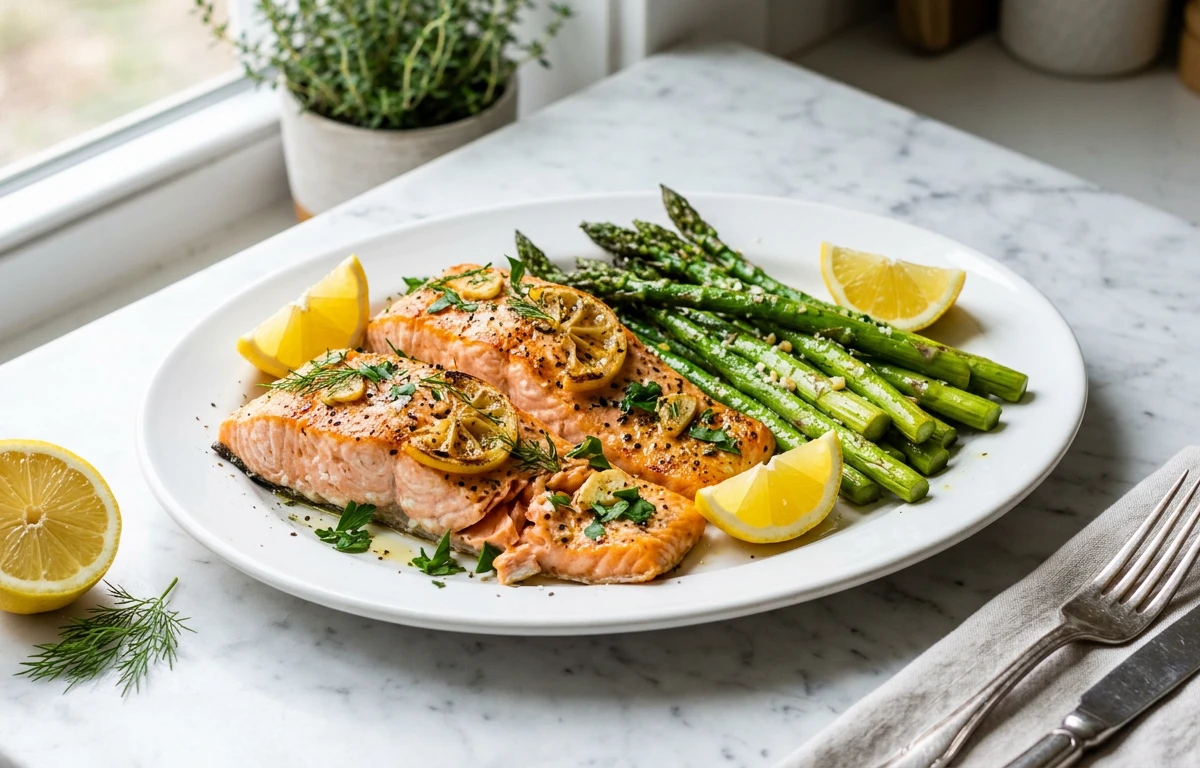
Sheet Pan Lemon-Garlic Salmon & Asparagus
Flaky, buttery salmon fillets roasted on a single sheet pan alongside crisp-tender asparagus spears. Everything gets drenched in a bright lemon-garlic drizzle that caramelizes in the oven into a glossy, tangy glaze. A complete, no-fuss dinner ready in under 30 minutes with hardly any cleanup.
For 4 servings
- prep
Preheat the oven and prep the pan.
1.Position a rack in the center of the oven and preheat to 200°C (400°F).2.Line a large rimmed baking sheet with parchment paper or foil for easy cleanup. - prep
Make the lemon garlic sauce.
1.In a small bowl, whisk together 3 tbsp olive oil, minced garlic, lemon zest, lemon juice, and 1 tsp honey.2.Stir in 1/4 tsp salt and freshly ground black pepper.TIPReserve 1 tablespoon of the sauce for drizzling at the end — it keeps the flavor fresh and bright. - prep
Season the asparagus and salmon.
1.Place trimmed asparagus on the prepared baking sheet. Drizzle with 1 tablespoon of the sauce and toss to coat. Push asparagus to the sides of the pan.2.Pat the salmon fillets dry with a paper towel. Arrange them skin-side down in the center of the pan.3.Spoon the remaining sauce evenly over the top of each fillet. Sprinkle salmon and asparagus with the remaining salt.TIPDrying the salmon helps the sauce cling and promotes better browning. - bake · ~15 min
Bake the sheet pan dinner.
1.Bake for 12-15 minutes, until the salmon flakes easily with a fork and the asparagus is tender-crisp.2.The salmon is done when the internal temperature reaches 63°C (145°F) at the thickest part.TIPIf you want the salmon top lightly browned, switch the oven to broil for the last 1-2 minutes — watch it closely. - garnish · ~2 min
Rest, garnish, and serve.
1.Remove the pan from the oven and let the salmon rest for 2 minutes.2.Drizzle the reserved fresh sauce over the salmon and asparagus.3.Scatter chopped parsley on top and serve warm.
What to keep in mind.
6 tips from the recipe — small details that make a real difference to the final dish.
- 1Pat the salmon dry thoroughly to ensure the glaze clings and the skin browns nicely.
- 2Trim asparagus by bending each spear until it snaps naturally at the woody end.
- 3Arrange the salmon and asparagus in a single layer to promote even roasting and caramelization.
- 4Reserve a tablespoon of the raw lemon-garlic sauce to drizzle after baking for a pop of fresh flavor.
- 5For perfectly flaky salmon, remove from the oven when it reaches 63°C (145°F) at the thickest part.
- 6If the asparagus is done before the salmon, transfer it to a plate and keep warm while the fish finishes.
Adapt it for your goals.
Low-oil
Reduce olive oil to 2 tablespoons and replace 1 tablespoon with lemon juice or water. The glaze will be lighter and less rich, reducing calories while still keeping the dish tender.
high proteinHigh-protein
Add 200g of halved cherry tomatoes and 150g of sliced zucchini to the sheet pan for extra volume and nutrients without changing the core protein.
spicySpicy
Add 1/4 teaspoon red pepper flakes to the lemon-garlic sauce for a subtle heat that complements the sweet honey and bright lemon.
herb swapHerb-swap
Replace parsley with fresh dill or chives for a different herbal note that pairs beautifully with salmon and lemon.
veganVegan
Substitute the salmon with 4 large portobello mushroom caps (stems removed) and replace honey with maple syrup. Bake for the same time until mushrooms are tender and juicy.
Why this is on our healthy list.
Rich in Omega-3s
Salmon is an excellent source of omega-3 fatty acids, which support heart and brain health.
Good Source of Fiber
Asparagus provides dietary fiber, aiding digestion and helping maintain a healthy gut.
High in Vitamin C
Lemon juice and zest contribute vitamin C, which supports immune function and iron absorption.
Low in Saturated Fat
This dish uses olive oil and lean salmon, keeping saturated fat low while providing healthy monounsaturated fats.
Frequently asked questions
Yes, but thaw the salmon completely in the refrigerator overnight and pat dry. Frozen asparagus should be thawed and drained well before roasting to avoid excess moisture.