Sheet Pan Salmon & Asparagus
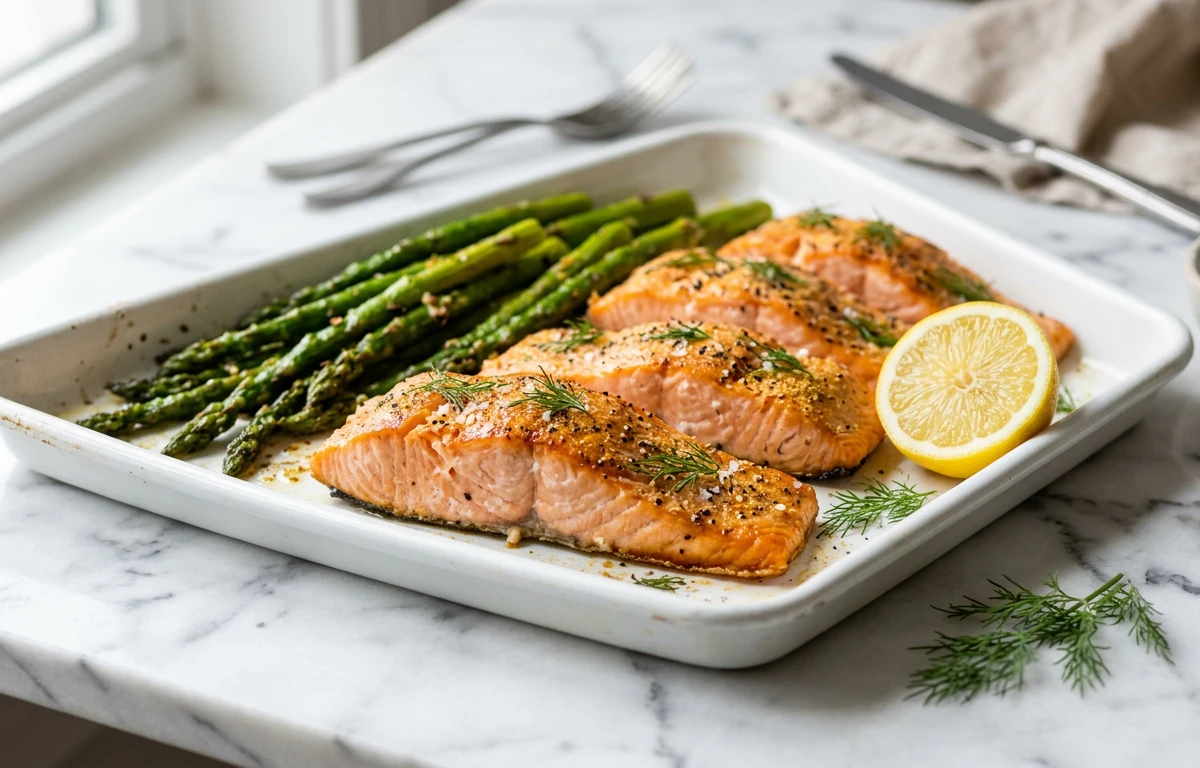
Tender, flaky salmon fillets roasted on a single sheet pan alongside vibrant, crisp-tender asparagus. Everything cooks together in under 20 minutes for a no-fuss weeknight dinner that delivers big flavor with minimal cleanup.
For 4 servings
- prep · ~10 min
Preheat oven and line the sheet pan.
Heat oven to 400°F. Line a large rimmed sheet pan with parchment paper for easy cleanup.
TIPPreheating fully is key — a hot oven gives the asparagus those crisp, roasted edges. - prep · ~2 min
Make the lemon-garlic oil.
In a small bowl, whisk together olive oil, minced garlic, lemon zest, dried dill, salt, and black pepper.
- prep · ~3 min
Season the salmon and asparagus.
1.Place salmon fillets skin-side down on one half of the prepared sheet pan.2.Arrange asparagus in a single layer on the other half.3.Drizzle the lemon-garlic oil evenly over the salmon and asparagus.4.Gently toss the asparagus to coat, and rub the oil mixture onto the salmon fillets.TIPPat the salmon dry with a paper towel before seasoning — this helps the oil and seasonings stick and encourages browning. - bake · ~15 min
Roast until the salmon is flaky and the asparagus is tender.
Bake on the center rack for 12 to 15 minutes. Salmon is done when it flakes easily with a fork and reaches an internal temperature of 145°F. Asparagus should be bright green and crisp-tender.
TIPAsparagus spears thinner than a pencil will cook in about 10 minutes — pull them early to avoid mushiness, or leave the salmon in for 2 more minutes. - garnish · ~1 min
Garnish with parsley and serve with lemon wedges.
Sprinkle freshly chopped parsley over the salmon and asparagus. Serve immediately with lemon wedges for squeezing over the top.
What to keep in mind.
6 tips from the recipe — small details that make a real difference to the final dish.
- 1Pat the salmon dry before seasoning to encourage browning and prevent steaming.
- 2Place thicker asparagus spears on the outer edge of the pan for more even cooking.
- 3Check salmon doneness at 12 minutes; thinner fillets may cook faster than the recipe suggests.
- 4Lay asparagus in a single layer with a little space between spears for crisp edges.
- 5Use a fish spatula to lift the salmon off the parchment; the skin will stick less.
- 6Make ahead: whisk the lemon-garlic oil up to a day in advance and refrigerate.
Adapt it for your goals.
Herb swap
Replace dried dill with 1 teaspoon dried thyme or 1 tablespoon fresh chopped tarragon for a different aromatic profile that still complements salmon and lemon.
spicySpicy
Add 1/4 teaspoon red pepper flakes to the lemon-garlic oil for a gentle heat that cuts through the richness of the salmon.
high proteinHigh-protein
Swap the asparagus for broccolini or trimmed green beans — both are equally sturdy and cook in the same time window.
low fatLow-fat
Reduce olive oil to 1 1/2 tablespoons and brush it on rather than drizzling; the salmon's natural oils will still keep it moist.
Why this is on our healthy list.
Rich in Omega-3 Fatty Acids
Salmon is a top source of marine omega-3s (EPA and DHA), which support heart and brain health.
Good Source of Folate & Vitamin K
Asparagus provides folate (important for cell growth) and vitamin K, which supports bone health.
Naturally Gluten-Free & Low-Carb
This dish contains no grains or gluten, making it suitable for gluten-sensitive and low-carb eating patterns.
Packed with Antioxidants
Garlic, parsley, and lemon zest deliver antioxidants that help fight oxidative stress in the body.
Frequently asked questions
Yes, thaw them completely in the refrigerator overnight and pat very dry before roasting — frozen salmon releases more water and can steam instead of browning.