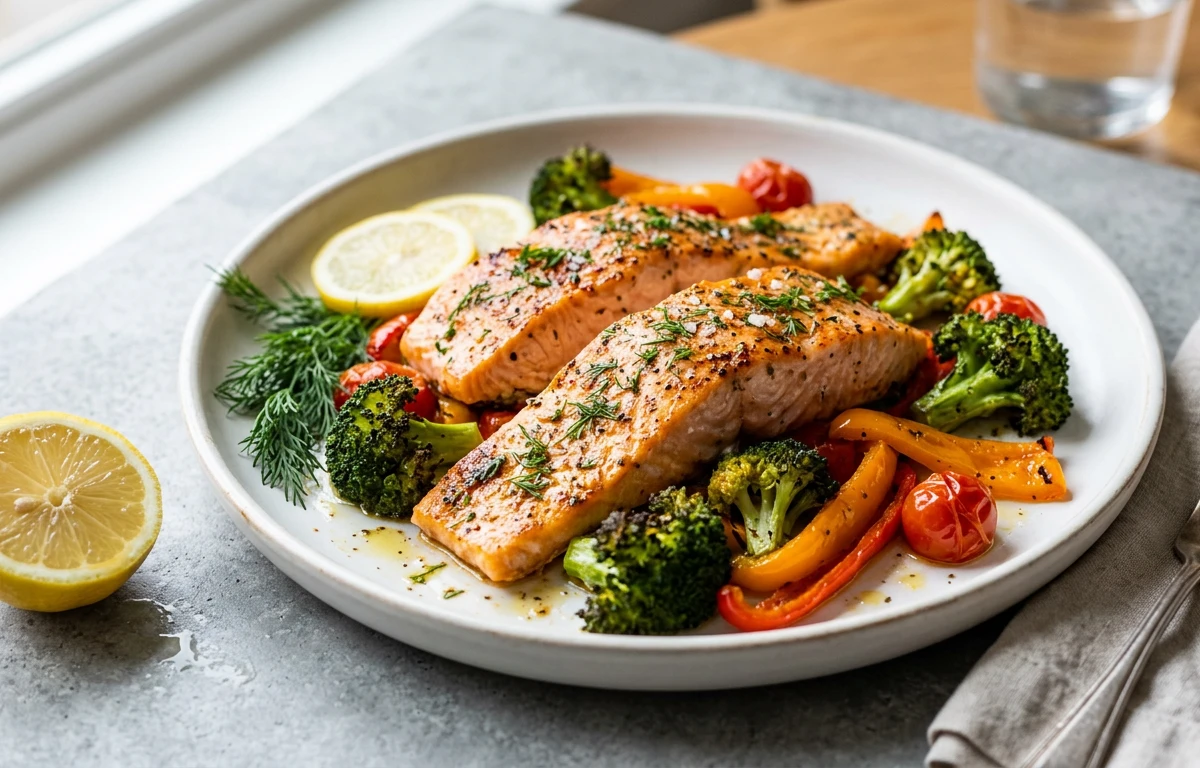
Sheet Pan Salmon & Broccoli
A complete dinner on one sheet pan, ready in under 30 minutes. Tender, flaky salmon fillets roasted alongside lightly charred broccoli florets, all tossed in a bright lemon-garlic dressing. Minimal cleanup, maximum flavor.
For 4 servings
- prep
Preheat the oven and prep the pan.
1.Preheat oven to 425°F (220°C).2.Line a large rimmed sheet pan with parchment paper or foil.TIPDon't skip preheating — a hot oven gives the broccoli crispy edges. - mix
Make the lemon-garlic dressing.
1.In a small bowl, whisk 2 tbsp olive oil with minced garlic, lemon juice, and dijon mustard until emulsified.2.Season with 0.25 tsp salt and a pinch of black pepper. - prep
Season the broccoli.
1.Place broccoli florets in a medium bowl.2.Drizzle with remaining 1 tbsp olive oil, 0.25 tsp salt, and a pinch of chili flakes.3.Toss well to coat evenly.TIPMake sure florets are similar in size so they roast evenly. - prep
Arrange everything on the sheet pan.
1.Spread broccoli in a single layer on one half of the prepared pan.2.Place salmon fillets skin-side down on the other half.3.Spoon the lemon-garlic dressing evenly over the salmon fillets. - bake · ~14 min
Roast until salmon flakes easily.
1.Place sheet pan in the preheated oven.2.Roast 12-15 minutes, until salmon is opaque and flakes easily with a fork.3.Broccoli should be tender with lightly charred edges.TIPSalmon internal temperature should reach 145°F (63°C) in the thickest part. - garnish
Garnish and serve immediately.
1.Remove pan from oven and sprinkle fresh parsley over everything.2.Serve hot with lemon wedges on the side.
What to keep in mind.
8 tips from the recipe — small details that make a real difference to the final dish.
- 1For even cooking, cut broccoli florets into similar-sized pieces so they all roast at the same rate.
- 2Pat salmon fillets dry with paper towels before dressing to help the lemon-garlic mixture adhere better.
- 3Arrange salmon skin-side down and don't flip — the skin crisps up and protects the delicate flesh.
- 4Line the sheet pan with parchment paper for easy cleanup and to prevent the fish from sticking.
- 5Use a fish spatula to lift the salmon off the pan — it slides under the skin without breaking the fillet.
- 6Let the salmon rest for 2 minutes after roasting so the juices redistribute evenly.
- 7If your broccoli begins to burn before the salmon is done, remove it to a plate and return the fish to the oven briefly.
- 8For make-ahead, prep the broccoli and dressing up to a day in advance; roast just before serving.
Adapt it for your goals.
Low-oil
Reduce olive oil to 1½ tbsp total and brush the dressing onto the salmon instead of spooning it — cuts calories while keeping flavor, ideal for those watching fat intake.
high proteinHigh-protein
Swap the broccoli for an equal weight of trimmed asparagus or green beans — both add extra fiber and protein, making this a more satiating meal post-workout.
jainJain
Substitute minced garlic with asafoetida (hing) and replace the dijon mustard with a pinch of black salt — Jain diners avoid root vegetables, and this keeps the dressing pungent and savory.
veganVegan
Replace salmon with 4 large portobello mushroom caps, score the tops, and follow the same roasting instructions — mushrooms become meaty and absorb the lemon-garlic dressing beautifully.
Why this is on our healthy list.
Rich in Omega-3s
Salmon provides docosahexaenoic acid (DHA) and eicosapentaenoic acid (EPA), which support brain function and reduce inflammation throughout the body.
High in Vitamin C
Broccoli and fresh lemon juice are excellent sources of immune-boosting vitamin C, with one serving covering nearly the entire daily requirement.
Good Source of Fiber
Broccoli contributes soluble and insoluble fiber that promotes healthy digestion and helps maintain steady blood sugar levels after eating.
Low in Saturated Fat
This dish relies on heart-healthy olive oil rather than butter or cream, keeping saturated fat content naturally low while delivering antioxidants.
Frequently asked questions
Yes, but thaw them completely in the refrigerator overnight and pat very dry before dressing — excess moisture will steam the fish instead of roasting it.