Sheet Pan Salmon & Potato Wedges
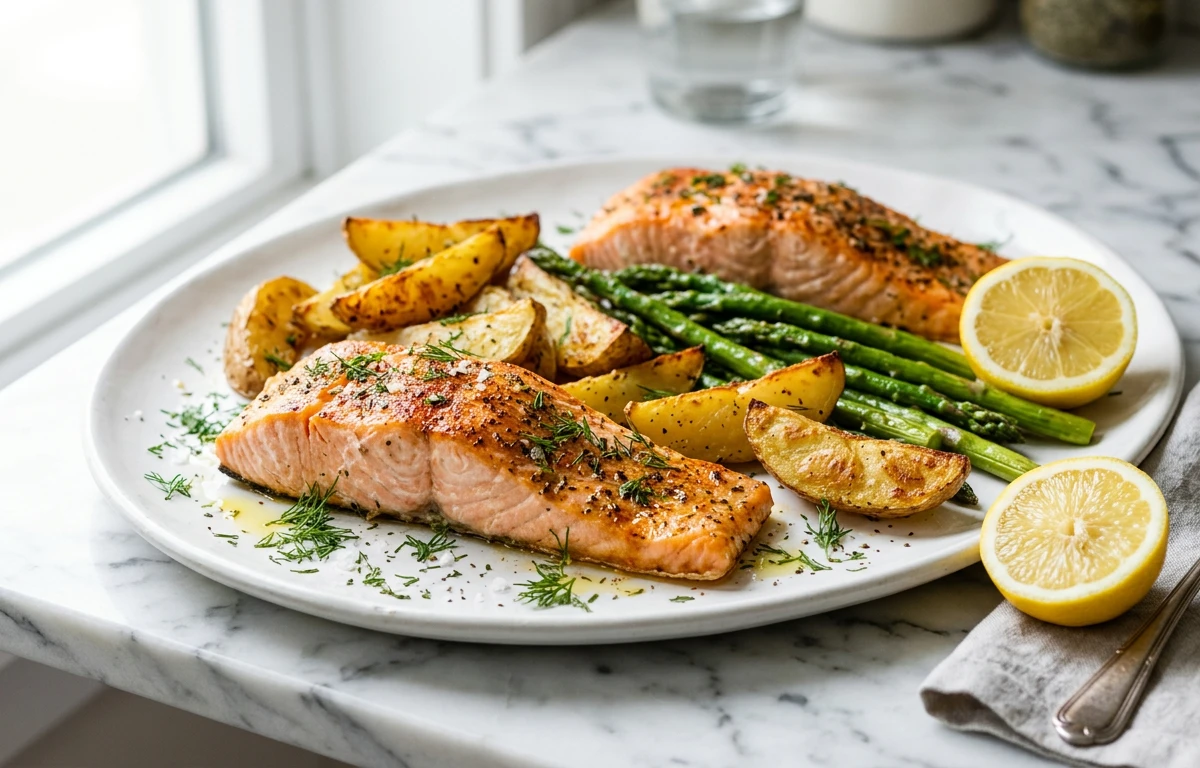
Crispy oven-roasted potato wedges and flaky salmon fillets all cooked together on one sheet pan. A fuss-free weeknight dinner with minimal clean-up that delivers big on flavor — the potatoes get golden and crunchy while the salmon stays tender and moist, finished with a squeeze of lemon.
For 4 servings
- prep
Preheat the oven and prep the sheet pan.
1.Preheat oven to 425°F (220°C) with rack in the middle position.2.Line a large rimmed sheet pan with parchment paper or lightly grease it. - prep
Season the potato wedges.
1.Cut potatoes lengthwise into wedges about ½-inch thick.2.In a large bowl, toss wedges with 2 tablespoons olive oil, garlic powder, smoked paprika, oregano, half the salt, and the black pepper until evenly coated.TIPKeep the wedges evenly sized so they roast at the same rate. - bake · ~20 min
Start roasting the potatoes.
1.Spread potato wedges in a single layer on one half of the sheet pan.2.Roast for 20 minutes, until they start to soften and edges begin to brown.TIPDon't crowd the potatoes — give them space to crisp up. - prep
Season the salmon while potatoes roast.
1.Pat salmon fillets dry with paper towels.2.Rub fillets with remaining 1 tablespoon olive oil and sprinkle with remaining salt.3.Let salmon sit at room temperature until potatoes are ready. - assemble
Add salmon to the sheet pan.
1.Pull the sheet pan from the oven and push potatoes slightly to the side.2.Place salmon fillets skin-side down on the empty half of the pan, leaving space between each piece. - bake · ~15 min
Bake until salmon is cooked through and potatoes are crisp.
1.Return sheet pan to the oven and bake 12-15 minutes.2.Salmon is done when it flakes easily with a fork and internal temperature reaches 145°F (63°C) at the thickest part.3.Potato wedges should be golden brown and crisp on the edges.TIPIf potatoes need more browning, remove salmon to a plate and continue roasting potatoes an extra 5 minutes. - garnish
Finish with lemon and parsley, then serve.
1.Squeeze fresh lemon juice over the salmon and potatoes.2.Scatter chopped parsley on top and serve immediately.
What to keep in mind.
6 tips from the recipe — small details that make a real difference to the final dish.
- 1Pat salmon completely dry before seasoning for the best sear and flakiest texture.
- 2Arrange potato wedges in a single layer with cut sides down to maximize browning and crispness.
- 3If your salmon fillets are thinner than 1 inch, check for doneness after 10 minutes of baking.
- 4Let the salmon rest at room temperature for 10 minutes before roasting so it cooks evenly.
- 5Use a fish spatula to lift salmon off the pan without breaking the delicate skin.
- 6Reheat leftovers in a 350°F oven for 5–7 minutes to restore potato crispness without drying the fish.
Adapt it for your goals.
Citrus-herb
Replace the lemon squeeze with a mix of orange juice and fresh dill for a sweeter, brighter finish that pairs well with the smoky paprika.
spicySpicy
Add ¼ teaspoon cayenne pepper to the potato seasoning and drizzle sriracha over the salmon before baking for a spicy kick.
low oilLow-oil
Halve the olive oil to 1.5 tbsp total and use a nonstick pan; spray potatoes with cooking spray instead—this reduces fat while still achieving some crispness.
veggie heavyVeggie-heavy
Add 2 cups of broccoli florets or asparagus spears to the pan alongside the salmon for the last 10 minutes of baking for a complete meal.
Why this is on our healthy list.
Rich in Omega-3s
Salmon is a top source of heart-healthy omega-3 fatty acids, which support brain function and reduce inflammation.
Good Source of Potassium
Potatoes provide potassium, an essential mineral that helps maintain healthy blood pressure and muscle function.
High-Quality Protein
A single serving of this dish delivers about 35 grams of protein from the salmon, supporting muscle repair and satiety.
Vitamin D Boost
Salmon naturally contains vitamin D, important for bone health and immune support, especially in winter months.
Frequently asked questions
Yes, but thaw it completely in the refrigerator overnight and pat it very dry before seasoning to avoid steaming instead of roasting.