Sheet Pan Salmon & Potatoes
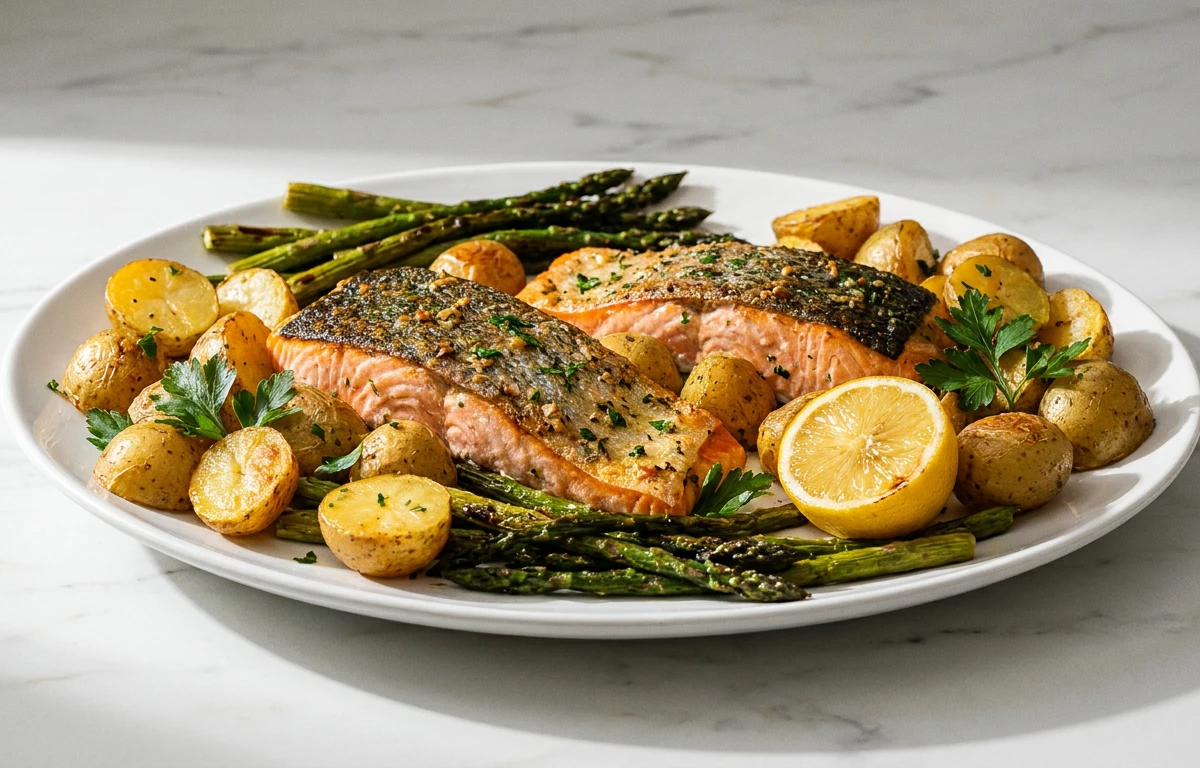
Flaky, tender salmon fillets roasted alongside crispy, golden baby potatoes and vibrant green beans. A complete, healthy dinner that comes together on one single sheet pan with minimal cleanup. Perfect for busy weeknights when you want something nourishing and delicious without the fuss.
For 4 servings
- prep
Preheat the oven and prepare the pan.
1.Place a rack in the center of the oven and preheat to 220°C (425°F).2.Line a large rimmed sheet pan with parchment paper, or lightly grease it. - prep · ~15 min
Season and roast the potatoes.
1.Spread the halved baby potatoes across the sheet pan.2.Drizzle with 1 tablespoon olive oil and sprinkle with half the salt and pepper.3.Toss with your hands to coat evenly, then arrange cut-side down.4.Roast for 15 minutes.TIPStarting the potatoes first ensures they get perfectly crisp by the time the salmon is done. - prep
Make the mustard glaze.
In a small bowl, whisk together the dijon mustard, minced garlic, lemon juice from half the lemon, and the remaining olive oil until smooth.
- assemble
Add green beans and salmon to the pan.
1.Remove the hot sheet pan from the oven. Push the potatoes to one side.2.Scatter the green beans in the center and place the salmon fillets skin-side down on the other side.3.Spoon the mustard glaze evenly over each salmon fillet.4.Season the green beans and potatoes with the remaining salt and pepper. - bake · ~11 min
Roast until salmon is cooked through.
Return the sheet pan to the oven and roast for an additional 10 to 12 minutes. The salmon is done when it flakes easily with a fork and reaches an internal temperature of 63°C (145°F).
TIPFor extra browning, switch the oven to broil for the final 1-2 minutes—keep a close eye so it doesn't burn. - garnish
Garnish and serve.
Sprinkle the chopped fresh dill over everything and serve immediately with the reserved lemon wedges on the side.
What to keep in mind.
5 tips from the recipe — small details that make a real difference to the final dish.
- 1Pat the salmon fillets dry with paper towels before glazing for better browning and a crisper skin.
- 2Arrange the potatoes cut-side down on the pan to maximize contact with the hot surface for deeper caramelization.
- 3If your green beans are thick, blanch them for 1 minute in boiling water before adding to the pan for even tenderness.
- 4For salmon that's medium-rare at the center, pull it from the oven at 62°C (143°F) and let carryover cooking finish it.
- 5Leftover sheet pan dinner keeps well for up to 2 days in the fridge; reheat gently in a low oven or toaster oven to preserve textures.
Adapt it for your goals.
Herb-Crusted Salmon
Add 1 tablespoon of dried breadcrumbs or panko mixed with extra chopped dill and parsley on top of the glaze for a crunchy, fragrant crust.
Spicy Maple GlazeSpicy Maple Glaze
Replace the Dijon with a mix of 1 tablespoon maple syrup, 1 teaspoon sriracha, and 1 tablespoon soy sauce for a sweet-heat twist.
Low Carb / KetoLow-Carb / Keto
Swap the baby potatoes for cauliflower florets (tossed in oil and roasted 10 minutes first) and increase the green beans for a low-carb, keto-friendly meal.
MediterraneanMediterranean
Replace dill with dried oregano or za'atar, add halved cherry tomatoes alongside the green beans, and serve with crumbled feta on top.
Why this is on our healthy list.
Rich in Omega-3s
Salmon provides a generous dose of heart-healthy omega-3 fatty acids, which support brain function and reduce inflammation.
High in Vitamin C
Lemon juice and fresh green beans supply vitamin C, a key antioxidant that boosts immune health and aids iron absorption.
Good Source of Fiber
Baby potatoes eaten with the skin and fresh green beans contribute dietary fiber, promoting digestive health and satiety.
Lean Protein Power
Each serving of salmon delivers about 30g of high-quality protein, essential for muscle repair and maintaining a healthy metabolism.
Frequently asked questions
Yes, but thaw them completely in the refrigerator overnight and pat very dry before glazing to avoid excess moisture that would steam the fish instead of roasting it.