Sheet-Pan Salmon with Lemon & Asparagus
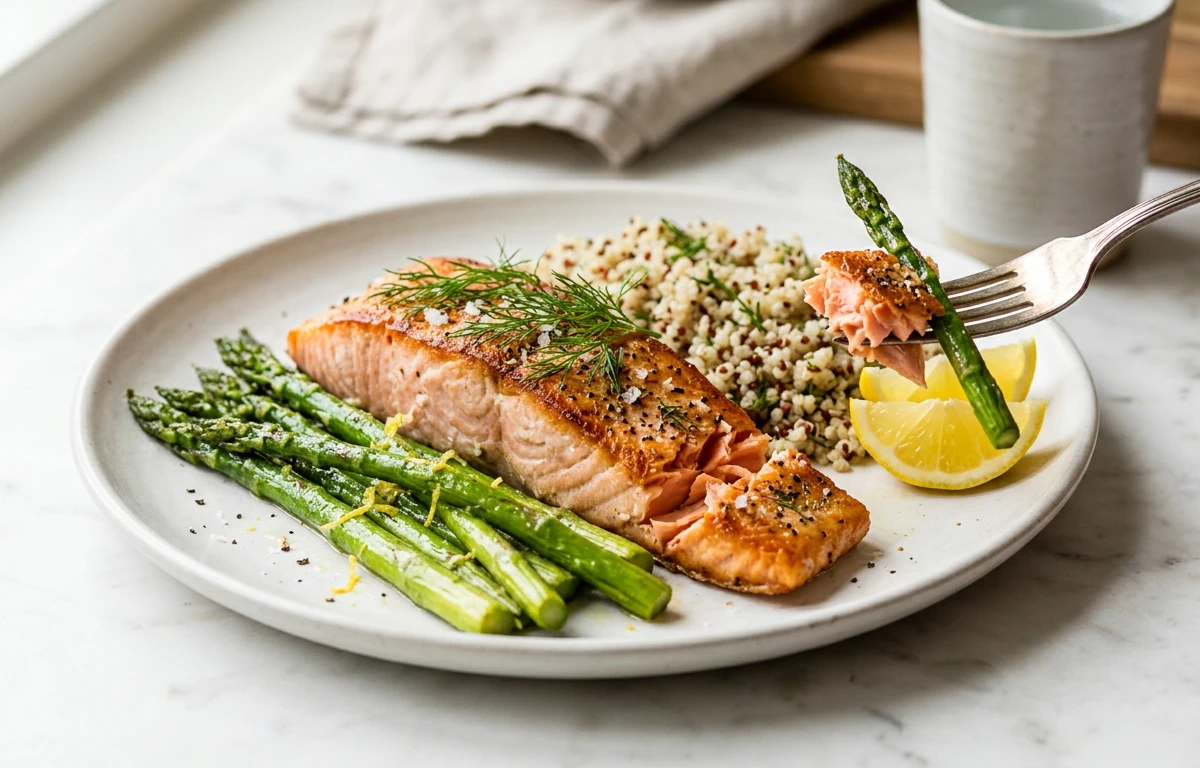
Flaky, tender salmon fillets roasted alongside crisp-tender asparagus on a single sheet pan. Fresh lemon slices and a simple olive oil drizzle bring bright, clean flavor to this quick weeknight dinner. Everything bakes together in under 20 minutes, making cleanup as effortless as the cooking.
For 4 servings
- prep
Preheat oven and prepare the baking sheet.
1.Position a rack in the middle of the oven and preheat to 400°F (200°C).2.Line a large rimmed baking sheet with parchment paper. - prep
Season the salmon and asparagus.
1.Pat the salmon fillets dry with paper towels and place them on one side of the prepared baking sheet.2.Arrange the trimmed asparagus on the other side of the baking sheet.3.Drizzle 1 tablespoon olive oil over the salmon and the remaining 1 tablespoon over the asparagus.4.Scatter the minced garlic evenly over both the salmon and asparagus.5.Season everything with salt and black pepper.6.Lay lemon slices over the salmon fillets.TIPPatting the salmon dry helps it brown more evenly and prevents steaming. - bake · ~15 min
Roast until the salmon is just cooked through.
Bake for 12 to 15 minutes, until the salmon flakes easily with a fork and the asparagus is tender with lightly browned tips. The internal temperature of the thickest part of the salmon should reach 135°F for medium doneness.
TIPStart checking at 10 minutes if your fillets are on the thinner side — thin pieces cook fast. - serve
Plate and serve with lemon wedges.
Transfer the salmon and asparagus to plates. Serve immediately with the reserved lemon wedges for squeezing over the top.
TIPLet the salmon rest 2 minutes off the pan so the juices settle — the fish stays moist.
What to keep in mind.
7 tips from the recipe — small details that make a real difference to the final dish.
- 1Pat the salmon very dry with paper towels before seasoning to ensure a golden, non-steamed exterior.
- 2Trim the woody ends of the asparagus by snapping one spear — it will naturally break where the tough part ends.
- 3Arrange salmon and asparagus in a single layer with space between pieces so they roast, not steam.
- 4Use center-cut salmon fillets of even thickness (about 1 inch) so all portions cook at the same rate.
- 5Check doneness at 10 minutes for thin fillets; thicker ones may need the full 15 minutes.
- 6Let the cooked salmon rest for 2 minutes off the hot pan to redistribute juices and stay moist.
- 7For extra browning, switch the oven to broil for the last 1–2 minutes, watching closely.
Adapt it for your goals.
Herb-crusted
Mix 2 tablespoons chopped fresh dill or parsley into the olive oil and garlic before drizzling. The herbs add a fragrant, garden-fresh layer that complements the lemon and salmon.
spicy sweetSpicy-sweet
Sprinkle ½ teaspoon smoked paprika and 1 teaspoon brown sugar over the salmon along with the salt and pepper. The paprika adds smoky warmth and the sugar helps the top caramelize beautifully.
low oilLow-oil
Reduce olive oil to 1 tablespoon total, using a kitchen spray or brushing it on. The salmon stays moist from its own natural oils, and the asparagus becomes lightly charred.
jainJain
Omit the garlic from the recipe entirely. Use a pinch of asafoetida (hing) dissolved in the olive oil for a garlic-like aroma that is permitted in Jain diets.
Why this is on our healthy list.
Rich in Omega-3 Fatty Acids
Salmon is an excellent source of long-chain omega-3s (EPA and DHA), which support heart and brain health.
High-Quality Protein
Each serving of salmon provides about 30–35 grams of complete protein, helping maintain muscle and keep you full.
Good Source of Folate
Asparagus naturally contains folate (vitamin B9), important for cell growth and DNA synthesis.
Vitamin C from Lemon
Fresh lemon juice adds a dose of vitamin C, which aids iron absorption and supports immune function.
Low in Carbohydrates
This dish is naturally low-carb and keto-friendly, with only trace carbs coming from the asparagus and lemon.
Frequently asked questions
Yes, but thaw them completely in the refrigerator overnight and pat very dry before seasoning. Frozen salmon releases more water, so skip the skin if you want it crisp.