.webp)
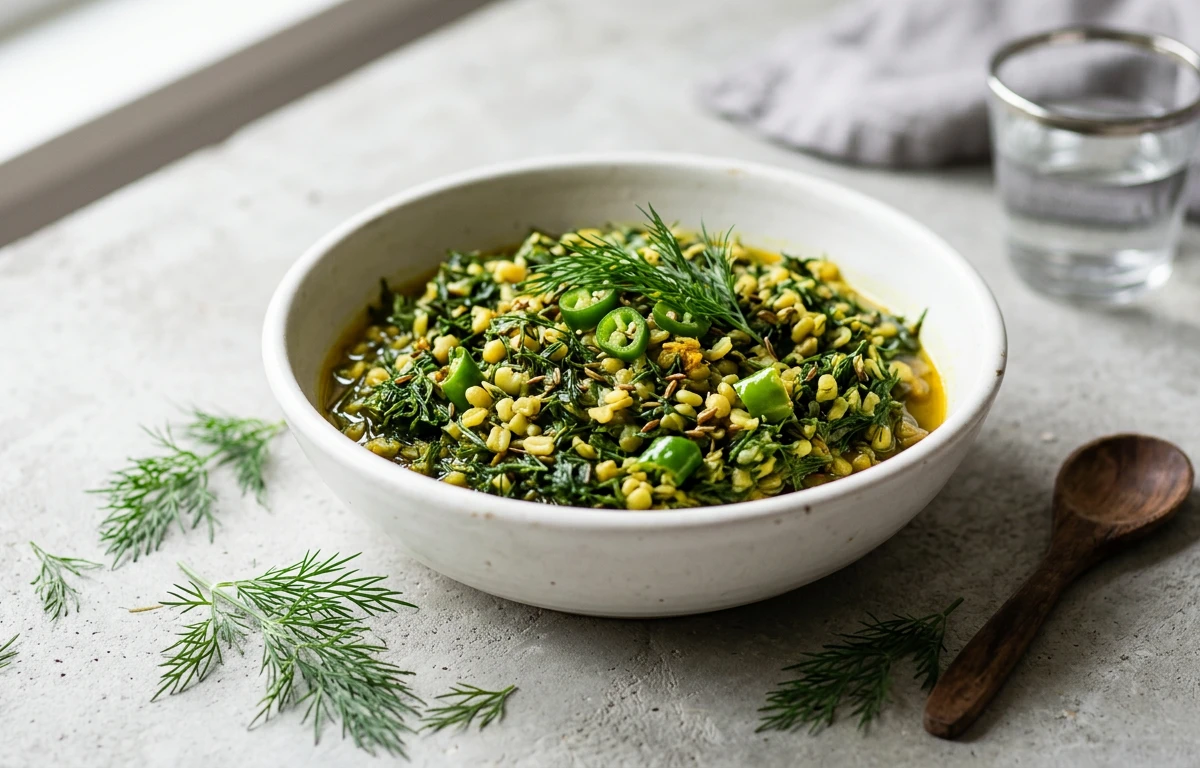
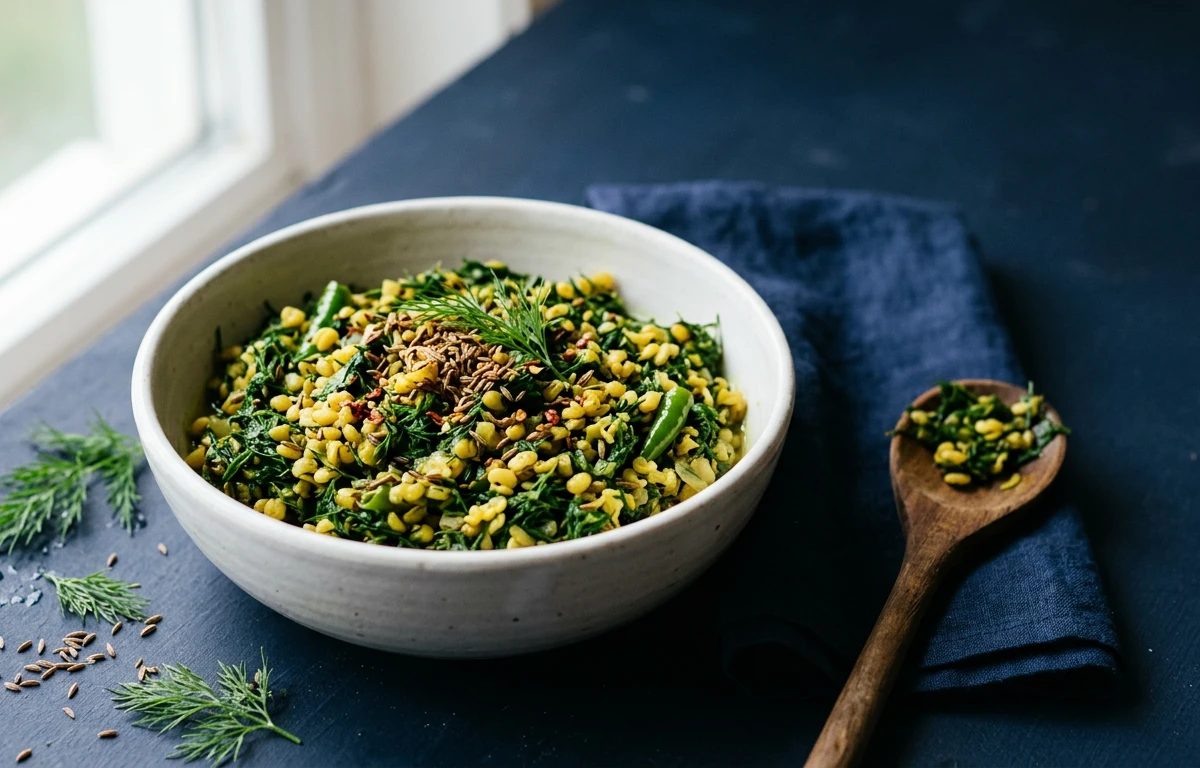
Shepu Dal (Lentils with Dill)
A light, earthy Maharashtrian dal with fresh dill leaves that give it a wonderfully unique, slightly sweet and aromatic flavour. This comforting lentil dish is gently tempered with mustard seeds, cumin, and hing, and finished with a squeeze of lemon for the perfect tangy balance.
For 4 servings
- prep
Wash and soak the dal.
Wash the toor dal under running water until the water runs clear. Soak in fresh water for 15 minutes, then drain well.
TIPSoaking softens the dal and helps it cook faster without turning mushy. - pressure cook · ~20 min
Pressure cook the dal.
1.Add the drained dal to a pressure cooker with 2 cups water, turmeric, and half the chopped garlic.2.Close the lid and cook on medium heat for 3-4 whistles.3.Let the pressure release naturally. Open and whisk the dal lightly until smooth.TIPNaturally releasing the pressure prevents the dal from becoming pasty. Whisk while still hot for the creamiest texture. - simmer · ~10 min
Simmer the dal with dill and tomatoes.
1.Add the chopped tomato, slit green chilies, and all the fresh dill to the cooked dal.2.Stir in the salt and bring the dal to a gentle boil, then reduce heat to a simmer and cook for 8-10 minutes until the dill is perfectly wilted and the tomatoes soften.3.If the dal is too thick, add a splash of water to reach your preferred consistency.TIPAvoid overcooking at this stage — dill loses its fresh, sweet flavour if boiled too long. - temper · ~2 min
Make the tempering.
1.Heat ghee in a small tadka pan over medium flame.2.Add mustard seeds and let them crackle and pop.3.Add cumin seeds and sauté until fragrant, about 15 seconds.4.Add the remaining crushed garlic and sauté until lightly golden.5.Add the pinch of hing and immediately pour the entire tempering over the simmering dal.TIPSwirl the tempering into the dal just before serving so the burst of roasted garlic flavour remains fresh. A tiny drizzle of raw ghee on top elevates the aroma even more. - mix · ~1 min
Finish and serve.
1.Stir the tempering into the dal, then immediately sprinkle the red chili powder on top without mixing it in too deeply.2.Squeeze in the fresh lemon juice and give the dal one final gentle stir.3.Ladle into a serving bowl and garnish with fresh chopped coriander.TIPSqueeze lemon juice only at the very end — if it cooks, the tangy brightness dulls significantly.
What to keep in mind.
6 tips from the recipe — small details that make a real difference to the final dish.
- 1Soaking toor dal for 15 minutes reduces cooking time and ensures even softness without becoming mushy.
- 2For the creamiest dal, whisk the pressure-cooked lentils vigorously while they are still hot.
- 3Add dill only after the dal is cooked; prolonged boiling destroys its delicate, sweet aroma.
- 4The tempering should be poured over the dal just before serving to preserve the fresh, roasted garlic fragrance.
- 5Squeeze lemon juice at the very end — heat dulls its bright, tangy kick.
- 6If the dal thickens on standing, loosen it with a little hot water before serving.
Adapt it for your goals.
Vegan
Replace ghee with coconut oil or a neutral oil in the tempering. The dal remains just as comforting and pairs beautifully with steamed rice.
high proteinHigh-protein
Swap half the toor dal for split moong dal (yellow lentils) — they cook faster and boost the protein content while keeping the texture light.
low oilLow-oil
Reduce ghee to 1 teaspoon and dry-roast the mustard seeds and cumin in a non-stick pan before adding a teaspoon of water to create a tadka-like effect.
gluten freeGluten-free
This dal is naturally gluten-free; just double-check your asafoetida brand is labeled gluten-free, as some commercial blends contain wheat flour.
Why this is on our healthy list.
Rich in Plant Protein
Toor dal provides a substantial source of plant-based protein, making this dish a satisfying and muscle-friendly meal for vegetarians.
High in Dietary Fiber
Lentils and fresh dill contribute soluble fiber, which supports healthy digestion and helps maintain steady blood sugar levels.
Packed with Antioxidants
Turmeric, dill leaves, and lemon juice deliver antioxidants like curcumin and vitamin C that help protect cells from oxidative stress.
Good Source of Iron
Pigeon peas and dill both contain iron, which is essential for oxygen transport in the blood and maintaining energy levels.
Naturally Low in Fat
With only a small amount of ghee, this dal is a light, heart-friendly dish that fits well into a balanced diet.
Frequently asked questions
Fresh dill is strongly recommended for its sweet, grassy aroma. Dried dill lacks the same vibrancy and can turn slightly bitter when simmered.



.webp)