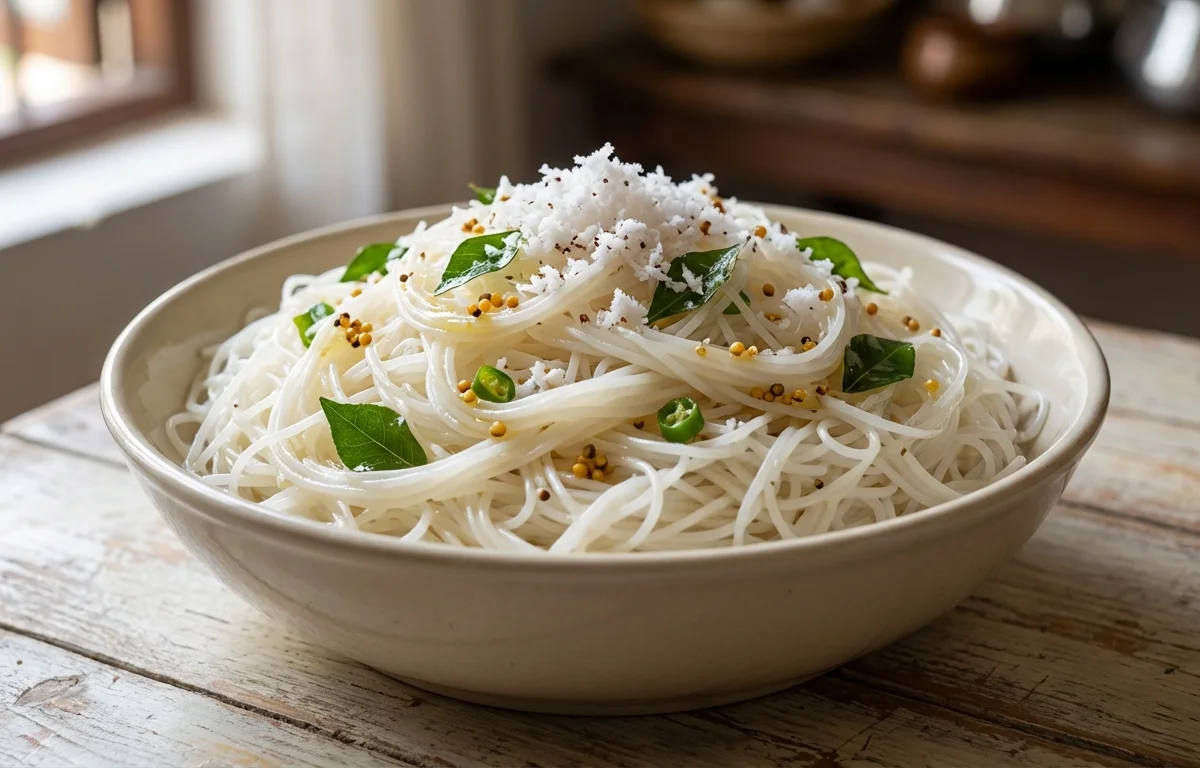
Shevai
Light, comforting seasoned vermicelli cooked the home-style way with onions, green chilies, and a gentle tempering. This everyday Indian dish is quick to make and works beautifully for breakfast or a simple side in a larger meal.
For 4 servings
- prep
Prepare the ingredients.
1.Slice the onion thinly.2.Slit the green chilies.3.Chop the coriander leaves and keep the lemon juice ready. - temper · ~2 min
Make the tempering.
1.Heat oil in a kadai over medium heat.2.Add mustard seeds and let them splutter.3.Add cumin seeds, urad dal, and chana dal.4.Add curry leaves and green chilies and cook for a few seconds.TIPKeep the heat medium so the dals turn lightly golden without burning. - saute · ~4 min
Cook the onion.
Add the sliced onion and cook until soft and lightly translucent. Do not brown it deeply.
- boil · ~5 min
Add water and bring it to a boil.
Pour in the water and add salt. Let it come to a steady boil over medium-high heat.
- mix · ~1 min
Add the vermicelli.
Lower the heat and add the vermicelli gradually, stirring well so it does not clump.
TIPStir as you add the vermicelli to keep the strands separate. - simmer · ~6 min
Cook until the shevai is soft.
Cover loosely and cook on low heat until the vermicelli absorbs the water and turns tender.
TIPIf it looks dry before the vermicelli softens, sprinkle in a little hot water. - garnish
Finish with lemon juice and coriander.
Turn off the heat, fluff the shevai gently, then mix in the lemon juice and coriander leaves.
- serve
Serve hot.
What to keep in mind.
7 tips from the recipe — small details that make a real difference to the final dish.
- 1Use roasted vermicelli if possible; if using plain, dry-roast it first for a nuttier taste and less stickiness.
- 2Let the mustard fully splutter before adding the dals, or the tempering will taste raw.
- 3Cook the onion only until soft and translucent; browned onions will make this shevai heavier and sweeter.
- 4Add the vermicelli in a steady rain while stirring so the strands stay separate instead of forming lumps.
- 5Keep the simmer low and cover loosely, not tightly, so the vermicelli absorbs water without turning mushy.
- 6Mix in lemon juice only after switching off the heat to keep the fresh tang bright.
- 7Leftovers can be revived with a sprinkle of hot water and a gentle fluff before reheating.
Adapt it for your goals.
Vegetable-loaded
Add peas, grated carrot, or finely chopped beans with the onion for a more filling breakfast and extra texture.
low oilLow-oil
Reduce the oil slightly and keep the tempering on medium heat; you still get flavor, but with a lighter finish.
spicierSpicier
Use extra green chilies or add a pinch of black pepper for a sharper, more warming version.
jain styleJain-style
Skip the onion and increase curry leaves and coriander; the dish stays light and aromatic without alliums.
Why this is on our healthy list.
Light and Easy Meal
This simple vermicelli dish is gently seasoned and cooked with minimal oil, making it suitable for a lighter breakfast or side.
Digestive Spice Tempering
Cumin, curry leaves, green chili, and lemon add aroma and brightness while keeping the dish from tasting flat or greasy.
Some Plant-Based Protein and Texture
Urad dal and chana dal in the tempering contribute a little protein and a pleasant bite in an otherwise soft dish.
Frequently asked questions
This usually happens when the vermicelli is added all at once or not stirred while going in. Add it gradually into boiling water and keep stirring to separate the strands.