
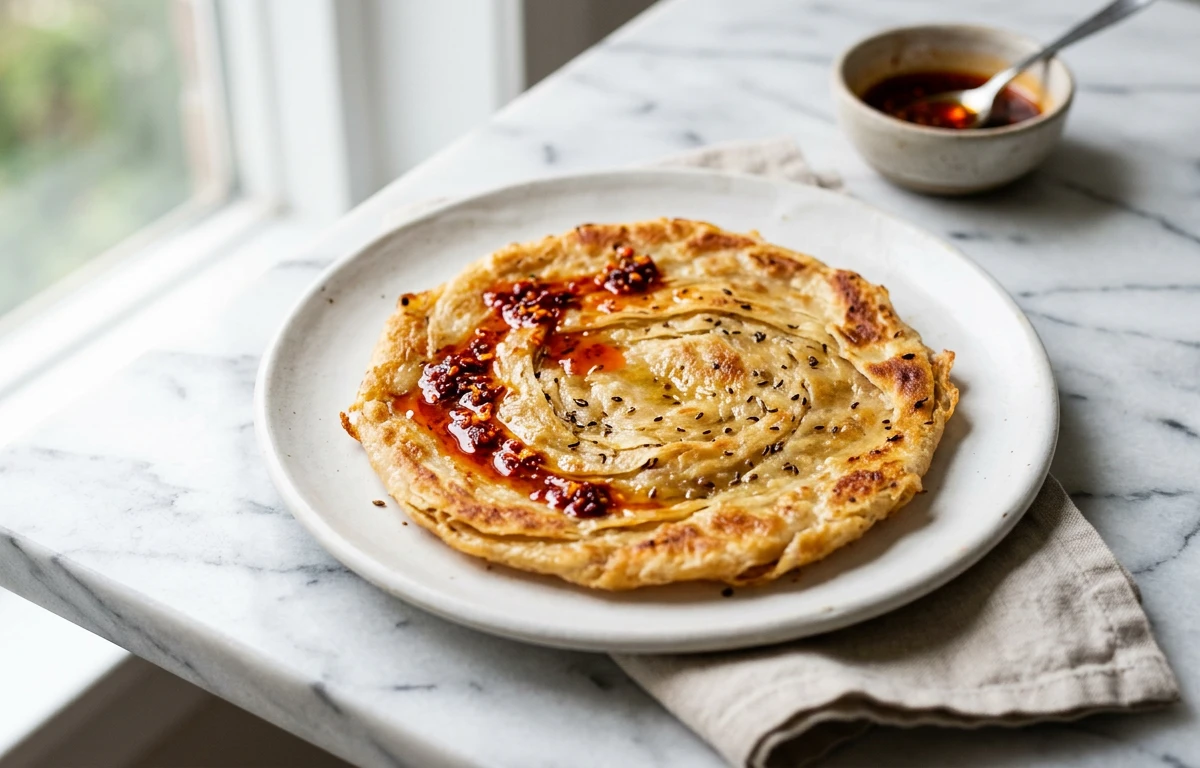
Simple Ajwain Paratha
Crispy, flaky whole wheat flatbreads infused with the warm, thyme-like aroma of carom seeds. A staple in North Indian homes, these parathas come together with minimal ingredients yet deliver a comforting flavor that pairs perfectly with yogurt, pickle, or a hot cup of chai.
For 4 servings
- prep · ~10 min
Make the dough.
1.In a large mixing bowl, combine atta, ajwain, and salt. Mix well.2.Add 2 tablespoons ghee and rub it into the flour until the mixture resembles breadcrumbs.3.Gradually add warm water, a little at a time, and knead into a smooth, soft dough.4.Cover the dough with a damp cloth and let it rest for 10 minutes.TIPThe dough should be soft but not sticky. A well-kneaded dough results in flakier parathas. - prep
Divide and roll the dough.
1.Divide the rested dough into 8 equal-sized balls.2.Dust a ball lightly with dry atta and flatten it gently.3.Roll it out into a disc about 6 inches in diameter. - fry · ~4 min
Cook the paratha.
1.Place a tawa on medium-high heat. Let it get hot.2.Gently place the rolled paratha on the hot tawa.3.Cook for about 30 seconds until small bubbles appear. Flip the paratha.4.Spread 0.5 teaspoon of ghee on the cooked side, then flip again.5.Spread 0.5 teaspoon of ghee on the other side. Press gently with a spatula until golden and crisp.6.Remove and keep warm. Repeat for the remaining dough balls.TIPKeep the tawa at a consistent medium-high heat. Too low and the paratha will be hard; too high and it will burn. - serve
Serve hot.
Serve the hot ajwain parathas immediately with fresh yogurt, a knob of butter on top, or a side of mango pickle.
What to keep in mind.
6 tips from the recipe — small details that make a real difference to the final dish.
- 1Rub the ghee into the flour until it resembles breadcrumbs—this creates the flaky layers in the paratha.
- 2Use warm water for kneading; it relaxes the gluten and makes the dough easier to roll.
- 3Rest the dough for at least 10 minutes; this prevents shrinkage and ensures soft parathas.
- 4Cook on medium-high heat—if the tawa is too cool, the paratha turns hard; too hot and it burns.
- 5Press gently with a spatula while cooking to encourage even browning and flaky layers.
- 6Stack cooked parathas in a cloth-lined basket to keep them soft and warm until serving.
Adapt it for your goals.
Stuffed ajwain paratha
Fill the rolled disc with a mixture of mashed boiled potatoes, finely chopped green chilies, and coriander before sealing and rolling again. This makes a hearty, all-in-one meal.
veganVegan
Replace ghee with an equal amount of neutral oil (like sunflower or avocado) both in the dough and for cooking. The parathas remain crisp and flaky.
gluten freeGluten-free
Substitute whole wheat flour with a gluten-free blend of 1.5 cups sorghum flour and 0.5 cup millet flour. Add 1 tsp psyllium husk powder to help bind the dough.
low oilLow-oil
Cook the paratha on a dry tawa without any ghee, then brush with just 1 tsp of ghee after cooking. The texture will be softer but still flavorful.
spiced upSpiced-up
Add 1/2 tsp finely crushed black pepper and 1/4 tsp turmeric to the flour along with ajwain for a warm, earthy twist that pairs well with curries.
Why this is on our healthy list.
Digestive Aid
Ajwain (carom seeds) are traditionally used in Indian cuisine to aid digestion and reduce bloating, making these parathas gentle on the stomach.
High in Whole Grains
Made with atta (whole wheat flour), each paratha provides dietary fiber that supports sustained energy and healthy digestion.
Healthy Fats from Ghee
Ghee adds butyrate, a short-chain fatty acid known to support gut health, and provides a rich flavor without excessive saturated fat.
Frequently asked questions
Add warm water one tablespoon at a time—if the dough sticks to your fingers, dust with a little flour; if it cracks, add a splash more water and knead again.


