Simple Aloo Methi
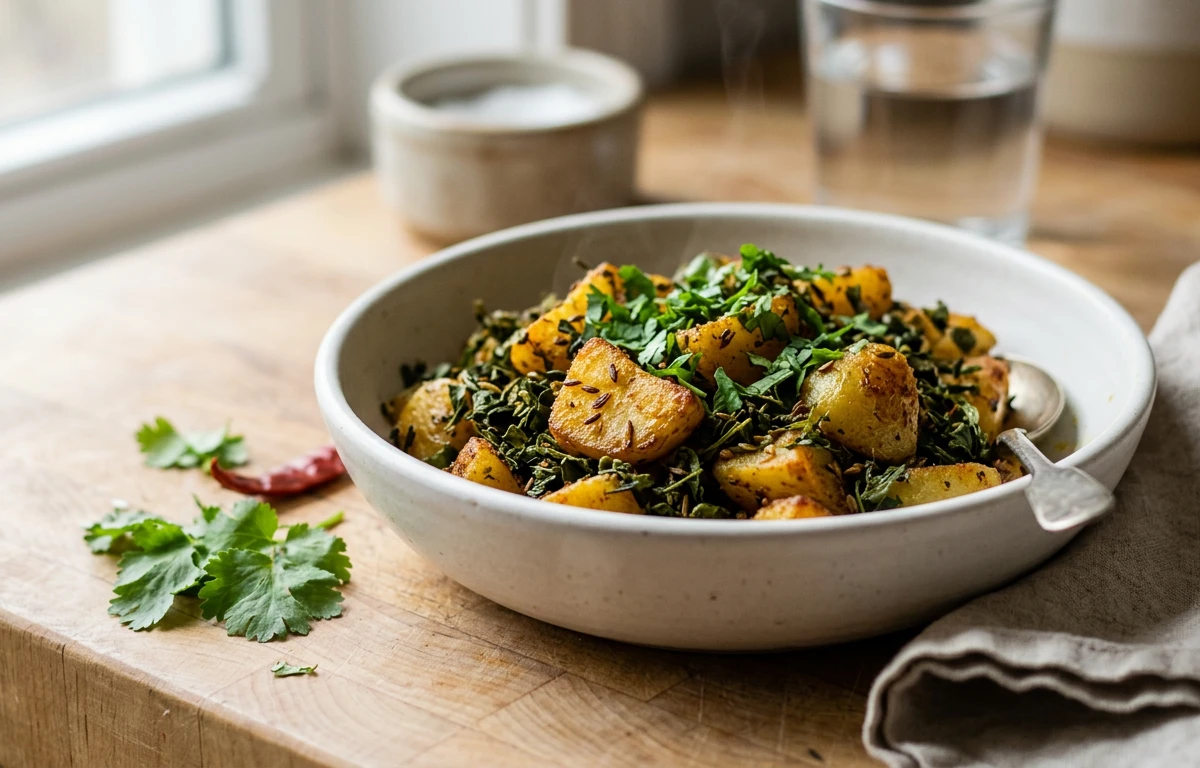
A comforting, homestyle North Indian dry sabzi where tender potatoes meet the earthy, slightly bitter notes of fresh fenugreek leaves. Cooked with minimal spices and a gentle tempering of cumin and green chilies, this simple dish comes together in under 30 minutes and pairs perfectly with roti or paratha.
For 4 servings
- prep
Prep the vegetables.
Wash and roughly chop the fenugreek leaves. Discard any thick stems. Peel the potatoes and cube them into small, bite-sized pieces.
- temper · ~2 min
Make the tempering.
1.Heat oil in a kadhai or pan over medium heat until shimmering.2.Add cumin seeds and let them splutter (30 seconds).3.Add chopped garlic and slit green chilies, sauté until garlic turns lightly golden (1 minute).TIPKeep the heat at medium — high heat will burn the garlic and make the dish bitter. - saute · ~15 min
Cook the potatoes.
1.Add the cubed potatoes to the pan and stir well to coat with oil.2.Add turmeric powder, red chili powder, coriander powder, and salt. Mix thoroughly.3.Cover and cook on low heat, stirring occasionally, until potatoes are tender and slightly crisp at the edges (12-15 minutes).TIPDon't add water — the steam from covering the pan is enough to cook the potatoes. Dry-cooking intensifies the flavor. - saute · ~4 min
Wilt the methi leaves.
1.Remove the lid and add all the chopped fenugreek leaves.2.Increase heat to high and stir-fry vigorously for 3-4 minutes until the leaves wilt completely and release their moisture.3.Continue to sauté until any released water evaporates and the sabzi looks glossy and dry.TIPHigh heat at this stage prevents the methi from turning mushy. The leaves should wilt quickly while retaining some texture. - garnish
Finish with garam masala and serve.
Turn off the heat. Sprinkle garam masala over the top and give it one final gentle mix.
- serve
Serve hot with rotis or parathas.
Transfer to a serving bowl and serve immediately while hot. Pairs beautifully with a dollop of fresh yogurt on the side.
What to keep in mind.
7 tips from the recipe — small details that make a real difference to the final dish.
- 1Don't add water while cooking the potatoes — the steam trapped by the lid is enough to cook them through.
- 2Wash the fenugreek leaves well before chopping, as they often have dirt trapped in the folds.
- 3Use small, even-sized potato cubes so they cook uniformly and get slightly crisp edges.
- 4Let the garlic turn just lightly golden in the tempering — burnt garlic will overpower the dish's subtle flavor.
- 5Stir-fry the methi on high heat to wilt it quickly without releasing excess water, keeping the sabzi dry.
- 6Add garam masala only after turning off the heat to preserve its aromatic oils.
- 7This sabzi tastes even better the next day as the flavors meld — store in an airtight container in the fridge.
Adapt it for your goals.
Low-oil
Reduce oil to 1 tablespoon and use a non-stick pan to cut down on fat while still getting the tempering flavors.
high proteinHigh-protein
Add 1/2 cup of boiled chickpeas or paneer cubes along with the potatoes for a more filling, protein-rich version.
jainJain
Skip the garlic and replace it with a pinch of asafoetida (hing) in the tempering to keep it onion-free and garlic-free.
veganVegan
This dish is naturally vegan — simply ensure you use a plant-based oil and serve without any dairy sides.
with peanutsWith peanuts
Crush a handful of roasted peanuts and sprinkle them over the finished sabzi for a nutty crunch and extra texture.
Why this is on our healthy list.
Rich in Iron from Methi
Fresh fenugreek leaves are a good source of dietary iron, which supports healthy blood and energy levels.
High in Fiber
Potatoes with skin and methi leaves both contribute fiber that aids digestion and keeps you full longer.
Low in Calories
This dry sabzi uses minimal oil and no heavy cream or ghee, making it a light yet satisfying vegetable side.
Contains Antioxidants
Turmeric and coriander powder bring antioxidant and anti-inflammatory compounds that support overall wellness.
Frequently asked questions
Yes, use about 3 tablespoons of dried kasuri methi. Crush it in your palms before adding at the end, and skip the high-heat wilting step.



.webp)