.webp)
Simple Banana Stem Stir-Fry (Poriyal)
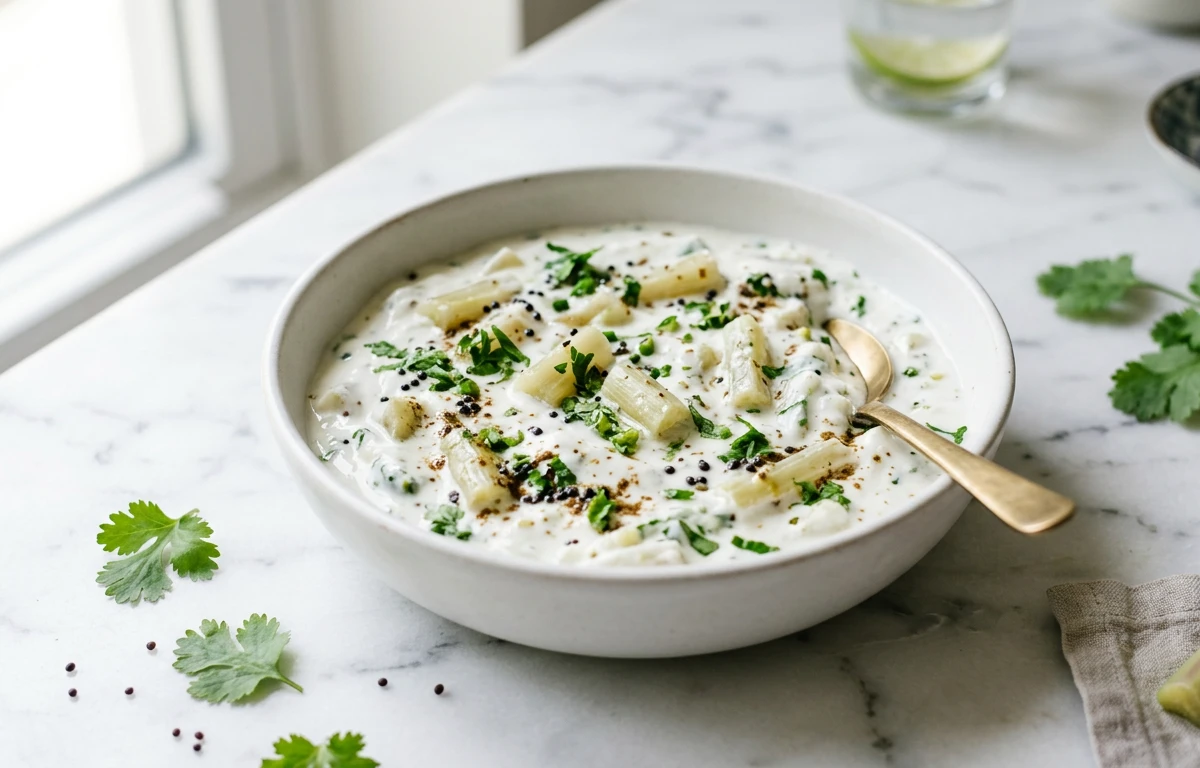
A simple South Indian stir-fry made from tender banana stem, tempered with mustard seeds and urad dal, finished with fresh coconut. Light, mildly spiced, and full of fiber—a humble everyday dish that pairs beautifully with steamed rice and sambar.
For 4 servings
- prep · ~10 min
Clean and chop the banana stem.
Remove the outer fibrous layers of the banana stem until you reach the tender inner core. Slice into thin rounds, removing any long fibers that wrap around. Stack the rounds and finely chop. Immediately drop the chopped stem into a bowl with 2 cups buttermilk mixed with 1 cup water to prevent discoloration and reduce bitterness. Soak for 10 minutes, then drain and squeeze out excess liquid.
- temper · ~2 min
Make the tempering.
1.Heat oil in a kadai over medium heat.2.Add mustard seeds and let them splutter (30 seconds).3.Add urad dal and sauté until golden (30 seconds).4.Add cumin seeds, dried red chili pieces, and curry leaves; sauté until fragrant (20 seconds).TIPWait for the mustard seeds to fully pop before adding the dal—this ensures the oil is hot enough. - saute · ~4 min
Sauté the aromatics.
1.Add finely chopped onion and slit green chilies to the tempering.2.Sauté until onions turn translucent (3-4 minutes). - saute · ~10 min
Cook the banana stem.
1.Add the drained chopped banana stem to the pan.2.Sprinkle salt and turmeric powder; stir to coat the stem evenly.3.Add 3 tablespoons of water, cover, and cook on low heat until the stem turns tender (8-10 minutes).4.Stir once halfway through to prevent sticking.TIPKeep the heat low and let the stem steam gently in its own moisture—high heat will dry it out before it cooks through. - mix · ~1 min
Finish with fresh coconut.
Once the banana stem is tender and any remaining liquid has evaporated, turn off the heat. Add the grated fresh coconut and gently toss to combine. Let the residual heat warm the coconut for a minute.
- serve
Serve hot with steamed rice and sambar.
What to keep in mind.
6 tips from the recipe — small details that make a real difference to the final dish.
- 1Choose only the innermost pale core of the banana stem; discard all tough outer rings to avoid chewiness.
- 2Soak chopped banana stem in buttermilk water for exactly 10 minutes to remove bitterness and prevent browning.
- 3Squeeze the soaked stem firmly before cooking to remove excess liquid, or the poriyal will turn watery.
- 4Do not skip the pinch of turmeric — it counteracts the stem's mild astringency and adds a warm color.
- 5Cook covered on low heat so the stem steams tender without drying out; lift the lid only once to stir.
- 6Add fresh coconut only after turning off the heat — overheating makes it lose its delicate texture and aroma.
Adapt it for your goals.
Vegan
Replace buttermilk with water plus a squeeze of lemon juice for soaking; the acidity still prevents browning. Omit buttermilk entirely for a completely plant-based version.
low oilLow-oil
Cook the banana stem in a nonstick pan with just 1 teaspoon of oil, dry-roasting the urad dal first in a separate pan to keep the tempering intact.
spicier versionSpicier version
Add ½ teaspoon red chili powder or a teaspoon of crushed black pepper along with the turmeric for a heat-forward poriyal that cuts through rich sambar.
coconut freeCoconut-free
Skip the grated coconut and instead stir in 1 tablespoon roasted peanut powder for a nutty, protein-rich finish that still pairs with rice.
Why this is on our healthy list.
High in Dietary Fiber
Banana stem is rich in insoluble fiber that aids digestion and helps prevent constipation, making this stir-fry a gentle gut-friendly side.
Low in Calories and Fat
With just 2 teaspoons of oil and no heavy dairy, this poriyal is a light, low-calorie accompaniment ideal for weight-conscious meals.
Natural Diuretic Support
Banana stem is traditionally valued in South Indian cooking for its mild diuretic properties, helping flush excess fluids from the body.
Contains Probiotic Goodness
The buttermilk soak introduces beneficial lactobacilli that may support gut health; the cooking process doesn't fully deplete them.
Frequently asked questions
Look for a firm, pale green stem with no browning or softening at the cut ends. The inner core should be light cream-colored and juicy.