Simple Cacio e Pepe
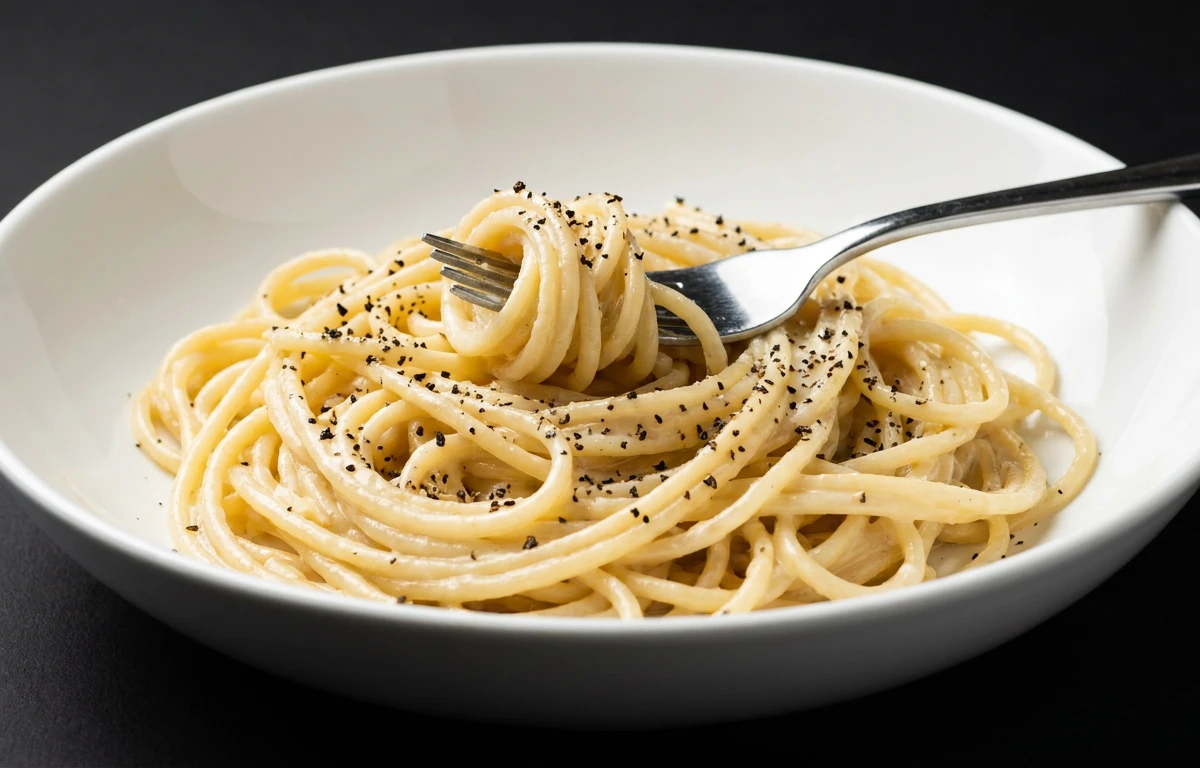
A deceptively simple Roman classic where al dente spaghetti meets a creamy, luscious sauce made from nothing more than pecorino romano, black pepper, and starchy pasta water. With just four ingredients and 20 minutes, this dish delivers restaurant-worthy richness in a weeknight-friendly package.
For 4 servings
- prep · ~5 min
Grate the pecorino and crack the pepper.
1.Finely grate 200 g pecorino romano on a microplane until snow-like and fluffy. Set aside in a bowl.2.Coarsely crack 2 tsp black peppercorns using a mortar and pestle or the bottom of a heavy pan.TIPThe cheese must be very finely grated — coarse shreds will clump and refuse to melt into a smooth sauce. - boil · ~8 min
Boil the spaghetti in salted water.
1.Bring a large pot of water to a rolling boil.2.Add spaghetti and cook until just shy of al dente, about 1 minute less than package directions.TIPUse less water than usual — about 3 litres — so the pasta water is extra starchy. That starch is the secret to the creamy sauce. - saute · ~2 min
Toast the black pepper.
1.While pasta cooks, place a large skillet over medium heat.2.Add the cracked black pepper and toast, shaking the pan, until fragrant — about 1 to 2 minutes.3.Ladle in about ½ cup of the starchy pasta water and let it bubble gently.TIPToasting the pepper wakes up its aromatic oils. Stop when you can really smell it — burnt pepper turns bitter fast. - mix · ~1 min
Create the pecorino paste.
1.In a bowl, combine the finely grated pecorino with 2 to 3 tablespoons of cold water.2.Mix with a fork until it forms a thick paste. Set aside near the stove.TIPMaking a cold-water paste with the cheese prevents it from seizing into stringy clumps when it hits the hot pasta. - mix · ~2 min
Transfer spaghetti to the skillet and toss.
1.Use tongs to lift spaghetti directly from the pot into the skillet with the peppered water. Reserve all the pasta water.2.Toss vigorously with tongs, adding splashes of reserved pasta water as needed to keep the pasta glossy and moving.3.Remove skillet from heat. Let it cool for 30 seconds — the pan should be warm but not sizzling.TIPTaking the pan off the heat before adding cheese is crucial. If the pan is too hot, the pecorino seizes into stringy clumps instead of melting into a cream. - mix · ~2 min
Add the pecorino paste and form the sauce.
1.Dollop the pecorino paste onto the spaghetti.2.Toss rapidly with tongs while ladling in more hot pasta water, a tablespoon at a time.3.Keep tossing until the cheese melts into a smooth, creamy sauce that coats every strand. Add a pinch of salt if needed.TIPThe sauce should flow like heavy cream. If it's too thick, add more pasta water. If too thin, keep tossing — the starch will tighten it up. - serve · ~1 min
Plate immediately and finish with more pecorino.
1.Twirl the spaghetti into warm bowls using tongs.2.Finish with an extra snowfall of grated pecorino and one more crack of black pepper.3.Serve right away while the sauce is at its creamiest.TIPCacio e Pepe waits for no one — the sauce thickens as it cools. Warm the serving bowls with hot water first for a few extra minutes of creaminess at the table.
What to keep in mind.
6 tips from the recipe — small details that make a real difference to the final dish.
- 1Use a Microplane for ultra-fine pecorino — coarse shreds won't melt smoothly into the sauce.
- 2Reserve extra pasta water before draining; you'll need it to adjust the sauce consistency.
- 3Let the skillet cool for 30 seconds off heat before adding the pecorino paste to prevent clumping.
- 4Toss the spaghetti vigorously with tongs to emulsify the cheese, starch, and fat into a creamy sauce.
- 5Warm serving bowls with hot water so the sauce stays fluid longer at the table.
- 6Toast the black pepper just until fragrant — burnt pepper turns bitter and ruins the dish.
Adapt it for your goals.
Whole-wheat
Swap spaghetti for whole-wheat pasta for a nuttier flavor and extra fiber; increase the reserved pasta water by a few tablespoons as whole-wheat pasta releases more starch.
black pepper forwardBlack-pepper-forward
Double the cracked black pepper and add a pinch of Aleppo pepper for a fruity heat — ideal for spice lovers who want a more aggressive pepper punch.
Why this is on our healthy list.
Rich in Calcium
Pecorino romano is a concentrated source of calcium, which supports bone health and nerve function.
Simple, Whole Ingredients
This recipe uses just four ingredients with no added thickeners or preservatives, making it a clean, minimally processed meal.
Frequently asked questions
The pan was likely too hot when you added the cheese. Always remove the skillet from heat and let it cool slightly before incorporating the pecorino paste.