Simple Coconut Taro Leaf Stew
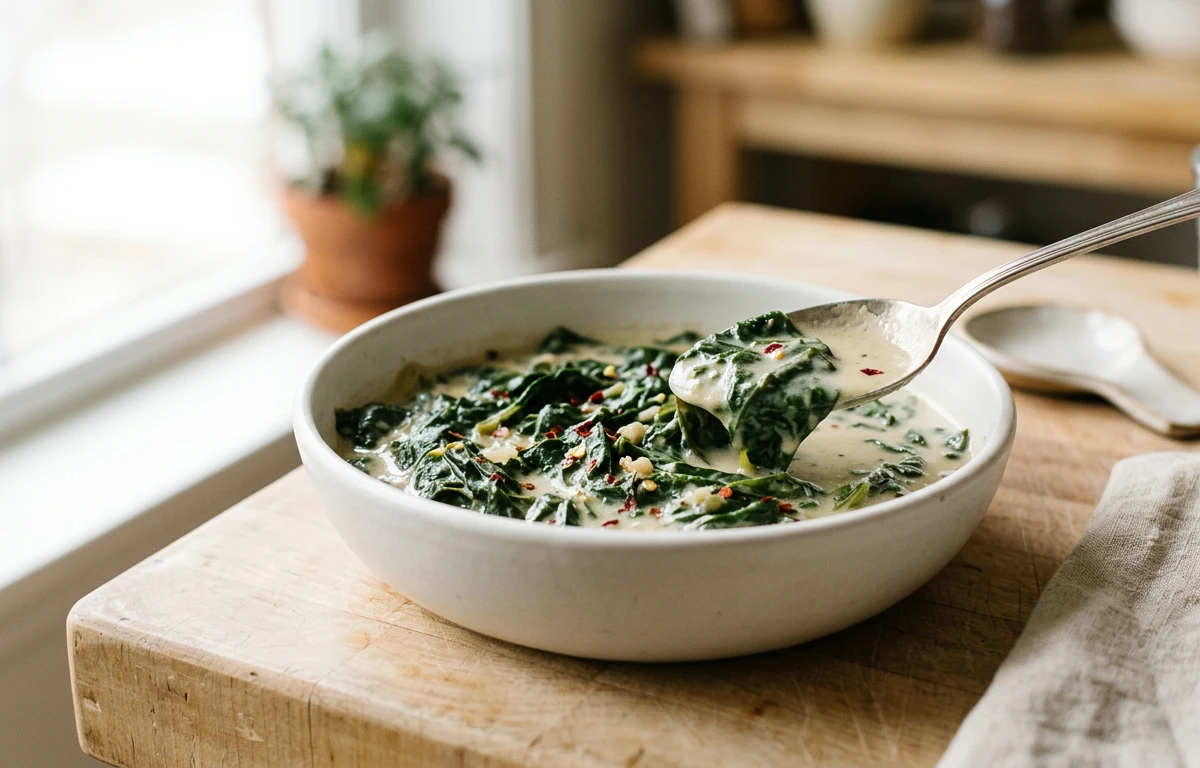
Tender taro leaves gently simmered in a fragrant coconut milk base until silky and lush. This Pacific Island-inspired stew is earthy, creamy, and surprisingly simple to make, pairing beautifully with steamed rice or flatbread for a comforting meal.
For 4 servings
- prep · ~5 min
Wash and chop the taro leaves.
Remove the tough central stems from the taro leaves. Rinse the leaves thoroughly under running water, then roughly chop them. Set aside.
TIPWear gloves or oil your hands if your skin is sensitive, as raw taro leaves can cause itching. - saute · ~4 min
Sauté the aromatics.
Heat oil in a saucepan over medium heat. Add the sliced onion, minced garlic, and slit green chilies. Cook, stirring occasionally, until the onions soften and turn translucent.
- simmer · ~15 min
Simmer the stew.
Add the chopped taro leaves to the pan along with a pinch of turmeric powder and salt. Pour in the coconut milk and water. Stir well, bring to a gentle boil, then reduce heat and let it simmer uncovered until the leaves are tender and silky.
TIPStir occasionally to prevent the coconut milk from splitting and to ensure the leaves don't stick. - garnish
Finish with lemon juice and serve.
Remove from heat and stir in the fresh lemon juice. Transfer to a serving bowl and serve hot.
What to keep in mind.
6 tips from the recipe — small details that make a real difference to the final dish.
- 1Handle raw taro leaves with oiled hands or gloves to avoid skin irritation from calcium oxalate crystals.
- 2Use full-fat coconut milk for the creamiest texture; light coconut milk may make the stew watery.
- 3Do not skip the lemon juice at the end — its acidity cuts through the richness and brightens the dish.
- 4Simmer uncovered so excess liquid evaporates and the stew thickens naturally without splitting.
- 5If using canned coconut milk, shake the can well before opening to re-emulsify the cream and liquid.
- 6Leftover stew thickens upon cooling; thin it with a splash of water or coconut milk when reheating.
Adapt it for your goals.
Protein-packed
Add 1/2 cup of cooked red lentils or chickpeas along with the taro leaves for a protein boost that turns the stew into a complete one-pot meal.
spicySpicy
Increase green chilies to 4 or add 1/2 teaspoon of red chili flakes for those who want a fiery kick against the coconut richness.
veganVegan
This recipe is already vegan — simply ensure your coconut milk is from a brand that uses no dairy additives.
Why this is on our healthy list.
Rich in Dietary Fiber
Taro leaves provide a good amount of fiber, supporting digestive health and prolonging satiety.
Packed with Vitamins A and C
Taro leaves are a source of these immune-supporting vitamins, and lemon juice adds an extra boost of vitamin C.
Healthy Fats from Coconut
Coconut milk supplies medium-chain triglycerides (MCTs), which can provide quick energy and support metabolism.
Naturally Gluten-Free
This stew contains no wheat or gluten-containing ingredients, making it suitable for gluten-sensitive diets.
Frequently asked questions
Yes — raw taro leaves contain calcium oxalate crystals that can cause intense itching or irritation on sensitive skin. Wear gloves or rub your hands with oil before handling.