Simple Cooked Elderberry Syrup
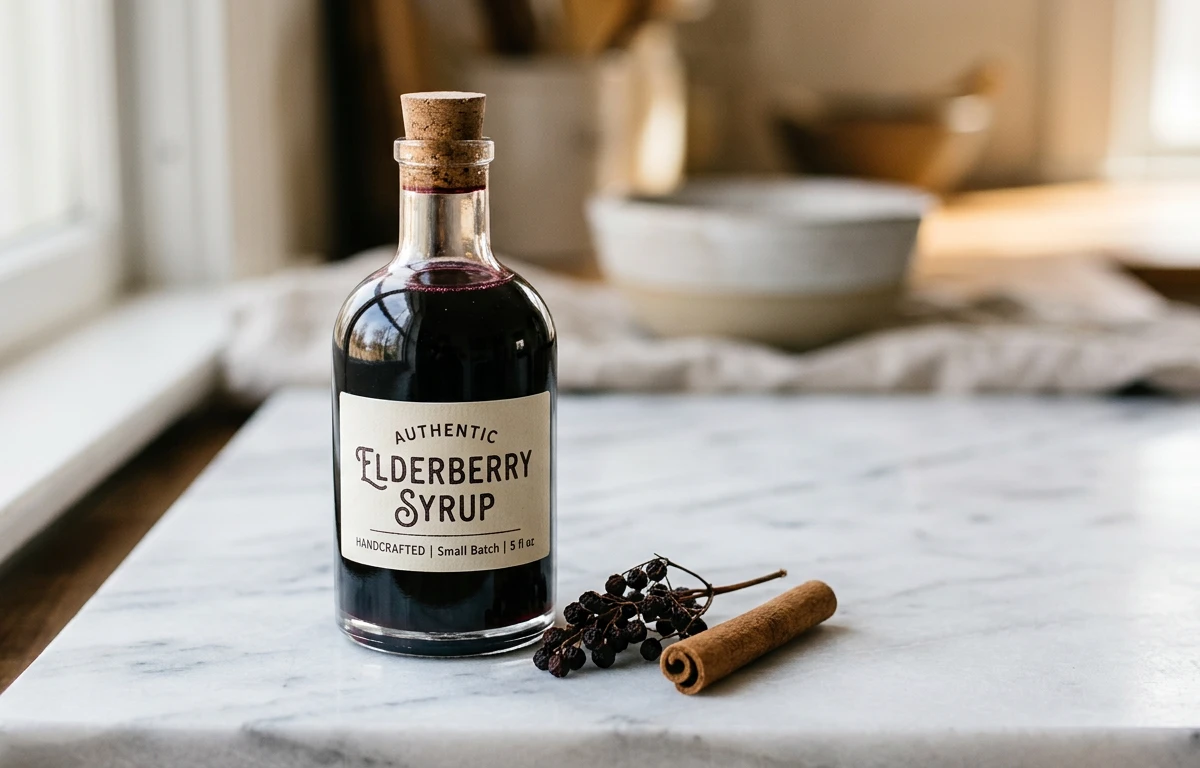
A deep purple, antioxidant-rich syrup made from dried elderberries gently simmered with water, honey, and warming spices. Slightly tart and earthy, this natural remedy has been used for generations to soothe sore throats and boost immunity. Makes a wonderful addition to sparkling water, tea, or drizzled over pancakes.
For 24 servings
- prep
Combine elderberries, water, and spices in a saucepan.
Place the dried elderberries, water, cinnamon stick, cloves, and sliced ginger into a medium saucepan.
- boil · ~45 min
Bring to a boil, then simmer.
Set the saucepan over high heat and bring the mixture to a rolling boil. Once boiling, reduce the heat to low, cover, and let it gently simmer for 45 minutes. The liquid will reduce by nearly half and become deeply colored.
TIPKeep an eye on the pot and stir occasionally to prevent sticking. - rest · ~10 min
Cool and strain the liquid.
Remove the saucepan from the heat and let the mixture cool until it's warm but safe to handle. Pour it through a fine mesh strainer into a bowl or measuring cup. Press the berries gently with the back of a spoon to extract all the liquid, then discard the cooked berries and spices.
TIPDo not press so hard that berry pulp pushes through the strainer; you want a clear syrup. - mix
Stir in the honey.
While the liquid is still warm but not boiling hot, add the honey and stir well until it dissolves completely. Adding honey to very hot liquid can destroy some of its beneficial enzymes.
TIPAllow the liquid to cool to just above room temperature before adding honey for best results. - assemble
Bottle and refrigerate.
Pour the finished syrup into a clean glass jar or bottle using a funnel. Seal tightly and store in the refrigerator for up to 3 months.
TIPLabel the jar with the date. A standard dose is 1 tablespoon for adults.
What to keep in mind.
6 tips from the recipe — small details that make a real difference to the final dish.
- 1Use dried elderberries, not fresh, as raw fresh berries are toxic and must be cooked.
- 2Simmer uncovered for the last 10 minutes if the syrup is too thin — it will thicken as it cools.
- 3Let the mixture cool to 110-120°F before adding honey to preserve its natural enzymes and flavor.
- 4Press the berries gently when straining; aggressive pressing pushes bitter tannins and pulp into the syrup.
- 5Store in a sterilized glass jar; the syrup freezes well in ice cube trays for individual doses.
- 6Label the jar with the preparation date — homemade syrup keeps up to 3 months refrigerated.
Adapt it for your goals.
Sugar-free
Replace honey with a sugar-free syrup or monk fruit sweetener for a low-glycemic version suitable for diabetics or those avoiding sugar.
veganVegan
Swap honey for agave nectar or maple syrup to make this syrup plant-based; the flavor becomes milder and more floral.
spiced upSpiced-up
Add a star anise pod and a strip of orange zest during simmering for a warm, citrusy twist that complements the elderberry's earthiness.
Why this is on our healthy list.
Rich in Antioxidants
Elderberries are loaded with anthocyanins and flavonoids that help fight oxidative stress and support overall immune function.
Natural Sore Throat Soother
Honey coats the throat and has mild antimicrobial properties, while warming ginger and cinnamon reduce inflammation.
No Artificial Additives
This syrup is made with whole-food ingredients — no refined sugar, preservatives, or synthetic colors.
Frequently asked questions
No — fresh elderberries must be cooked thoroughly to destroy toxic compounds; dried berries are pre-treated and safer for this method.