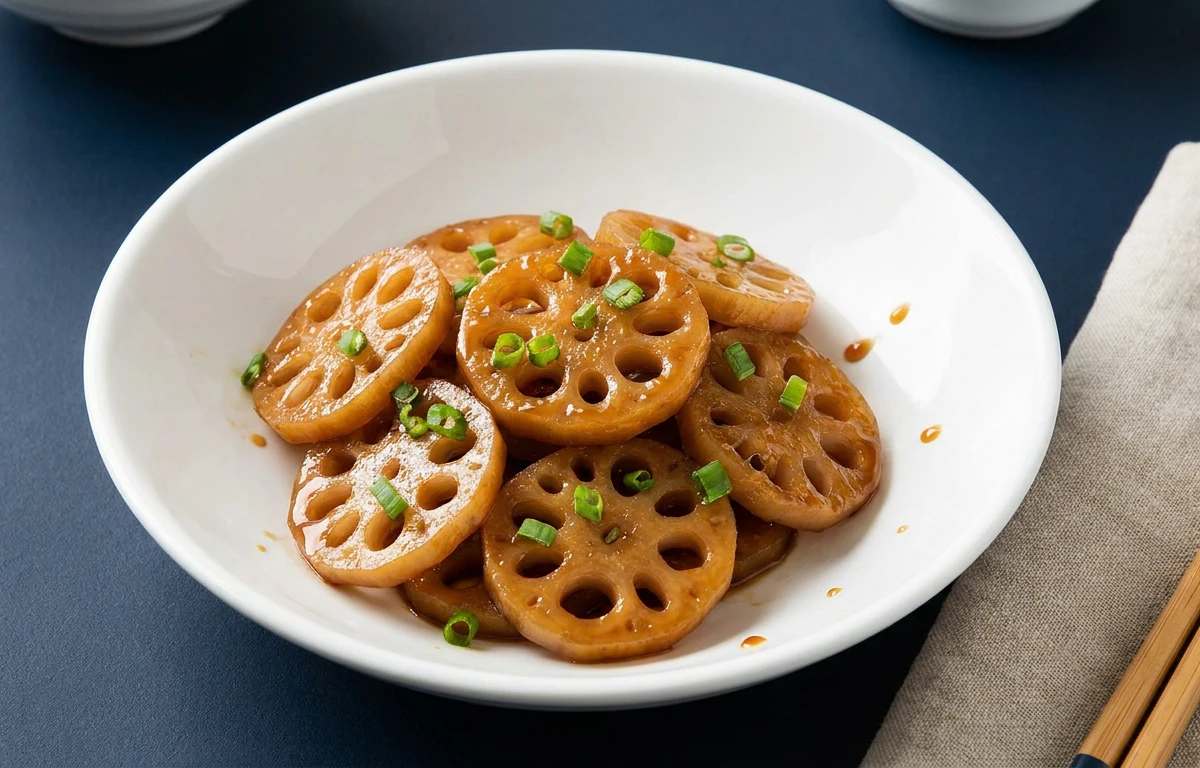
Simple Garlic-Ginger Lotus Stem Stir-fry
Crisp, tender slices of lotus stem stir-fried with a punchy garlic-ginger kick and warm Indian spices. A quick, everyday dry sabzi that brings a satisfying crunch to the plate, pairing beautifully with roti and dal.
For 4 servings
- boil · ~5 min
Parboil the lotus stem slices.
1.Bring a pot of water to a rolling boil.2.Add the sliced lotus stem and boil for 3-4 minutes until just tender but still crisp.3.Drain and rinse under cold water to stop the cooking. Set aside.TIPDon't overcook — the lotus stem should retain a slight crunch for the stir-fry. - temper · ~3 min
Make the tempering with cumin and aromatics.
1.Heat oil in a kadai or wok over medium heat.2.Add cumin seeds and let them splutter for 30 seconds.3.Add chopped garlic and sauté until golden and fragrant (1 minute).4.Add julienned ginger and slit green chilies. Sauté for 30 seconds.TIPKeep the flame medium — garlic burns quickly and turns bitter. - saute · ~4 min
Sauté the onions until soft.
Add the sliced onions and cook until they turn translucent and soft, about 3-4 minutes. Stir occasionally to avoid browning.
- saute · ~7 min
Add the spice powders and lotus stem.
1.Lower the heat. Add turmeric powder, red chili powder, coriander powder, and salt.2.Stir for 20-30 seconds until the spices bloom and smell aromatic.3.Add the parboiled lotus stem slices and toss well to coat evenly with the masala.4.Sauté on medium-high for 5-6 minutes, stirring occasionally, until the edges begin to crisp.TIPDon't add water — the lotus stem should fry dry to get lightly charred edges. - garnish · ~1 min
Finish with garam masala, lemon juice, and cilantro.
1.Turn off the heat. Sprinkle garam masala over the stir-fry.2.Drizzle with fresh lemon juice and toss once.3.Transfer to a serving bowl and garnish with chopped coriander leaves. - serve
Serve hot with roti or paratha.
Serve the stir-fry immediately as a side with dal and phulka, or as a dry sabzi alongside rice and yogurt.
What to keep in mind.
6 tips from the recipe — small details that make a real difference to the final dish.
- 1Parboil lotus stem for exactly 3-4 minutes to retain a crisp-tender bite; overcooking makes it mushy.
- 2Dry the lotus stem slices thoroughly after rinsing to avoid splattering when they hit the hot oil.
- 3Keep the flame medium while sautéing garlic to prevent burning and bitterness.
- 4Do not add any water while stir-frying the lotus stem; it should develop light charred edges in the dry heat.
- 5Always add garam masala after turning off the heat to preserve its volatile aromas.
- 6This stir-fry tastes best served immediately; it loses crunch upon reheating.
Adapt it for your goals.
Soy-glazed
Replace salt with 1 teaspoon soy sauce and omit lemon juice; finish with a pinch of sugar for a Chinese-Indo fusion stir-fry that pairs well with steamed rice.
no onion no garlic (jain)No-onion no-garlic (jain)
Omit onion and garlic; use asafoetida (hing) in the tempering along with cumin seeds for a Jain-friendly version that still carries aromatic depth.
crunchy nuttyCrunchy-nutty
Add 2 tablespoons of roasted peanuts or cashews along with the spice powder for a nutty crunch that complements the lotus stem's texture.
coconut keralaCoconut-kerala
After the final stir-fry, toss in 1 tablespoon of freshly grated coconut and a few curry leaves for a South Indian twist with mild sweetness.
Why this is on our healthy list.
Rich in Dietary Fiber
Lotus stem is packed with both soluble and insoluble fiber, supporting digestion and promoting a feeling of fullness.
Source of Vitamin C
The addition of lemon juice and fresh ginger adds a small but meaningful amount of vitamin C, which helps support immune function.
Low in Calories
This stir-fry uses minimal oil and relies on water-based parboiling, making it a light yet satisfying vegetable dish ideal for weight management.
Contains Antioxidant Spices
Turmeric, coriander, and cumin provide polyphenols and anti-inflammatory compounds that contribute to overall wellness.
Frequently asked questions
Fresh lotus stem is best for crunch; frozen stems are often mushy after thawing. If using frozen, reduce parboiling time to 1 minute and pat very dry.



.webp)