
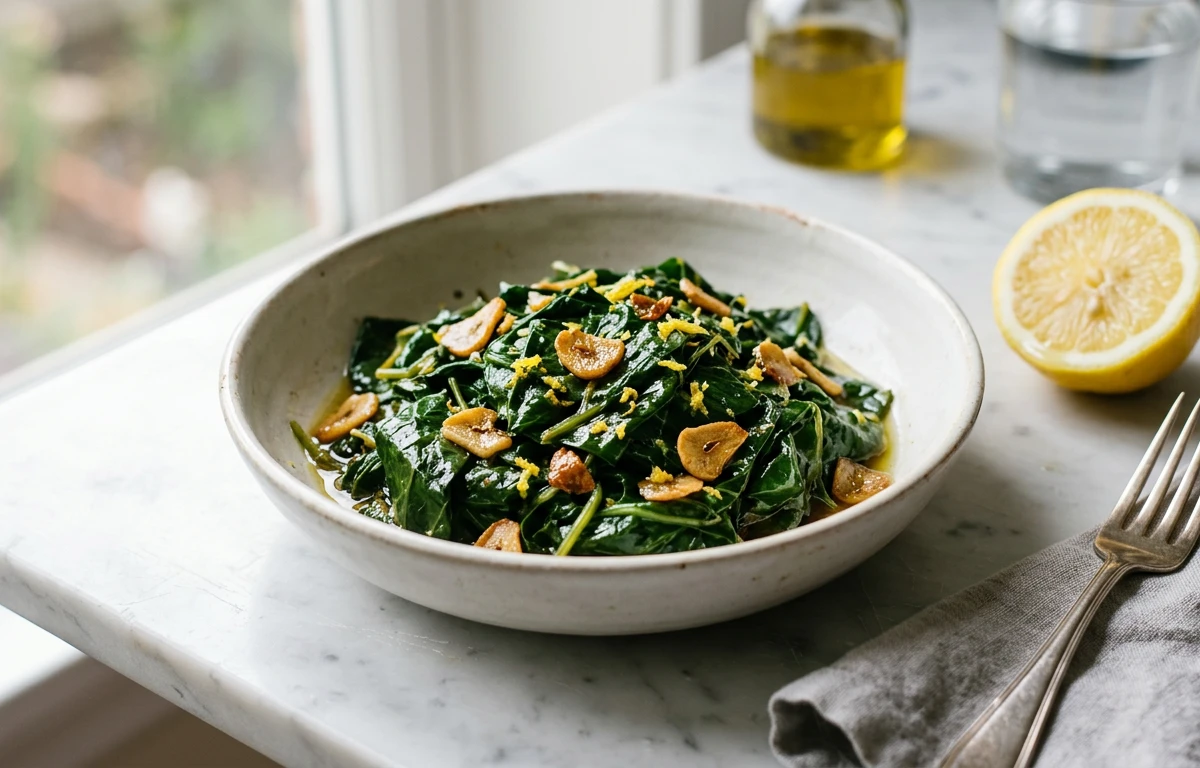
Simple Garlic-Lemon Taro Leaves
Tender taro leaves cooked simply with lots of garlic and a bright squeeze of lemon. This quick, no-fuss sabzi lets the earthy flavor of the leaves shine through, with just a whisper of heat from green chilies. Ready in under 20 minutes, it is a rustic, homestyle side dish that pairs beautifully with roti or dal rice.
For 4 servings
- prep
Prep the taro leaves.
Wash the taro leaves thoroughly under running water. Pat them dry. Remove the thick stems and central veins, then finely chop the leaves. Keep aside.
TIPChoose young, medium-sized leaves. Older leaves can be tough and may cause slight itching. If leaves are mature, blanch them for a minute in boiling water before chopping. - temper · ~1 min
Temper the oil with cumin.
Heat oil in a kadhai or pan over medium heat. Add cumin seeds and let them sizzle and crackle until fragrant, about 30 seconds.
- saute · ~1 min
Sauté the garlic and green chilies.
Add the minced garlic and slit green chilies to the pan. Sauté for about a minute until the garlic turns light golden and releases its aroma, stirring constantly to prevent burning.
TIPBe careful not to brown the garlic too much as it can turn bitter very quickly. - saute · ~5 min
Cook the taro leaves.
Add the chopped taro leaves to the pan along with turmeric powder and salt. Stir well to coat the leaves with the garlic and oil. Cook uncovered on medium heat for 4 to 5 minutes, stirring occasionally.
TIPTaro leaves release their own moisture. Do not add water; let them cook in their own steam. It helps preserve their flavor and nutrients. - saute
Finish with lemon juice.
When the leaves have wilted and cooked down, switch off the heat. Drizzle the fresh lemon juice over the top and give it a final gentle mix.
TIPAdding lemon juice off the heat keeps its flavor bright and fresh. - serve
Serve hot.
Transfer the garlic-lemon taro leaves to a serving bowl and serve immediately with roti, paratha, or as a side with dal and rice.
What to keep in mind.
7 tips from the recipe — small details that make a real difference to the final dish.
- 1Always use young, medium-sized taro leaves to avoid a scratchy throat or itchiness.
- 2Do not add water during cooking; the leaves release enough moisture to cook perfectly.
- 3Remove the thick central vein of each leaf before chopping for a tender texture.
- 4Sauté garlic just until light golden; over-browning makes it bitter and ruins the dish.
- 5Add lemon juice only after turning off the heat to preserve its fresh, bright acidity.
- 6For best flavor, use freshly squeezed lemon juice, not bottled varieties.
- 7Leftovers can be stored in the fridge for up to 2 days; reheat gently without adding water.
Adapt it for your goals.
Low-oil
Reduce oil to 1/2 tablespoon and use a non-stick pan; water-sauté the garlic and cumin briefly before adding leaves for a lighter, oil-free version.
high proteinHigh-protein
Add 1/4 cup of boiled chana dal or crumbled paneer in the final minute of cooking for extra protein and a heartier texture.
jainJain
Skip the garlic and replace it with a pinch of asafoetida (hing) to maintain the aromatic depth while adhering to Jain dietary restrictions.
coconut twistCoconut twist
Stir in 2 tablespoons of fresh grated coconut just before adding lemon juice for a subtle sweetness and creamy contrast to the garlicky leaves.
Why this is on our healthy list.
Rich in Dietary Fiber
Taro leaves are a good source of fiber, which supports healthy digestion and helps maintain steady energy levels.
Packed with Vitamins A and C
These leaves provide vitamin A for eye health and vitamin C from lemon juice and leaves to support immune function.
Low in Calories and Fat
With just one tablespoon of oil and no heavy creams, this sabzi is a light, low-calorie side dish that fits well into balanced meals.
Natural Anti-Inflammatory
Turmeric and garlic both offer anti-inflammatory properties, which may help reduce joint stiffness and support overall wellness.
Frequently asked questions
Yes, frozen taro leaves work well. Thaw them completely, squeeze out excess water, and cook as directed—reduce cooking time slightly since they are already tender.


