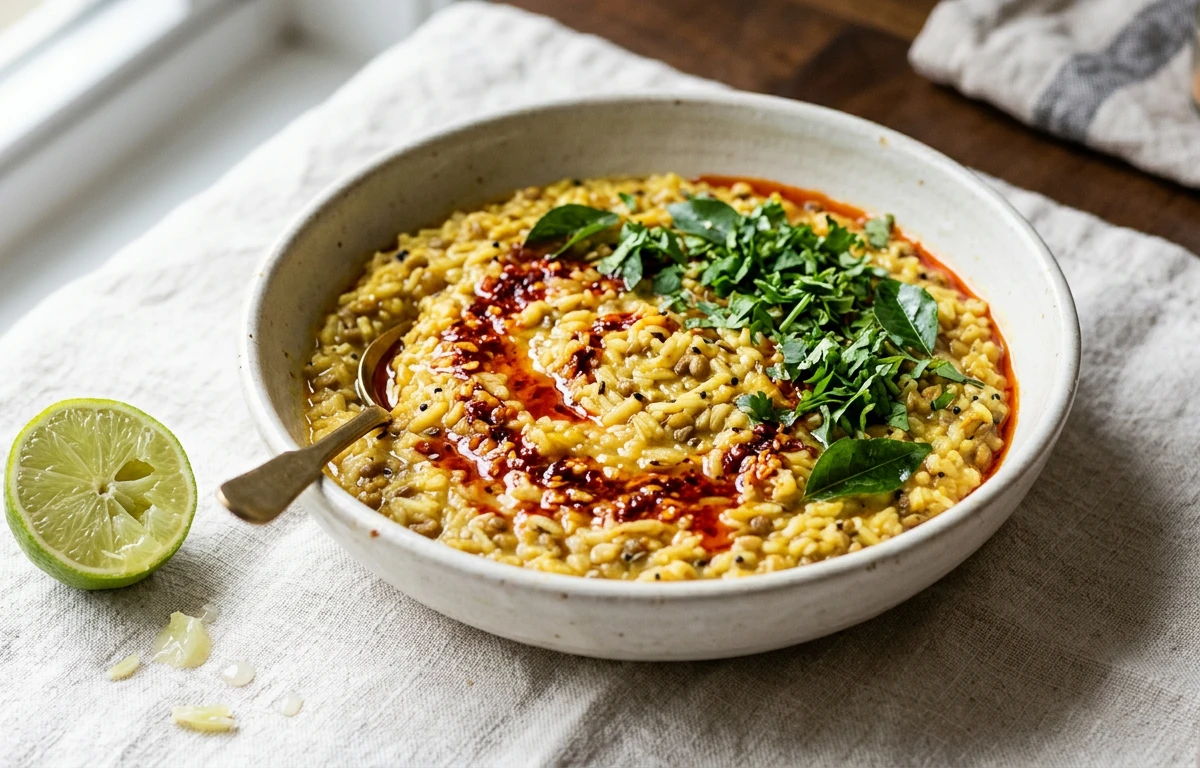
Simple Kitchari
A warm, comforting one-pot meal of rice and moong dal cooked together until soft and creamy. Lightly spiced with cumin and turmeric, this gentle Indian classic is easy to digest and perfect for a simple lunch or dinner.
For 4 servings
- prep
Wash and soak the rice and dal.
1.Rinse basmati rice and moong dal together under running water until water runs clear.2.Soak in fresh water for 30 minutes, then drain completely. - temper · ~1 min
Make the tempering.
1.Heat ghee in a pressure cooker over medium heat.2.Add cumin seeds and let them sizzle and turn golden (30 seconds).3.Add asafoetida and turmeric powder, stir quickly for 10 seconds.TIPDon't let the turmeric burn — it turns bitter. Keep the heat medium-low after adding. - mix
Add rice, dal, and water to the cooker.
1.Tip the drained rice and moong dal into the cooker with the tempering.2.Add salt and 4 cups of water. Stir gently to combine. - pressure cook · ~12 min
Pressure cook the kitchari.
1.Close the lid securely and cook on medium-high heat until the first whistle.2.Reduce heat to low and cook for 3 more whistles (about 10-12 minutes).3.Turn off the heat and let pressure release naturally.TIPNatural release is key — letting it sit makes the kitchari creamier. - mix
Mash and adjust consistency.
1.Open the cooker and stir the kitchari vigorously with a ladle.2.Mash lightly to get a creamy porridge-like texture. Add a splash of hot water if it feels too thick. - serve
Serve warm in bowls.
Ladle into katoris and serve hot with a dollop of ghee on top, a side of yogurt, or simple papad.
TIPKitchari thickens as it cools. Add a little warm water when reheating.
What to keep in mind.
7 tips from the recipe — small details that make a real difference to the final dish.
- 1Soak the rice and dal for at least 30 minutes to ensure even cooking and a creamier texture.
- 2Natural pressure release is essential — it allows the grains to continue steaming and become porridge-like.
- 3If you prefer a thinner kitchari, add an extra ½ cup of hot water after cooking and stir well.
- 4For a deeper flavor, swap half the ghee for coconut oil or use a tadka of fresh ginger slices.
- 5Leftover kitchari thickens overnight; thin it with warm water or broth when reheating.
- 6Serve with a squeeze of lemon juice just before eating to brighten the earthy spices.
- 7Make a double batch and freeze portions — this dish freezes beautifully for up to 3 months.
Adapt it for your goals.
Vegan
Replace ghee with coconut oil or avocado oil for a fully plant-based version. The coconut oil adds a subtle sweetness that pairs beautifully with turmeric.
low oilLow-oil
Skip the tempering and simply boil the soaked rice and dal with turmeric and salt. For aroma, stir in a pinch of toasted cumin powder at the end.
high proteinHigh-protein
Add ½ cup of diced paneer or cubed tofu during the last 5 minutes of cooking for extra protein and a soft, chewy contrast.
jainJain
Omit asafoetida (often ground with onion/garlic) and use a pinch of hing-free cumin-turmeric tempering. Replace ghee with peanut oil or ghee from a Jain-certified source.
Why this is on our healthy list.
Easily Digestible
Moong dal is one of the lightest legumes — it's low in gas-producing compounds and cooks into a gentle, soothing mash that's ideal for sensitive stomachs.
Anti-Inflammatory Spices
Turmeric and asafoetida both contain compounds (curcumin and ferulic acid) that help reduce inflammation and support gut health.
Complete Plant Protein
Rice and moong dal together provide all nine essential amino acids, making this a complete protein meal suitable for vegetarians and vegans.
Packed with B Vitamins
Moong dal is rich in folate (vitamin B9) and thiamine (B1), which support energy metabolism and nervous system function.
Frequently asked questions
Yes — simply simmer the drained rice and dal in a pot with 5 cups of water for 35–40 minutes, stirring occasionally, until soft and creamy.