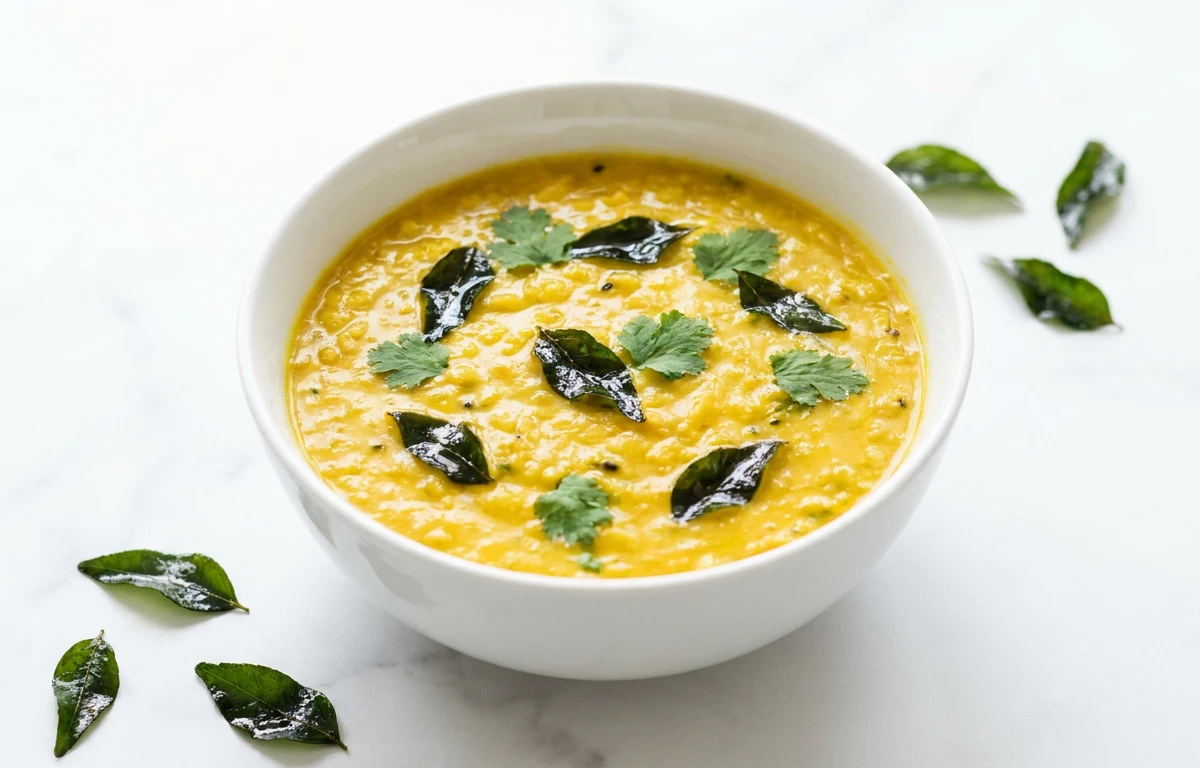
Simple Lentil Dal with Crispy Curry Leaves
A warm, comforting bowl of creamy lentils finished with a crackling tempering of curry leaves, mustard seeds, and cumin. This everyday dal comes together in one pot and tastes like home — simple, nourishing, and deeply satisfying with steamed rice or soft roti.
For 4 servings
- prep · ~5 min
Rinse the dal and prepare aromatics.
1.Rinse 1 cup toor dal under cold water 2-3 times until water runs clear.2.Slice 4 garlic cloves thinly and break 2 dried red chilies in half.3.Wash 12 curry leaves and pat them completely dry with a clean towel.TIPDry curry leaves thoroughly — any water will cause hot oil to splatter violently. - pressure cook · ~15 min
Pressure cook the dal with turmeric.
Add rinsed dal, 3 cups water, turmeric powder, and salt to the pressure cooker. Close the lid and cook on medium heat for 3-4 whistles. Let the pressure release naturally.
TIPNatural pressure release keeps the dal creamy. For a thinner dal, add an extra 0.5 cup water now. - mix · ~6 min
Whisk the dal and adjust consistency.
Open the cooker and whisk the dal vigorously with a wire whisk or wooden churner until smooth and creamy. Stir in 1 cup of water and bring to a gentle simmer on low heat.
TIPWhisking well is the secret to that silky restaurant-style texture. Don't skip this step. - temper · ~3 min
Make the crispy curry leaf tempering.
1.Heat 2 tsp ghee in a small tadka pan over medium heat until shimmering.2.Add 0.5 tsp mustard seeds and let them splutter completely (30 sec).3.Add 0.5 tsp cumin seeds, 2 broken dried red chilies, and sliced garlic — sauté until garlic turns golden (30-40 sec).4.Add 1 pinch asafoetida and 12 dry curry leaves — fry until leaves turn crisp and translucent (20-30 sec).TIPWatch the garlic closely — it goes from golden to burnt in seconds. Pull the pan off heat the moment it turns light brown. - mix · ~1 min
Pour the tempering over the dal and mix.
Immediately pour the crackling tempering over the simmering dal. The hot oil will sizzle on contact — stir once and take off the heat.
TIPNever stir the tempering into the dal on the stove for more than a few seconds. The sizzle is where the magic happens. - garnish
Garnish with coriander leaves and serve hot.
Sprinkle chopped coriander leaves over the dal. Serve steaming hot with steamed rice, jeera rice, or soft roti.
What to keep in mind.
6 tips from the recipe — small details that make a real difference to the final dish.
- 1Pat curry leaves bone-dry before frying to prevent dangerous oil splatter.
- 2Whisk the cooked dal vigorously for a silky, restaurant-style texture.
- 3Natural pressure release keeps the dal creamy; avoid quick-release.
- 4Watch garlic closely in the tadka — it burns in seconds after turning golden.
- 5For a thinner dal, add an extra ½ cup water during pressure cooking.
- 6Serve dal immediately after adding tempering for maximum aroma and crunch.
Adapt it for your goals.
Coconut dal
Add ¼ cup fresh or frozen grated coconut along with the tempering for a mild sweetness and richer South Indian flavor.
tomato dalTomato dal
Stir in 1 chopped medium tomato after pressure cooking and simmer for 5 minutes for a tangy, comforting variation.
veganVegan
Replace ghee with coconut oil or neutral oil in the tempering to keep the dish fully plant-based.
high proteinHigh-protein
Swap half the toor dal with masoor dal (red lentils) or add a handful of chopped spinach for extra iron and protein.
Why this is on our healthy list.
Rich in Plant Protein
Toor dal (pigeon peas) provides a solid source of plant-based protein, supporting muscle repair and satiety.
High in Dietary Fiber
Lentils are packed with soluble fiber, which aids digestion and helps maintain steady blood sugar levels.
Anti-Inflammatory Spices
Turmeric and asafoetida offer natural anti-inflammatory properties, supporting joint health and immunity.
Good Source of Folate
Toor dal is naturally rich in folate, an essential B vitamin for cell growth and red blood cell formation.
Frequently asked questions
Yes, you can substitute with masoor dal (red lentils) or moong dal (split yellow mung beans) — cooking time may vary slightly.