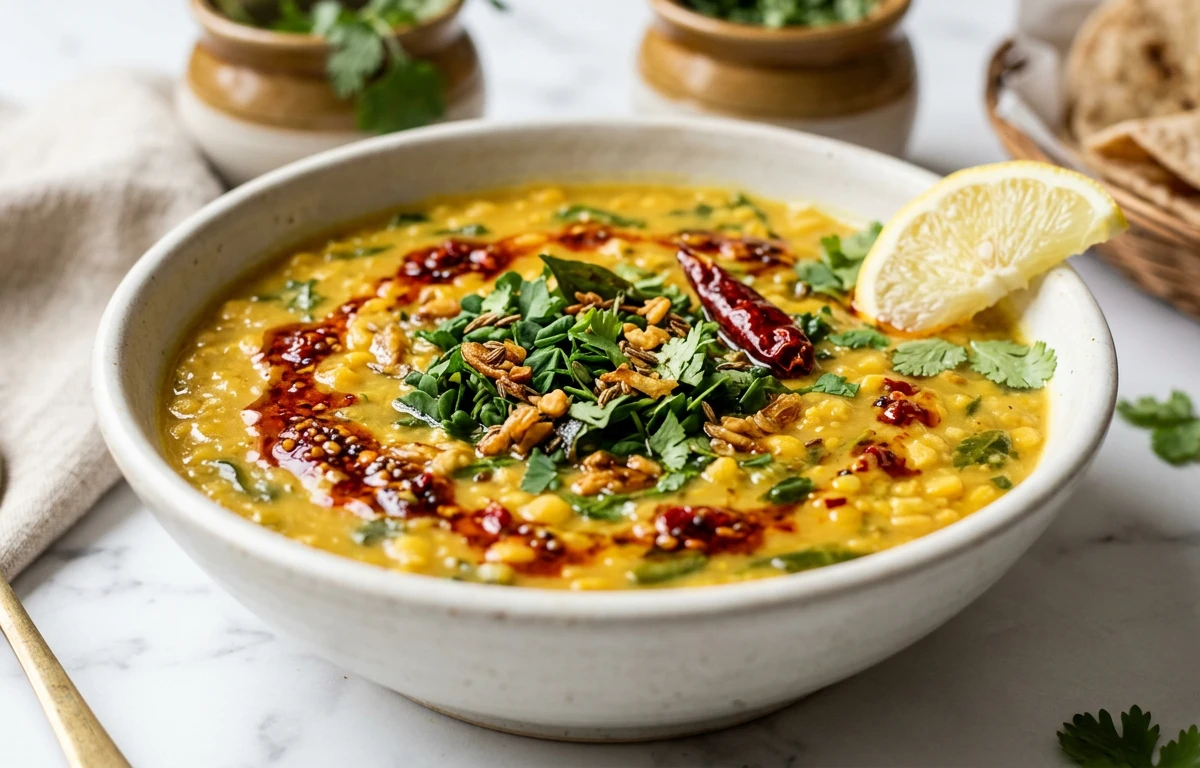
Simple Methi Dal
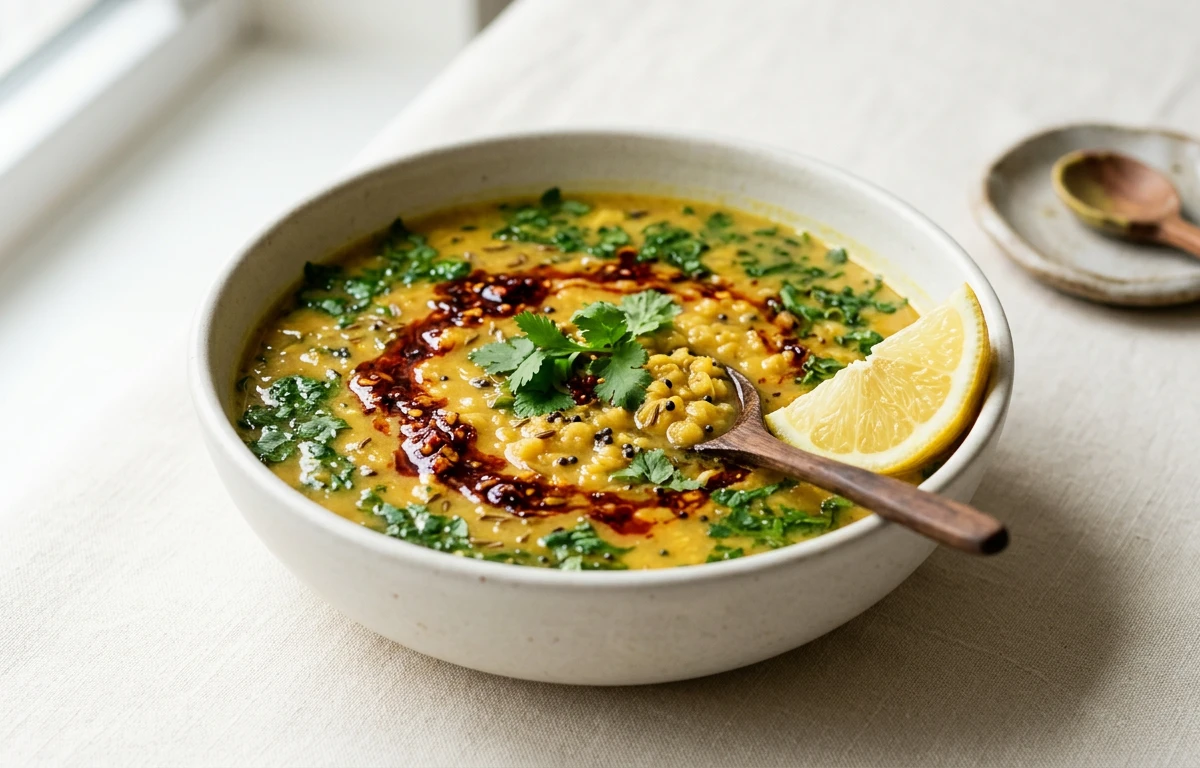
A humble, everyday dal infused with the gentle bitterness of fresh fenugreek leaves. This Simple Methi Dal combines creamy toor dal with aromatic tempering of cumin, garlic, and green chilies for a comforting bowl that pairs perfectly with steamed rice.
For 4 servings
- prep · ~30 min
Wash and soak the dal.
Wash the toor dal thoroughly in water 2-3 times until the water runs clear. Soak in fresh water for 30 minutes, then drain.
TIPSoaking softens the dal and reduces cooking time. - pressure cook · ~15 min
Pressure cook the dal.
1.Add the soaked dal to the pressure cooker with 3 cups of water and turmeric powder.2.Close the lid and cook on medium heat until 3-4 whistles.3.Let the pressure release naturally, then whisk the dal until smooth.TIPNatural release helps the dal cook through completely without burning. - saute · ~5 min
Prepare the methi leaves.
While the dal cooks, wash and roughly chop the fresh fenugreek leaves. Sprinkle a pinch of salt on them and set aside for 5 minutes to reduce bitterness, then squeeze out excess water.
TIPSalting the methi leaves draws out excess bitterness and softens them. - temper · ~3 min
Make the tempering.
1.Heat ghee in a pan over medium heat until it shimmers.2.Add cumin seeds and let them crackle for 30 seconds.3.Add minced garlic and sauté until golden and fragrant (30-40 seconds).4.Add slit green chilies and stir for 20 seconds.TIPWatch the garlic carefully — it can burn quickly and turn bitter. - saute · ~9 min
Cook the onions and tomatoes.
1.Add the finely chopped onion and sauté until translucent (3-4 minutes).2.Add the chopped tomato and red chili powder, cook until the tomato softens and releases oil (3-4 minutes).3.Stir in the chopped methi leaves and sauté for 2 minutes until wilted.TIPCook the tomatoes until the raw smell disappears for a sweeter, deeper flavor. - simmer · ~7 min
Combine and simmer the dal.
1.Pour the whisked dal into the pan with the methi-onion mixture.2.Add salt and mix well.3.Simmer on low heat for 5-7 minutes, stirring occasionally, until the dal thickens slightly and flavors meld.TIPIf the dal is too thick, add a splash of hot water to reach your preferred consistency. - garnish · ~1 min
Garnish with fresh coriander and serve hot.
Ladle the dal into bowls, sprinkle freshly chopped coriander leaves on top, and serve immediately with steamed rice or roti.
TIPA final drizzle of raw ghee on top adds a luxurious aroma and richness.
What to keep in mind.
5 tips from the recipe — small details that make a real difference to the final dish.
- 1Soak the toor dal for at least 30 minutes to ensure even cooking and a creamy texture.
- 2Salting the fenugreek leaves and squeezing out excess water is key to reducing their bitterness.
- 3Cook the garlic in ghee until just golden, not brown, to avoid a bitter taste in the tempering.
- 4Simmer the dal on low heat after combining to allow the flavors to meld without scorching.
- 5If the dal thickens too much upon standing, thin it with a splash of hot water before serving.
Adapt it for your goals.
Extra-proteína
Add 1/4 cup of moong dal or masoor dal along with the toor dal for a higher protein content and a slightly different texture.
low oilLow-oil
Skip the ghee and use 1 teaspoon of oil for the tempering, or dry-roast the cumin seeds, to reduce fat without sacrificing flavor.
veganVegan
Replace ghee with any neutral oil or coconut oil for a fully plant-based version that still delivers a rich tempering.
smoky flavoredSmoky-flavored
Add a pinch of asafoetida (hing) to the tempering and finish with a quick dhungar (smoke infusion) using a hot coal or charcoal for a restaurant-style smoky aroma.
low spiceLow-spice
Omit the red chili powder and use only one green chili, deseeded, for a mild, kid-friendly version that still tastes comforting.
Why this is on our healthy list.
Rich in Plant-Based Protein
Toor dal is an excellent source of plant protein, making this dish a satisfying and nutritious option for vegetarian meals.
Supports Digestive Health
The fiber in toor dal and fenugreek leaves aids digestion and helps maintain a healthy gut.
Good Source of Iron
Fenugreek leaves are naturally rich in iron, which supports healthy blood and energy levels.
Anti-Inflammatory Properties
Turmeric and garlic in this recipe contain compounds known for their anti-inflammatory and immune-supporting benefits.
Frequently asked questions
Yes, substitute 2 tablespoons of dried kasuri methi for the fresh leaves. Skip the salting step and add the dried leaves directly to the tempering or simmered dal.